A Guide to the Euphrasian Basilica: Poreč's Byzantine Masterpiece
The Euphrasian Basilica in Poreč is one of the best-preserved early Byzantine churches in the Mediterranean, famous for its golden mosaics and UNESCO status.
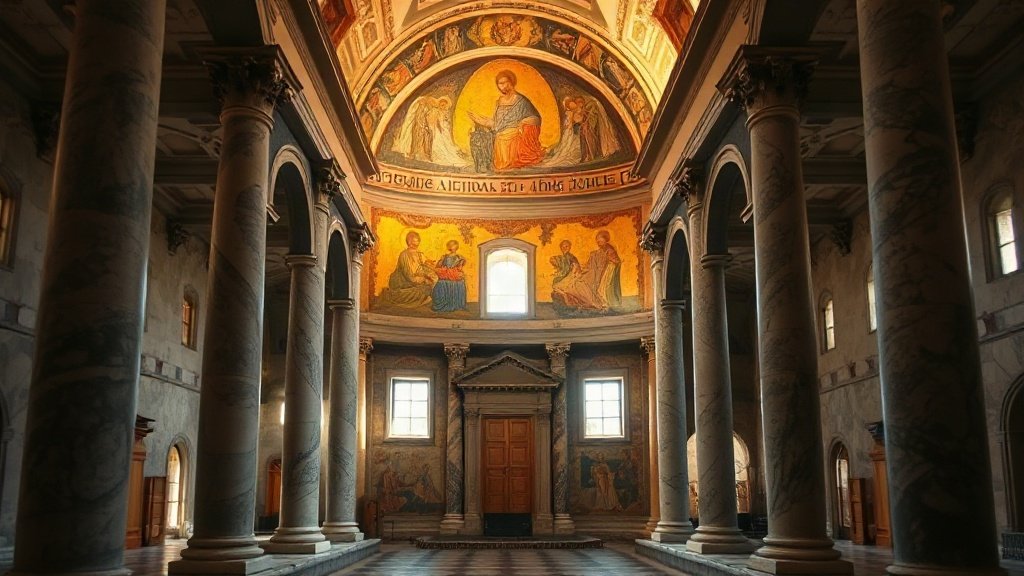
Illustration: AI-generated image
The Euphrasian Basilica in Poreč, Istria, is one of the finest surviving examples of early Byzantine art and architecture in the entire Mediterranean. Built in the 6th century, its golden mosaics and finely carved stonework still captivate visitors more than 1,400 years later. For anyone interested in Croatia's deep cultural roots, this basilica is a must-see.
A UNESCO World Heritage Site
The basilica complex, which includes the church, baptistery, bell tower and episcopal palace, was inscribed on the UNESCO World Heritage List in 1997. It is part of a wider group of early Christian monuments in Poreč, but the basilica's apse mosaics are considered among the most important of their kind in Europe. The site attracts art lovers, historians and pilgrims from around the world.
History in Stone and Light
The basilica stands on the site of earlier Christian buildings dating back to the 4th century. The current church was commissioned by Bishop Euphrasius in the mid-6th century, during the period of Byzantine rule in Istria. Its design follows the typical early Christian basilica plan: a rectangular nave flanked by two side aisles, separated by rows of elegant marble columns. The columns, many of them recycled from older Roman structures, support richly decorated capitals and a wooden roof. The light that filters through the small windows creates a serene, contemplative atmosphere.
The Mosaics: A Golden Glow
The most famous feature of the basilica is the mosaic decoration in the apse. Here, Christ is depicted as a youthful figure, seated on a globe and flanked by the twelve apostles. Below, the Virgin Mary sits enthroned with the Christ Child, surrounded by angels and local saints. Bishop Euphrasius himself appears in the mosaic, holding a model of the church – a rare and precious portrait of a historical figure from this period. The gold background shimmers in the daylight, giving the impression of a heavenly realm. The floor mosaics, geometric and floral patterns created from thousands of tiny coloured stones, are equally impressive.
Visiting the Basilica
The Euphrasian Basilica is located in the heart of Poreč's old town, just a short walk from the waterfront. It is open to visitors throughout the year, though the busiest months are from May to September. While there is no need to book in advance during off-season, summer visitors may encounter queues at peak times. Photography is allowed inside, but flash is discouraged to protect the delicate mosaics. Dress modestly as it remains an active place of worship.
Why It Matters
The basilica is more than a beautiful building; it is a window into a formative period of European history, when Byzantine art and culture spread across the Adriatic. Its mosaics are among the best preserved of their kind, rivalling those in Ravenna, Italy. For anyone exploring Istria, the Euphrasian Basilica offers a profound connection to the region's early Christian heritage and the artistic achievements of the Byzantine Empire.