A Slow Guide to Lonjsko Polje: Croatia's Floodplain Wilderness
Discover one of Europe's largest floodplains, where storks nest on wooden roofs, wild horses graze, and time slows in traditional Posavina villages.
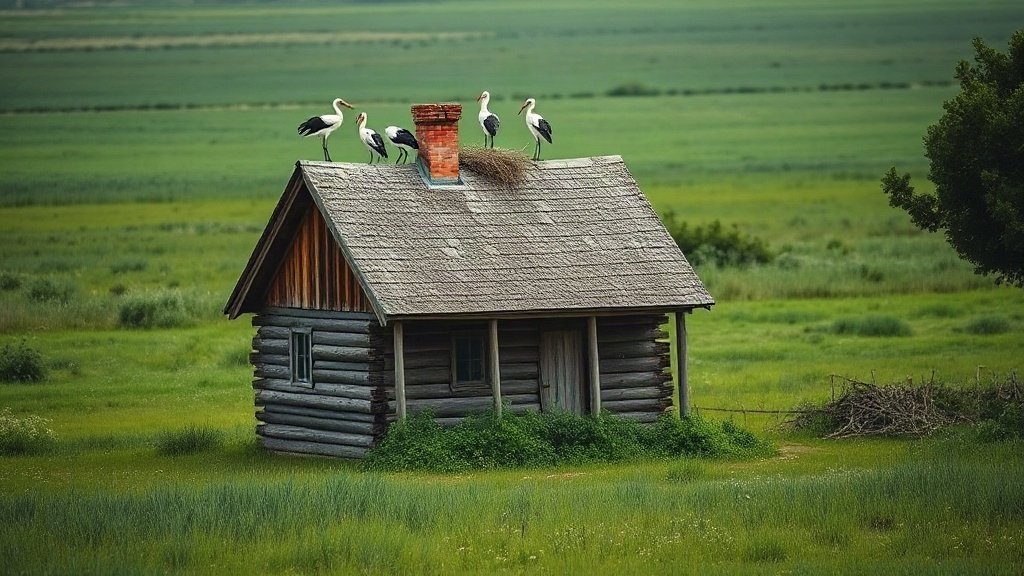
Illustration: AI-generated image
Lonjsko Polje Nature Park protects one of the largest and best-preserved floodplains in Europe. Wedged between the Sava River and the low hills of Moslavina, this quiet corner of central Croatia is a patchwork of wet pastures, oak forests and slow-moving watercourses. It is a place where life follows the rhythm of the river, and where a handful of villages still keep traditions that have vanished elsewhere.
A landscape shaped by water
The Sava River and its tributaries flood the plain each year, leaving behind rich alluvial soil and a mosaic of habitats. In spring and autumn, large areas become shallow lakes and wetlands, attracting thousands of migratory birds. In summer, the water recedes, and the meadows turn into grazing land for hardy livestock. This annual cycle has shaped both the natural environment and the human culture of Posavina, the region along the Sava.
Stork villages and wooden architecture
Two villages are particularly worth seeking out. Čigoč, often called the European Stork Village, is famous for its large population of white storks that build their nests on wooden roofs and telegraph poles. Krapje, a few kilometres away, is a protected village of traditional Posavina houses—elegant two-storey wooden buildings with steep roofs and open galleries. Walking through these quiet streets gives a powerful sense of a way of life that has endured for centuries.
Wildlife and birdwatching
The park is a birdwatcher's paradise. Besides white storks, you may spot spoonbills, herons, egrets and the rare black stork. The floodplain also shelters otters, beavers and the indigenous Posavina horse, a hardy breed that grazes freely on the wet meadows. Observation points and marked trails allow visitors to watch wildlife without disturbing it.
Getting there and getting around
The park is easiest to reach by car from Zagreb. Take the motorway towards Slavonski Brod and exit at Kutina or Novska, then follow signs to Čigoč, Krapje or the park's main visitor centre in Krapje. Public transport is limited: buses run from Zagreb to Kutina or Sisak, but onward connections to the villages are infrequent. Once there, the best way to explore is on foot or by bicycle along the gravel roads and dykes. Boat tours along the Sava are sometimes available, but schedules vary.
When to visit
Spring is the most dramatic season, when the floods return and the storks arrive. Autumn brings golden colours and large flocks of migratory birds. Summer can be hot and dry, but it is a good time for cycling and seeing the horses. Winter is often quiet, though high water can make some areas inaccessible. Always check current conditions before setting out.
Practical tips
- Bring binoculars and a camera with a long lens—the birds are often at a distance.
- Wear waterproof shoes, especially in spring and autumn.
- Mosquito repellent is essential in the warmer months.
- Carry cash; some small shops and stands in the villages may not accept cards.
- Respect private property: many of the wooden houses are still family homes.
- Stop at the park's information centre in Krapje for maps and up-to-date advice on trails and water levels.
Lonjsko Polje is not a place of grand monuments or crowded viewpoints. Its beauty lies in the subtle interplay of water, grass, wood and sky. Allow a full day to explore slowly, and you will come away with a deeper understanding of Croatia's natural and cultural heritage.