A Slow Guide to the Kornati Islands: Croatia's Stone Labyrinth
Discover the rugged beauty of the Kornati archipelago, a national park of 89 islands, islets and reefs where limestone meets the Adriatic.
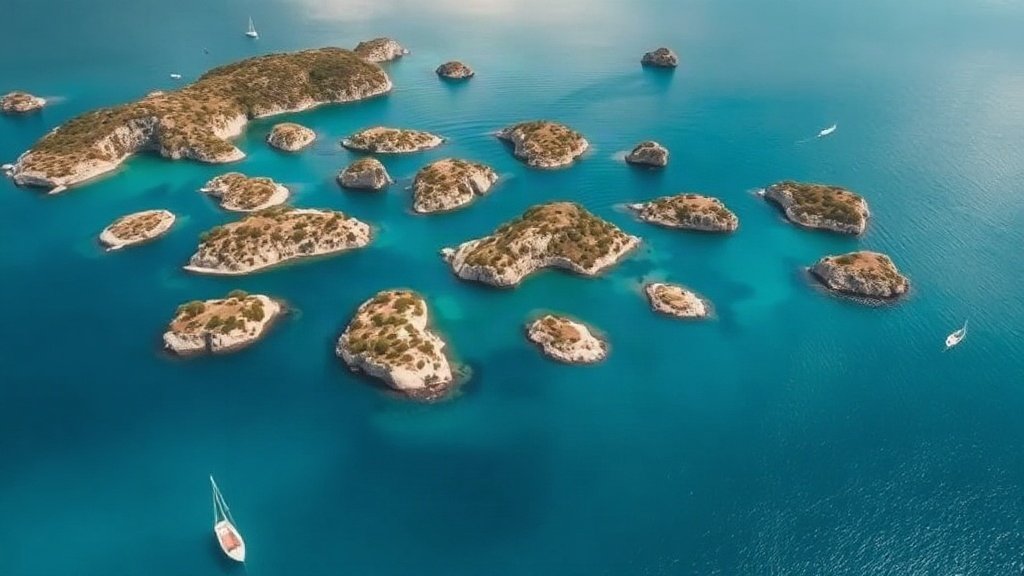
Illustration: AI-generated image
The Kornati Islands are often described as a labyrinth of stone and sea. This archipelago, lying off the Dalmatian coast between Zadar and Šibenik, is the densest in the Mediterranean. Most of it falls within Kornati National Park, a protected area covering roughly 220 square kilometres and comprising 89 islands, islets and reefs. With their stark white limestone, sparse vegetation and crystal-clear waters, the Kornati feel almost otherworldly, a moonscape rising from the Adriatic.
A Maze of Stone and Sea
The islands are largely barren, shaped by centuries of wind and salt. Their western cliffs, known as the crowns, plunge dramatically into the sea, creating some of the most striking coastal scenery in Europe. The highest point is on the island of Kornat, reaching 237 metres. Despite the harsh conditions, the archipelago supports a surprising variety of life, from aromatic herbs like sage and immortelle to seabirds and rich marine ecosystems.
Geology and History
The Kornati's dramatic relief is the result of limestone erosion over millions of years. The islands were once part of the mainland, and rising sea levels after the last ice age created this fragmented seascape. Traces of human presence date back to Illyrian times, and the area has been used for sheep grazing and olive growing for centuries. Today, most of the islands are uninhabited, though a few seasonal stone cottages remain.
What to See and Do
Most visitors come for the water. Swimming and snorkelling in the Kornati is a joy, thanks to exceptional visibility and a wealth of fish, sea urchins and octopus. The lack of sandy beaches means you'll often have a rocky cove to yourself. On land, the Tureta Fortress on Kornat island is a Byzantine-era ruin with sweeping views, and the tiny church of Our Lady of Tarac offers a quiet pause. For hikers, walking trails connect a few of the larger islands, but be prepared for intense sun and no shade.
Planning Your Visit
There is no accommodation on the islands, so day trips are the norm. Regular boat excursions depart from coastal towns like Murter, Zadar and Šibenik, and many visitors arrive on private or chartered sailboats. The season runs from late spring to early autumn; July and August can be scorching, so bring plenty of water, sun protection and sturdy shoes. Since there are no shops or restaurants, pack all food and drinks you'll need. If you're on a sailing holiday, anchoring overnight in one of the many sheltered bays is unforgettable, but be mindful of park rules, which protect the marine environment.
Here is what to bring for a comfortable day trip:
- Plenty of water (at least two litres per person)
- High-factor sunscreen and a hat
- Sturdy shoes for walking on sharp limestone
- Snorkelling gear to enjoy the underwater world
- A light picnic and snacks
- A dry bag to protect electronics from sea spray
With its surreal landscapes and sensation of complete escape, the Kornati Islands are a must for nature lovers and sailors seeking the wild heart of the Adriatic.