A Walking Guide to Zagreb's Upper Town: History, Cafés and Views
Discover the medieval heart of Croatia's capital with this self-guided walk through Gornji Grad, from the noon cannon to hidden courtyards and lively café terraces.
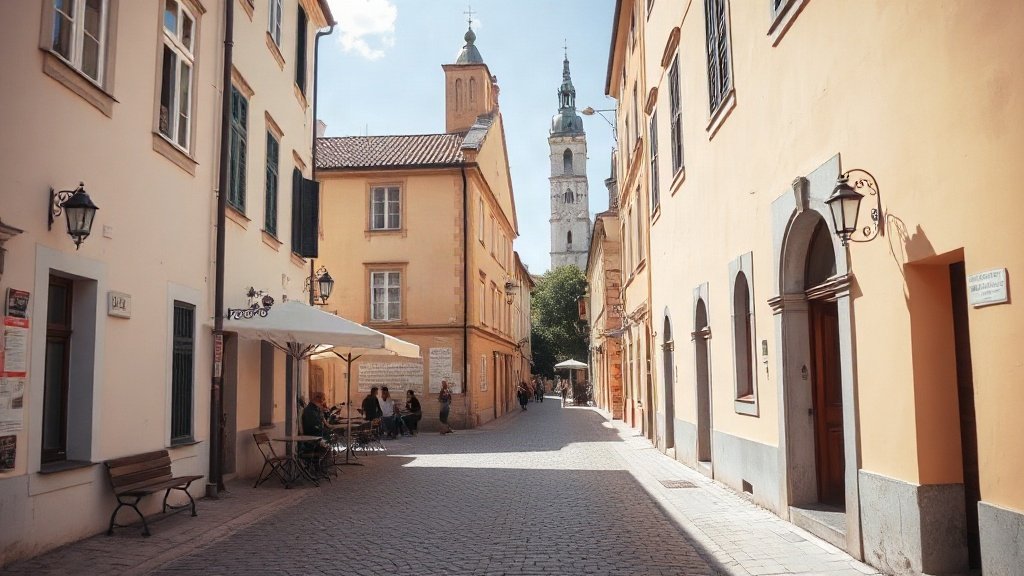
Illustration: AI-generated image
High on a hill above the modern city, Zagreb's Upper Town (Gornji Grad) is the historic and political heart of Croatia's capital. A maze of cobbled lanes, pastel facades and quiet courtyards, it rewards slow exploration. You can cover the main sights in an afternoon, but leave time to sit and soak up the atmosphere—this is a neighbourhood to savour, not rush.
A Walk Through History
Begin at Ban Jelačić Square, the city's main hub, and head west towards the funicular—one of the shortest in the world—or take the winding stairs beside it. At the top, you emerge onto the Gradec Plateau, one of two medieval settlements that merged to form Zagreb in the 19th century. The other, Kaptol, is home to the cathedral and sits on a neighbouring hill.
From the plateau, follow the old town walls east. You'll soon reach Lotrščak Tower, a 13th-century watchtower that still fires a cannon every day at noon. The blast, a tradition dating back to the 19th century, echoes across the city and is a beloved local custom.
Key Sights Not to Miss
The visual highlight of the Upper Town is St. Mark's Church, instantly recognisable by its colourful tiled roof depicting the coats of arms of Zagreb and Croatia. The square around it is flanked by the Croatian Parliament and Government buildings, making it the political centre of the country.
Just a short walk away is the Stone Gate (Kamenita vrata), the only surviving medieval city gate. Inside, a small chapel houses a revered painting of the Virgin Mary, and locals often pause to light a candle or say a prayer as they pass through. The gate opens onto a pedestrian street lined with galleries and craft shops.
Art lovers should visit the Klovićevi Dvori Gallery, which hosts major exhibitions in a former monastery, or the quirky Museum of Broken Relationships, a crowd-pleaser with its collection of mementos from failed romances.
Cafés and Local Life
The Upper Town is not all monuments—it is also a place to experience Zagreb's famous café culture. While the liveliest café street, Tkalčićeva, lies just below the hill, the quieter squares of the Upper Town offer a more relaxed pace. Find a terrace on a cobbled lane and order a coffee the Croatian way: slowly, with no intention of leaving soon.
For a local treat, try a slice of štrukli, a baked pastry filled with cottage cheese, or a traditional kremšnita (custard slice). Many cafés also serve rakija, a fruit brandy, if you need warming up on a cool day.
Practical Tips
Wear comfortable shoes—the cobblestones are charming but uneven. Early morning and late afternoon are the best times to avoid tour groups and catch soft light for photos. The funicular operates frequently and is a fun way to ascend, but the stairs are free and offer a gentle workout.
After exploring the Upper Town, walk down through the Stone Gate towards Tkalčićeva Street and the Dolac Market below, where you can pick up fresh fruit or local cheese. The transition from medieval hilltop to bustling market is one of Zagreb's great urban experiences.