Ajvar: A Guide to Croatia's Beloved Roasted Pepper Relish
A smoky, sweet and tangy condiment made from roasted red peppers, ajvar is a staple in Croatian kitchens. Here's how it's made and enjoyed.
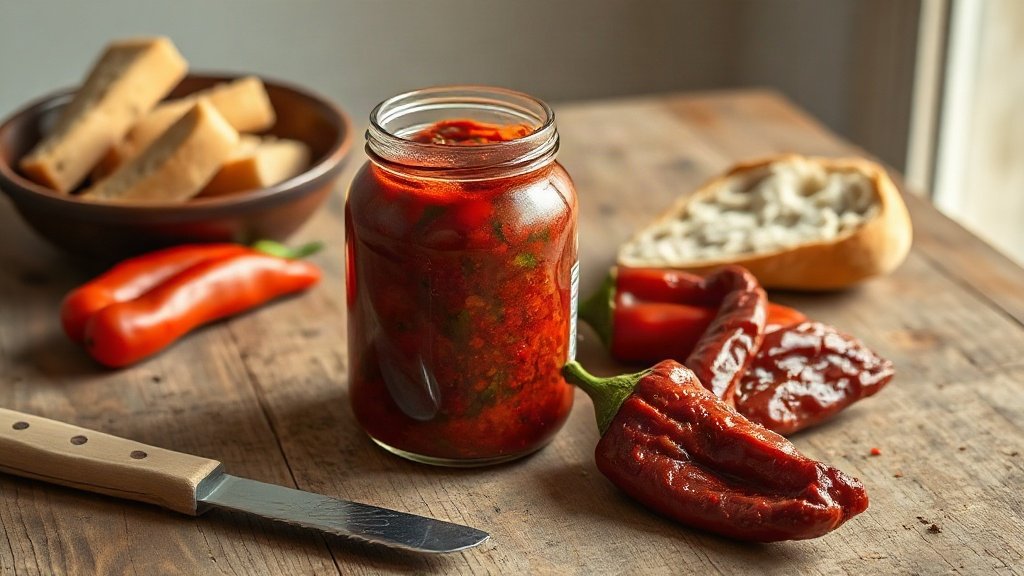
Illustration: AI-generated image
Ajvar is a thick, smoky relish made from roasted red peppers, and it holds a special place in Croatian kitchens. Often prepared in late summer and autumn, when peppers are at their peak, it is a pantry staple that brings a burst of Balkan flavour to the table all year round.
What is Ajvar?
At its core, ajvar is a simple combination of roasted red peppers, often with aubergine, garlic, oil and vinegar. The ingredients are blended into a smooth or slightly textured spread that ranges from mild to fiery, depending on the addition of hot chillies. While its exact origins are debated across the Balkans, it has become a beloved condiment in Croatia, especially in continental regions like Slavonia and Zagorje.
The name comes from the Turkish word havyar, meaning caviar, a nod to its rich, prized status. Traditional ajvar contains no tomatoes, though some modern versions include a small amount for sweetness.
How is Ajvar Made?
Making ajvar is a ritual that often involves the whole family. Red bell peppers, sometimes combined with aubergine, are roasted until the skins blacken and blister. This can be done over an open flame, on a grill, or in a hot oven. Roasting imparts the characteristic smoky depth that defines good ajvar.
Once roasted, the peppers are left to steam, then peeled and deseeded. They are then ground or minced, traditionally by hand with a mincer, and simmered slowly with sunflower oil, garlic, vinegar and salt. The mixture is cooked for several hours, stirred constantly, until it thickens and achieves a rich, jam-like consistency. Some cooks add a few hot peppers for a ljuta (hot) version.
The finished ajvar is poured into sterilised jars while still hot and sealed to preserve it for months. The sight of rows of ruby-red jars cooling on a kitchen counter is a familiar autumn scene in many Croatian homes.
How to Enjoy Ajvar
Ajvar is wonderfully versatile. It is most commonly spread on fresh bread or lepinja, often as part of a traditional meza alongside cheese, cured meats and pickles. It pairs beautifully with grilled meats such as ćevapčići, pljeskavica and roast lamb, adding a sweet-smoky contrast. It also works as a dip for vegetables, a filling for sandwiches, or a flavour booster in stews and sauces.
For a quick appetiser, spread ajvar on slices of crusty bread and top with a little feta or young sheep cheese. Or stir a spoonful into scrambled eggs for a Balkan-inspired breakfast.
Buying and Storing
Commercial ajvar is widely available in Croatian supermarkets, but quality varies. Look for jars where red peppers are listed as the first ingredient, with a high pepper percentage and no artificial additives. Homemade ajvar from local producers or OPG farms is often superior, with a deeper flavour and thicker texture.
Unopened jars can be stored in a cool, dark place for up to a year. Once opened, keep the ajvar refrigerated and use within a couple of weeks. To prevent mould, always use a clean spoon and top the surface with a thin layer of oil after each use.
Whether you make it yourself or buy a jar, ajvar brings a taste of Croatian tradition to any table. Its smoky, sweet and tangy character is a reminder of autumn harvests and the joy of preserving the season's best.