How Vienna Turns Over a Million Tonnes of Waste into Energy Every Year
Four incinerators in the Austrian capital process waste and heat tens of thousands of homes, offering lessons for Croatia as it debates its first such facility.
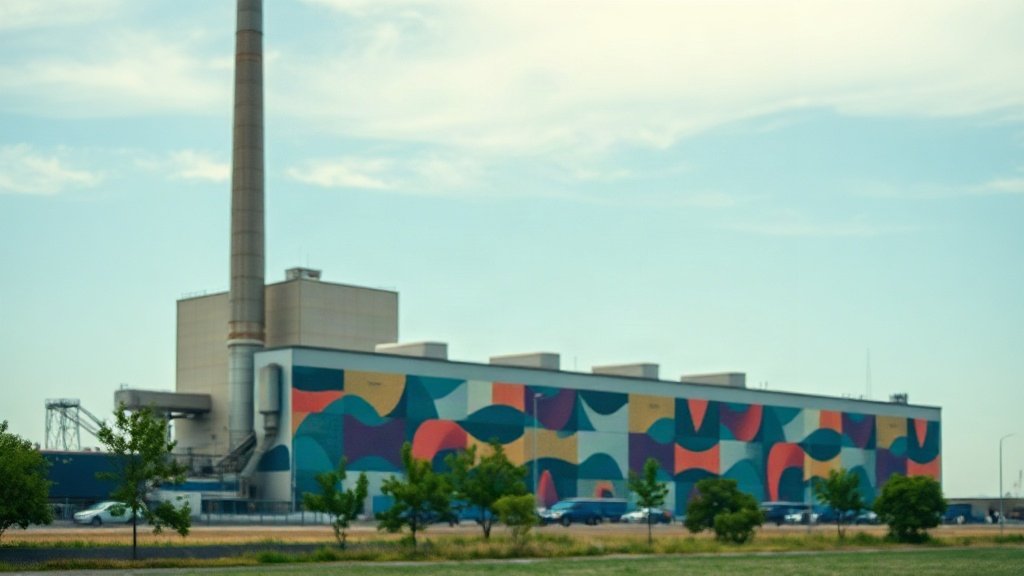
Illustration: AI-generated image
Vienna's four waste incineration plants process more than one million tonnes of municipal, industrial and other waste every year, turning it into electricity and heat for tens of thousands of homes. The Austrian capital's experience is increasingly relevant for Croatia, which remains the only EU member state without a waste-to-energy facility.
According to city utility Wien Energie, the plants – Spittelau, Flötzersteig, Simmeringer Haide and Pfaffenau – together handle over a million tonnes annually, including sewage sludge. The heat produced from burning waste is used to warm water that then feeds the district heating network, supplying homes and public buildings across the city.
Flötzersteig, the oldest, has operated since 1963 and now processes about 200,000 tonnes of municipal waste per year, generating roughly 470,000 megawatt-hours of heat for around 55,000 households. Spittelau, opened in 1971 and rebuilt after a fire in 1987 with a colourful design by Friedensreich Hundertwasser, handles about 280,000 tonnes annually and heats more than 60,000 homes while also producing electricity. Its striking facade has made it a tourist attraction in its own right.
Simmeringer Haide, located in Vienna's 11th district, is a larger complex that also processes industrial, commercial, hazardous and medical waste. Around 100,000 tonnes of municipal waste, 110,000 tonnes of industrial waste and over 225,000 tonnes of sewage sludge are treated there each year using rotary kilns at temperatures of approximately 1,200 degrees Celsius. The plant produces about 450,000 megawatt-hours of heat and 50,000 megawatt-hours of electricity annually.
Pfaffenau, the most modern of the four, opened in 2008 and handles around 250,000 tonnes of municipal waste yearly. It generates approximately 65 gigawatt-hours of electricity and 410 gigawatt-hours of heat, enough for tens of thousands of homes, and features a four-stage flue gas cleaning system to reduce harmful emissions.
Not all residents living near the plants are entirely at ease. Some told N1 they occasionally notice a specific smell depending on wind direction, while others said traffic and car exhaust were a bigger concern. However, personal experiences are not a substitute for systematic monitoring, and experts emphasise the importance of continuous emission controls and transparent communication with neighbours.
The debate is also alive in Croatia. A group of Zagreb city councillors recently visited Vienna to see the system first-hand, while a citizen initiative has opposed a planned incinerator at Rebro. With Croatia still without a single waste-to-energy plant, Vienna's long experience offers valuable lessons – but also raises questions about location, technology and public trust.