Ivanjski krijesovi: A Guide to Croatia’s Midsummer Bonfire Tradition
Every June, hillsides across Croatia light up with bonfires for Ivanjski krijesovi, an ancient celebration of midsummer, fire and community.
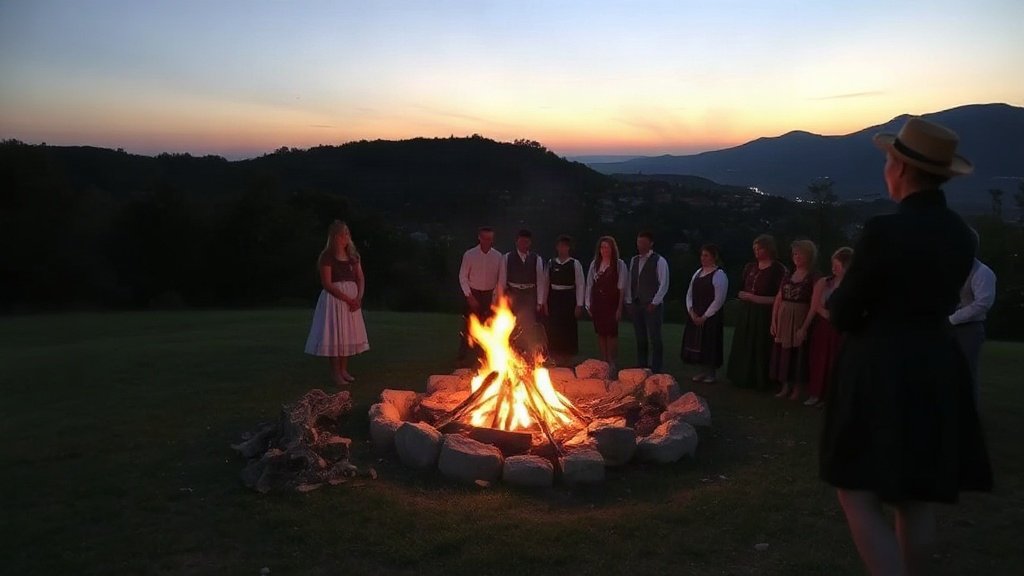
Illustration: AI-generated image
On the shortest night of the year, the hills and fields of Croatia glow with fire. Ivanjski krijesovi — the bonfires of St John's Eve — have blazed on 23 June for centuries, marking midsummer with a tradition that is at once pagan, Christian and deeply local.
Ancient Roots, Modern Celebration
The custom predates Christianity. Long before the Church dedicated the day to St John the Baptist, Slavic and pre-Slavic communities lit fires to honour the sun at its peak and to ward off evil spirits. When Christianity spread, the celebration was absorbed into the eve of the saint whose birth the Gospels place six months before Christ's — a natural fit for a solar festival.
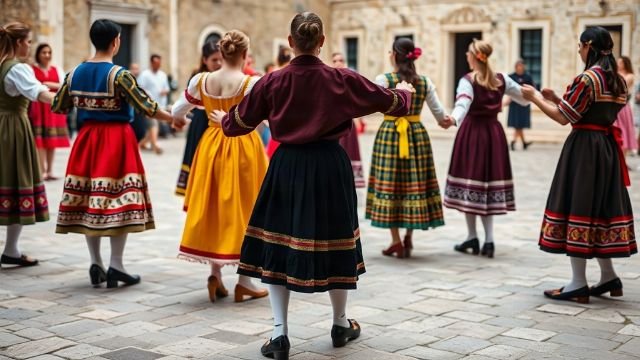
Today, Ivanjski krijesovi remains a living tradition, particularly in rural areas of Zagorje, Slavonia, the Dalmatian hinterland and parts of Istria. Villages compete to build the tallest pyre, often on a hilltop, and the whole community gathers after sunset to sing, dance and share food and drink.
Where to Experience It
The bonfires are not a single organised event but a widespread folk custom. In many small towns and villages, local cultural societies (kulturno-umetnička društva) organise public celebrations with traditional music and costume. The region of Zagorje, north of Zagreb, is especially known for its elaborate bonfire ceremonies, which sometimes include the crowning of a 'kralj ivanjski' (St John's king). Along the coast, fires are often lit on beaches or headlands, with people jumping over the flames into the sea.
What to Expect
At its heart, the evening is about fire as a symbol of purification and renewal. The bravest young men and women leap over the embers — a custom believed to bring luck, health and fertility. Traditional songs, many of them with pre-Christian themes of nature and love, are sung around the fire. In some places, flowers and herbs gathered on St John's Eve are thrown into the flames, their smoke said to protect the household for the year ahead.
Practical Tips
If you are in Croatia on 23 June, ask locally where the nearest bonfire will be held; these events are rarely advertised in tourist brochures but are widely known among residents. Wear comfortable shoes suitable for uneven ground, and be prepared for a late night — the fires often burn until well after midnight. While the atmosphere is welcoming, remember that jumping over flames is best left to those with experience; watching from a safe distance is perfectly acceptable.
Above all, Ivanjski krijesovi offers a rare glimpse into a Croatia that exists beyond the coastal resorts: a land of villages, customs and a deep connection to the turning seasons.