Krafne: A Guide to Croatia's Beloved Jam-Filled Doughnuts
Discover the sweet, airy doughnuts known as krafne, a staple of Croatian bakeries and a highlight of Carnival season.
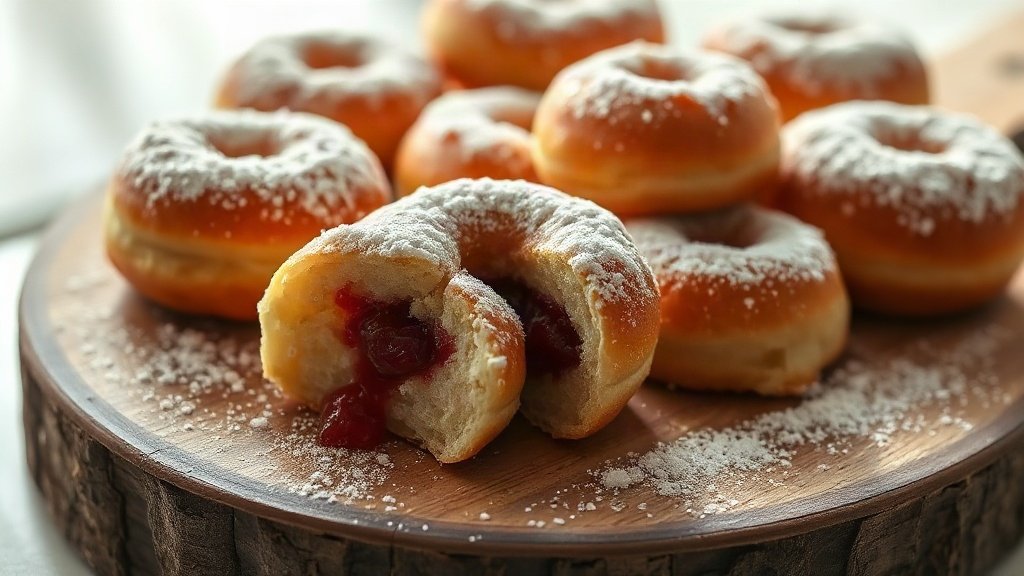
Illustration: AI-generated image
Krafne are among the most beloved sweet treats in Croatia. These soft, yeast-raised doughnuts are deep-fried until golden, then filled with jam, chocolate, or vanilla cream, and often dusted with icing sugar. They are a staple of Croatian bakeries and a highlight of the Carnival season, but you can find them all year round.
What are krafne?
Krafne are made from a rich, yeasted dough that includes eggs, butter, and sometimes a splash of rum or lemon zest for extra flavour. After the dough has risen, it is rolled out and cut into rounds. The rounds are left to rise again before being fried in hot oil until puffed and golden brown. Once cool, the doughnuts are filled with a sweet filling using a piping bag or a special syringe. The most traditional filling is apricot jam, but plum jam, chocolate, and vanilla custard are also common. A final dusting of icing sugar is the classic finish.
The result is a light, airy pastry with a tender crumb and a burst of sweet filling. Krafne are similar to Berliner doughnuts or jam doughnuts found elsewhere in Europe, but Croatian versions often have a slightly less sweet dough, letting the filling shine.
Krafne have a long history in Croatia, brought to the region during the Austro-Hungarian period. They quickly became a fixture of local bakeries and home kitchens, particularly in the continental parts of the country. Today, they are as much a part of Croatia's culinary identity as any coastal seafood dish.
Variations across Croatia
While the basic recipe is consistent, you will find regional differences. In Zagreb and the northern regions, krafne are typically round and generously filled. Along the coast, they may be slightly smaller and sometimes baked instead of fried, though frying remains the traditional method. Some bakeries offer creative fillings such as pistachio cream or local fruit jams made from sour cherries or rosehip. During Carnival, especially in the days before Ash Wednesday, families and bakeries produce large quantities of krafne, as they are a symbol of indulgence before the Lenten fast.
It is worth noting that krafne are different from fritule, another popular Croatian fried dough. Fritule are small, round, and often contain raisins and a splash of rakija; they are not typically filled. Krafne are larger, with a substantial filling.
How to enjoy krafne
The best way to enjoy a krafna is fresh, ideally still slightly warm from the bakery. Pair it with a cup of strong Croatian coffee or a glass of cold milk. Many people buy them as a mid-morning snack or an afternoon treat with friends. If you are visiting Croatia, look for them in any local bakery (pekara) or at outdoor markets, especially during the winter and early spring months when Carnival celebrations are in full swing.
For home cooks, making krafne from scratch is a rewarding project, though it requires patience for the dough to rise. There are countless family recipes, but the key is to use good-quality jam and to fry at a steady temperature so the doughnuts cook evenly without absorbing too much oil.
Krafne are a simple pleasure that speaks to Croatia's Central European heritage and its love of honest, comforting food. Whether you enjoy them during Carnival or on an ordinary Tuesday, they are sure to satisfy any sweet tooth.