Port of Ploče: A Strategic Gateway for Adriatic Trade
Discover why the Port of Ploče is becoming an increasingly attractive option for importers and exporters in Croatia and beyond.
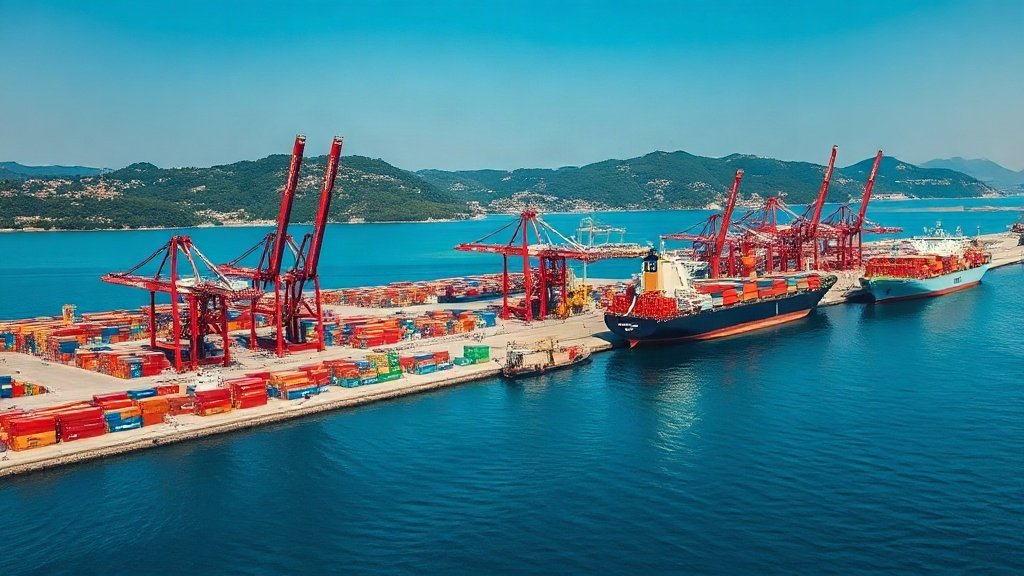
Illustration: AI-generated image
The Port of Ploče, situated in southern Dalmatia at the mouth of the Neretva River, is Croatia's second largest cargo port and a vital link in the region's transport network. For businesses involved in import, export or logistics, understanding what this port offers can open up efficient and cost-effective routes to Central and Southeast Europe.
Location and connectivity
Ploče enjoys a strategic position on the Adriatic coast, roughly halfway between Split and Dubrovnik. The port is directly connected to the A1 motorway, providing straightforward road access to the rest of Croatia and neighbouring countries. More importantly, it is the terminus of a railway line that runs northwards through Bosnia and Herzegovina towards the Pan-European Corridor Vc, linking the Adriatic with Budapest and beyond. This multimodal setup means goods can arrive by sea and continue their journey by rail or truck without excessive handling.
Facilities and cargo types
The port handles a diverse range of cargo, including dry bulk such as coal, ore and fertilisers, as well as general cargo, containers and liquid bulk. Its deep-water berths can accommodate large ocean-going vessels, while specialised terminals for bulk and containerised freight allow for efficient loading and unloading. Ro-Ro (roll-on/roll-off) services also operate, supporting the movement of vehicles and wheeled cargo. The port's ongoing development has focused on expanding container capacity and modernising equipment to meet growing demand.
Why choose Ploče for your business
For importers and exporters, Ploče offers several practical advantages. Its location reduces transit times for goods destined for Bosnia and Herzegovina, Serbia, Hungary and other landlocked markets, often cutting hundreds of kilometres compared to northern Adriatic ports. The port's free zone status—subject to current regulations—can provide tax and customs benefits for certain operations, such as storage, processing or re-export. Additionally, lower congestion compared to larger ports can translate into faster turnaround and fewer delays, which is especially valuable for time-sensitive shipments.
Practical considerations
Before routing cargo through Ploče, businesses should familiarise themselves with local customs procedures and any specific requirements for their goods. Working with a reliable freight forwarder or shipping agent experienced in the port's operations is advisable. It is also worth checking current rail and road connections, as infrastructure improvements continue. While the port is not the largest in the Adriatic, its strategic location and focus on regional trade make it a compelling option for companies looking to optimise their supply chains.