A Guide to Ganga: Croatia's Raw Polyphonic Singing from the Dalmatian Hinterland
Ganga is a powerful, dissonant style of group singing rooted in the rocky villages of Dalmatia's hinterland and western Herzegovina. Here's what makes it unique and where you can still hear it.
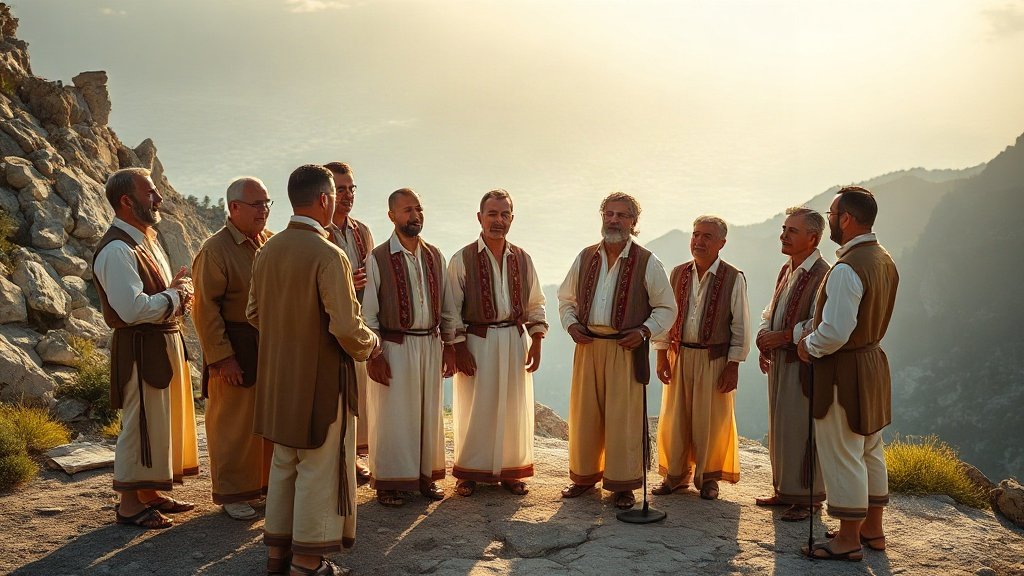
Illustration: AI-generated image
In the sun-baked villages of Dalmatia's rugged interior, a sound rises that seems carved from the limestone itself. Ganga is a form of traditional group singing known for its forceful delivery, close harmonies and a piercing, almost dissonant edge. For generations it has been the musical soul of the region known as Dalmatinska Zagora and the neighbouring Croatian communities of western Herzegovina.
What exactly is ganga?
Ganga is a polyphonic vocal tradition performed by a small group of singers, usually men but sometimes women. One lead singer begins a phrase, often improvised, while the others join in with a sustained chord or a repeated refrain. The result is a dense, vibrating texture that can sound harsh to unfamiliar ears but is deeply expressive to those who grew up with it.
The word 'ganga' itself is thought to derive from an old term for 'echo' or 'resonance', which perfectly captures the way the voices bounce off stone walls and hillsides. The singing is unaccompanied, relying entirely on the power of the human voice and the natural acoustics of the open air.
How is ganga performed?
There is no written score for ganga. Singers learn by listening and joining in from childhood. A typical performance might begin with one voice stating a lyrical line about love, work, or village life, followed by the group responding in a tight, often dissonant chord that holds until the leader continues. The effect is call-and-response, but with a constant tension that keeps the music feeling alive.
The leading role requires not only a strong voice but also a quick wit, as lyrics are frequently improvised to comment on current events or tease friends. In many villages, ganga sessions are a social event, taking place in the evening outside the local konoba or in the main square.
Where can you hear ganga today?
Ganga remains alive in its home region, particularly around towns like Imotski, Vrgorac, Sinj and the wider Dalmatian hinterland. It is performed at festivals, weddings, and informal gatherings. The annual Festival of Ganga in the village of Zmijavci, near Imotski, draws groups from across the region and offers a chance to hear the tradition at its most vibrant.
For visitors, the best way to experience ganga is to travel through the smaller villages of Zagora, especially in late summer when many local festivities take place. Even a brief encounter with this raw, ancient sound can leave a lasting impression of Croatia's untamed musical heritage.
Why does ganga matter?
Ganga is more than just music; it is a vessel for local identity. In a region that has seen significant emigration, the songs carry memories of a hard but proud way of life. They speak of rocky fields, olive groves, and the bonds of family and community. While younger generations may not sing as often as their grandparents did, efforts by cultural associations and the festival tradition keep the practice alive.
For travellers seeking authentic experiences far from the coastal crowds, listening to ganga is a window into a Croatia that is raw, resilient and deeply rooted in its landscape.