A Guide to the Ljelje Procession from Gorjani: Croatia's Spring Queens' Ritual
Every spring, the village of Gorjani in Slavonia comes alive with a unique ritual: a procession of girls in colourful costumes, carrying sabres and singing as they visit each household. Discover the history and meaning of the Ljelje, a tradition recognised by UNESCO.
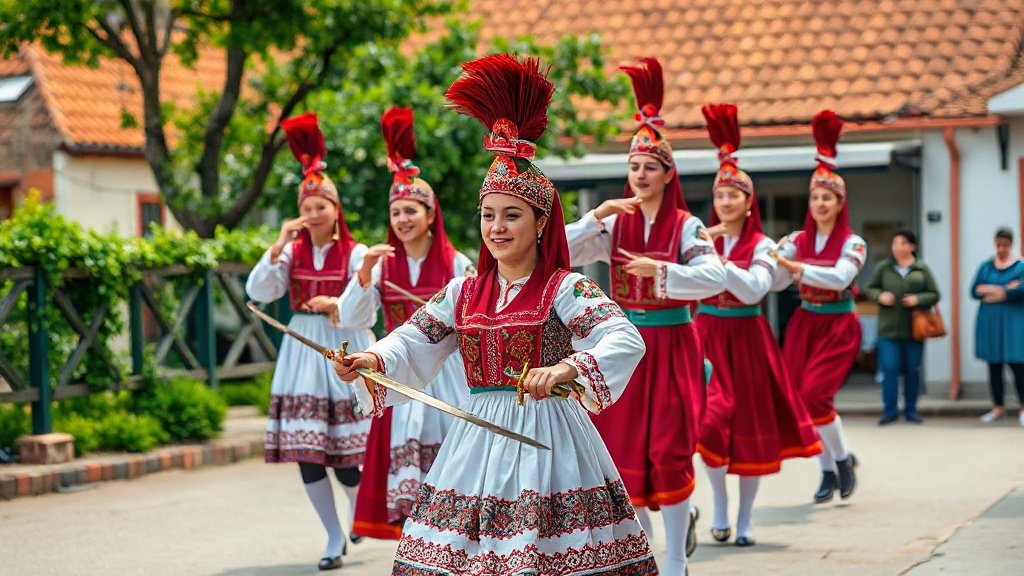
Illustration: AI-generated image
In the flatlands of Slavonia, the small village of Gorjani hosts one of Croatia's most captivating spring traditions. Known as the Ljelje (or Kraljice), this procession of girls in ornate costumes has been performed for centuries and was inscribed on UNESCO's Representative List of the Intangible Cultural Heritage of Humanity in 2009. Here's what you need to know about this living piece of Croatian folklore.
What are the Ljelje?
The Ljelje are a group of young women from Gorjani who take part in a ritual procession each year on the Feast of Pentecost. The name "ljelje" is thought to derive from the word for a leafy branch or a type of plant, which the participants once carried. Today, the central element is a dance with sabres, performed by the girls as they move from house to house. The tradition is also known as Kraljice, meaning "queens," reflecting the regal appearance of the participants.
The Ritual Procession
On the morning of Pentecost, the Ljelje gather in traditional folk costumes. Their outfits are richly embroidered, and they wear tall, elaborate headdresses that add to their commanding presence. The group typically consists of about ten girls, who are accompanied by male musicians playing instruments such as the tamburitza or bagpipes. The procession moves through the village, stopping at each household. At every home, the girls perform a song and a sword dance, their sabres clashing in rhythm. The ritual is believed to bring good fortune, fertility, and protection to the household. In return, the residents offer food, drink, or small gifts.
A Living Tradition with Deep Roots
The origins of the Ljelje are uncertain, but the tradition is thought to be very old, possibly linked to pre-Christian spring rites. Over time, it became associated with the Christian feast of Pentecost, which falls in late spring. Despite modernization, the people of Gorjani have kept the custom alive, passing it down through generations. In 2009, UNESCO recognized the procession as an example of intangible cultural heritage, noting its role in community identity and the transmission of traditional skills.
Where to Experience the Ljelje
The procession takes place annually in Gorjani, a village in Osijek-Baranja County in eastern Croatia. It happens every year on Pentecost Sunday, which usually falls in May or June. Visitors are welcome to observe the procession, but it is a living community event rather than a staged performance. To fully appreciate the tradition, it's worth learning about the symbolism of the costumes, songs, and dance beforehand. While the event is the main focus, the surrounding Slavonian countryside offers additional cultural and culinary experiences.
The Ljelje procession from Gorjani is more than just a folk spectacle; it is a vital link to Croatia's rural heritage. For travellers interested in authentic traditions, witnessing this springtime ritual is a memorable and meaningful way to connect with local culture.