A Guide to the Zagreb Funicular: Croatia's Historic Shortcut
Discover the story behind Zagreb's charming funicular, one of the shortest in the world, linking the city's Upper and Lower Towns.
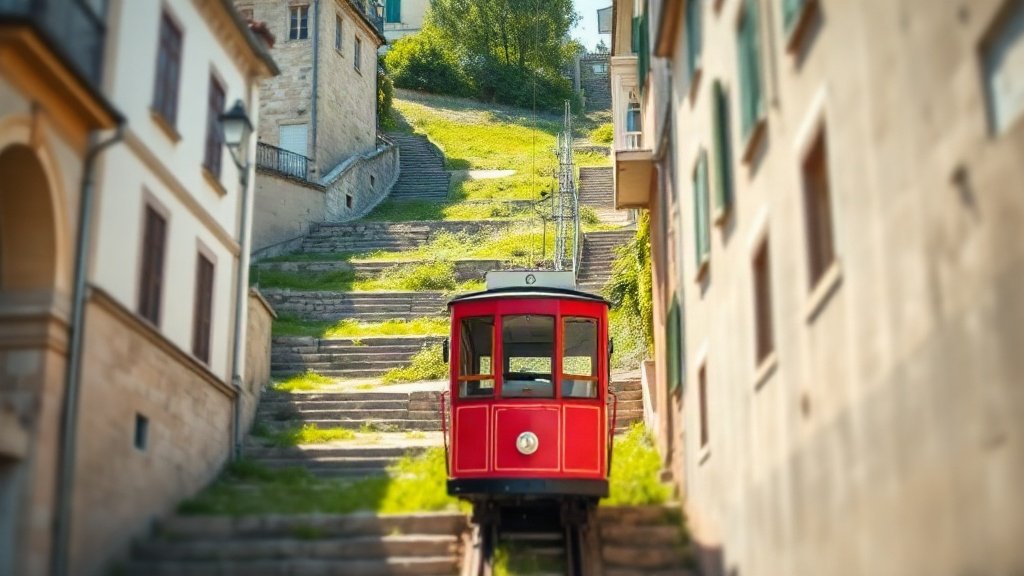
Illustration: AI-generated image
Tucked between Zagreb's Lower and Upper Towns, the funicular is a beloved symbol of the city. Opened in 1890 as a steam-powered railway, it was electrified in 1934 and remains one of the world's shortest public-transport funiculars, with a track length of just 66 metres. The ride takes about a minute, but it saves a steep climb up the historic Grič hill.
The funicular connects Tomićeva Street in the Lower Town with Strossmayerovo šetalište in the Upper Town, home to landmarks like St. Mark's Church, the Croatian Parliament, and the Lotrščak Tower. For locals and visitors alike, it is a practical link and a nostalgic journey through Zagreb's past. The wooden carriages, painted in the city's blue and white colours, have been carefully maintained to preserve their original charm.
Beyond its function, the funicular holds cultural significance as a protected monument of industrial heritage. It embodies Zagreb's late 19th-century modernisation and its unique geography, where the medieval Gradec and Kaptol settlements grew on hills above the Sava floodplain. Today, it is one of the city's most photographed spots, especially during the Advent season when the Upper Town glows with festive lights.
Whether you ride it for the view, the history, or the simple joy of a short, steep ascent, the Zagreb funicular offers a memorable slice of Croatian urban culture.