A Slow Guide to Trogir: A UNESCO Town on a Tiny Island
Compact, car-free and packed with Venetian architecture, Trogir is one of the most elegant historic towns on the Dalmatian coast. Here’s how to make the most of a slow day or two.
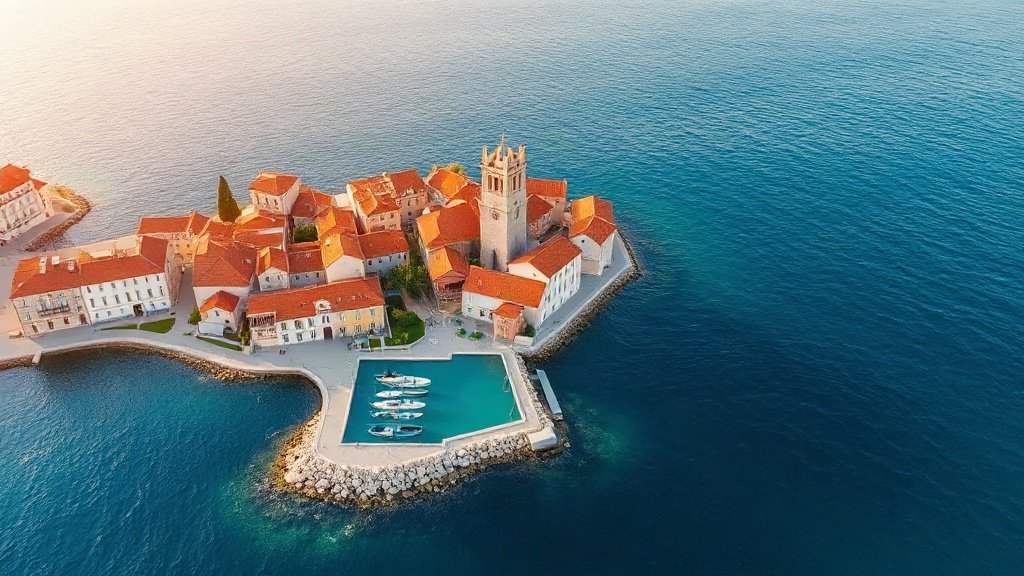
Illustration: AI-generated image
Set on a small island squeezed between the mainland and the larger island of Čiovo, Trogir feels like a miniature Venice. Its old town is a dense web of stone lanes, hidden courtyards and Romanesque churches, all protected as a UNESCO World Heritage Site since 1997. And because the historic core is completely car-free, every corner invites you to wander slowly.
Getting to Trogir
Trogir sits just 25 kilometres west of Split, and Split Airport is only about 6 kilometres away. Regular local buses link Trogir with Split’s main bus station, and the journey takes around 30–40 minutes. If you are driving, park outside the old town—there are public car parks on the mainland side—and cross the short bridge on foot. From the Split waterfront, you can also arrive by boat in summer when seasonal passenger ferries run to Trogir’s palm-lined Riva.
What to See
Everything worth seeing is within a five-minute walk. Start at the main square, Trg Ivana Pavla II, where the Cathedral of St. Lawrence dominates. Its west portal, carved by Master Radovan in 1240, is one of the finest examples of Romanesque sculpture in the region. You can climb the bell tower for a view over the red rooftops, but do note the narrow stone steps.
Nearby, the 15th-century Kamerlengo Fortress rises at the western tip of the island. A walk along its ramparts gives a sweeping panorama of the channel and the hills beyond. The town’s other fortress, St. Mark’s Tower, sits on the northern edge. Back in the centre, the loggia and clock tower, the Cipiko Palace and the Church of St. Peter add to the architectural mix. Don’t miss the south gate, which was once the main sea entrance, now decorated with a small statue of the town’s patron saint.
Strolling and Eating
The best way to experience Trogir is to get lost in its side streets. Away from the waterfront, the alleys are quiet even in high summer, with washing strung between stone houses and cats dozing on doorsteps. The Riva promenade, lined with cafés and palm trees, is perfect for a coffee or a glass of local wine while watching the yachts come and go.
For food, family-run konobas serve Dalmatian staples like grilled fish, octopus salad and peka. Many have small terraces tucked into courtyards. Trogir is also known for its soparnik, a traditional chard-filled pie, though it is more common at village festivals than on restaurant menus.
Beaches and Day Trips
If you want a swim, cross the bridge to Čiovo. The island’s western side has several pebble and concrete beaches with clear water, and the Okrug Gornji area is popular with locals. From Trogir’s harbour, boats run to the nearby Drvenik islands in summer, offering quieter coves and sandy stretches.
When to Go
Spring and early autumn are ideal, with warm weather and fewer visitors. In July and August the old town fills up quickly, especially when cruise ships call. Winter brings a sleepy atmosphere, though most sights remain open and you may have the narrow streets almost to yourself.