A Slow Guide to Zadar: Sea Organ, Roman Ruins and Adriatic Sunsets
Zadar blends ancient history with modern art, from its Roman forum to the mesmerising Sea Organ and Greeting to the Sun.
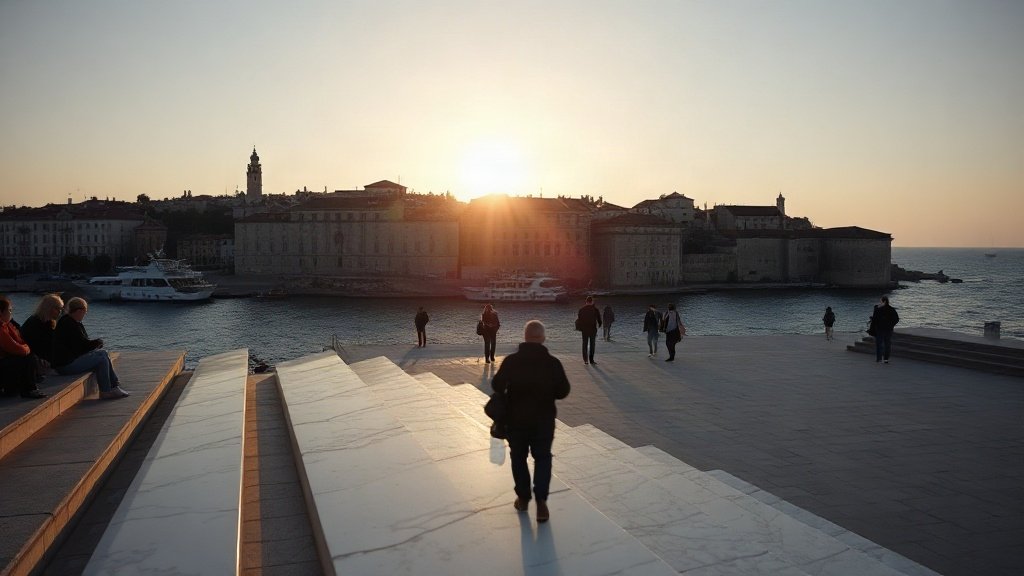
Illustration: AI-generated image
Zadar is a city that rewards slow exploration. Set on a peninsula along Croatia's northern Dalmatian coast, it layers Roman ruins, medieval churches and contemporary art installations against a backdrop of island-dotted sea. The historic core is compact and walkable, with marble streets that open onto sunlit piazzas and a waterfront where locals and visitors gather each evening to watch the sun slip into the Adriatic.
The Sea Organ and Greeting to the Sun
Zadar's most famous attractions sit side by side on the western tip of the peninsula. The Sea Organ (Morske orgulje) is a set of underwater pipes built into the promenade steps. As waves push air through the tubes, the structure produces a series of harmonic, almost otherworldly notes. The sound changes with the sea's mood: calm days bring gentle chords, while rougher weather creates a more insistent melody. It is best enjoyed at sunset, when the sky turns pink and orange.
Next to the Sea Organ is the Greeting to the Sun (Pozdrav Suncu), a large circular installation of solar panels and glass. It absorbs sunlight during the day and transforms it into a colourful light show after dark. Children often run across it, and couples pause for photos as the colours shift beneath their feet.
Roman and medieval heritage
Zadar's old town sits on the grid of a Roman city. The Forum, laid out between the 1st century BC and the 3rd century AD, is now an open square where the original paving stones peek through. Fragments of columns and the base of a temple stand among café terraces, giving the square an informal, lived-in feel. The 9th-century Church of St Donatus, a round pre-Romanesque building, rises beside the Forum and is one of the city's symbols, though its interior is mostly empty.
Nearby, the Cathedral of St Anastasia dominates the skyline. Its Romanesque façade and rose window date from the 12th and 13th centuries, and the bell tower offers sweeping views over red rooftops and the sea. Walk the narrow streets around the cathedral to find hidden courtyards, stone coats of arms and quiet chapels.
Island day trips
Zadar is a natural base for exploring the Zadar archipelago. Regular ferries and excursion boats connect the city with islands such as Ugljan, known for its olive groves and pine-shaded coves, and Dugi Otok, home to the striking Telašćica Nature Park and the white cliffs of the Kornati National Park's edge. Even a short boat ride brings a sense of escape, with swimming spots and village konobas (taverns) within easy reach.
Practical tips
The old town is mostly pedestrianised, so bring comfortable shoes. The waterfront promenade stretches for several kilometres and is ideal for an evening stroll. Zadar's climate is Mediterranean, with hot, dry summers and mild winters, making spring and early autumn particularly pleasant for exploring. The city is well connected by bus to other Dalmatian towns, and its airport serves many European destinations. While Zadar can be busy in July and August, its attractions remain open year-round, and the Sea Organ plays in every season.
Whether you come for the music of the waves, the layers of history, or simply to sit with a coffee and watch the ferries glide by, Zadar offers a slower, more contemplative side of the Croatian coast.