A Walker's Guide to Plitvice Lakes: Routes, Seasons and Smart Planning
Plitvice Lakes National Park is one of Croatia's best-known natural wonders. Here is how to approach the lakes, choose a route and make the most of each season.
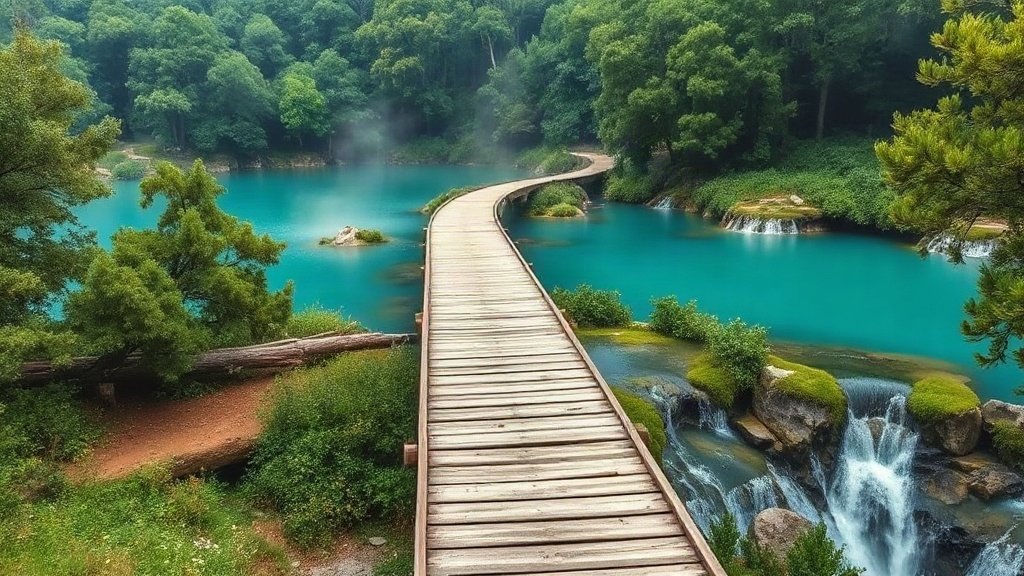
Illustration: AI-generated image
Few places in Croatia look as unreal as Plitvice Lakes National Park. Sixteen terraced lakes, linked by waterfalls and wooden boardwalks, sit in forested hills in the Lika region, roughly midway between Zagreb and the Dalmatian coast. The park is a UNESCO World Heritage Site, and it rewards a little planning.
How the park is laid out
The lakes are divided into the Upper Lakes and the Lower Lakes. The Upper Lakes sit in a dolomite valley and are larger, with gentle boardwalks and many small cascades. The Lower Lakes lie in a narrower limestone canyon and feel more dramatic, with steeper paths and a few caves.
The park's most famous waterfall, Veliki Slap, drops into the canyon near the lower end of the lake system. Most visitors want to see it, so it is a good anchor for planning your day.
Choosing a route
The park has several marked walking routes of varying length, and they combine walking with an electric boat across the largest lake, Kozjak, and a panoramic shuttle. Shorter routes suit families and anyone with limited time. Longer ones cover both the upper and lower sections and need a good part of the day.
- Short visit: pick a route focused on the lower lakes and the big waterfall.
- Half a day or more: choose a route that crosses Kozjak by boat and takes in both sets of lakes.
- Full day: a longer loop lets you stop often and explore quieter paths.
Check the park's official information before you go, as routes and transport options can change.
What each season offers
Spring brings full waterfalls from rain and melting snow, with fresh green forest around the lakes.
Summer is the busiest season. Early mornings and late afternoons are calmer, and you will want sun protection and water.
Autumn turns the beech forest gold and red, and the crowds thin. It is a favourite with photographers.
Winter can be magical, with ice and snow on the boardwalks, though some paths can be slippery and cold weather may limit parts of the park.
Practical tips
- Wear shoes with good grip. Boardwalks are often wet.
- Bring layers. The park sits at altitude and is cooler than the coast.
- Swimming in the lakes is not allowed, as the fragile travertine formations need protecting.
- Allow plenty of time for photos. You will stop more often than you expect.
- Consider staying nearby the night before so you can start early.
Why it looks the way it does
The lakes are formed by travertine barriers, natural dams built up over thousands of years as moss, algae and bacteria help minerals settle out of the water. The process is slow and still ongoing, which is why staying on the paths matters. The water's colour shifts between turquoise, green and blue depending on minerals, light and season.
Go early, pick your route in advance and leave time to simply stand and watch the water. That is the best way to see Plitvice.