How to Store Firewood Properly in Croatia: A Practical Guide
Learn how to season, stack and protect your firewood so it burns efficiently through the Croatian winter, whether you use a wood stove, fireplace or central heating boiler.
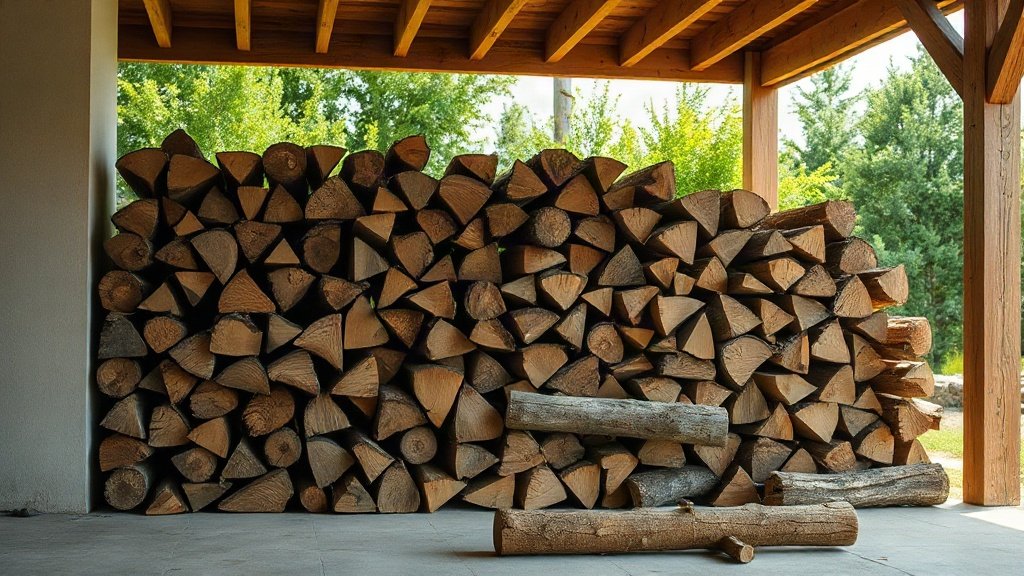
Illustration: AI-generated image
For many households in Croatia, especially in rural areas and older stone houses, firewood remains a primary source of heating. Whether you rely on a wood-burning stove, an open fireplace or a central heating boiler, the way you store your firewood has a direct impact on how well it burns, how much heat you get and how much smoke your chimney produces. Proper storage also saves you money, because dry wood produces noticeably more heat than damp wood.
Choose the right wood
Not all firewood is equal. In Croatia, the most commonly used types are oak, beech and hornbeam. These hardwoods are dense and burn slowly, producing long-lasting heat. Softwoods like pine or spruce ignite easily but burn quickly and can cause a build-up of creosote in the chimney. If you have a choice, opt for hardwood for your main fuel; use softwood only as kindling.
Always buy wood that has been cut to the correct length for your stove or fireplace. Most appliances in Croatia are designed for logs between 25 and 33 cm long. If the logs are too long, they will not fit properly and may cause safety issues.
Season the wood before burning
Freshly cut wood contains a lot of moisture – sometimes more than 50% of its weight. Burning green wood is inefficient: much of the energy goes into evaporating water rather than producing heat, and it creates excessive smoke and tar. Seasoning is simply the process of letting the wood dry naturally over time.
Wood should be split soon after cutting, as split wood dries much faster than whole rounds. Stack it loosely in a place with good air circulation. In Croatia's Mediterranean climate, wood can season in as little as six to nine months if stored correctly during the warm, dry summer. In continental areas with higher humidity, allow at least a year. A simple way to check if wood is ready is to knock two logs together: dry wood makes a sharp, hollow sound, while wet wood sounds dull.
Stack it the right way
Good stacking is about maximising airflow. The classic method is to create a criss-cross pattern at the ends of the pile to stabilise it, then stack the logs in neat rows. Leave small gaps between the logs rather than packing them tightly. Elevate the pile off the ground using pallets, bricks or purpose-made racks. This prevents moisture from being drawn up from the soil and keeps the bottom layer dry.
If you have space, build a few smaller stacks rather than one huge pile. This allows air to move through each stack more easily and makes it easier to rotate your wood – always use the oldest, driest wood first.
Protect from rain and snow
Wood needs to stay dry, but it also needs ventilation. The best solution is a dedicated woodshed with a roof and open or slatted sides. If you don't have a shed, cover the top of the stack with a tarpaulin or waterproof membrane, but leave the sides exposed. Never wrap the entire pile in plastic, as this traps moisture and encourages rot and mould.
In coastal areas, be aware of the salty sea air. Salt can settle on wood and cause corrosion in your stove. A simple roof over the stack will help, and storing wood a little further from the sea is even better. In areas affected by the strong bura wind, make sure your stack is stable and the cover is well secured.
Practical tips for smaller spaces
If you live in an apartment with a small fireplace, you may not have room to store a winter's worth of wood outdoors. In that case, consider buying smaller quantities more often from a local supplier. Many people keep a day or two's worth of wood in a basket near the fireplace and store the rest on a balcony or in a basement storage unit, as long as it is dry and well ventilated.
Remember that wood stored indoors for too long can bring insects or spiders into your home. Bring in only what you plan to burn within a few days.
With a little planning, your firewood will be dry, well-seasoned and ready to keep you warm through the coldest Croatian nights.