Licitar: A Guide to Croatia's Traditional Gingerbread Hearts
Learn the story behind licitar, Croatia's famous heart-shaped gingerbread, and how these decorative biscuits became a beloved expression of affection.
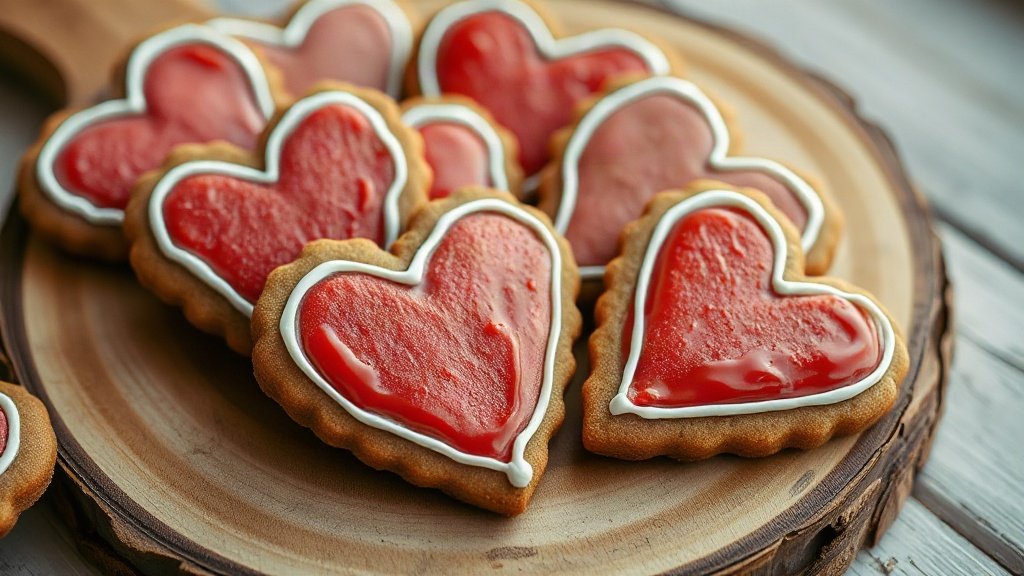
Illustration: AI-generated image
Walk through any souvenir market in Zagreb or the towns of Hrvatsko zagorje and you will see them: bright red hearts, sometimes round, sometimes shaped like birds or horses, decorated with white icing and a tiny mirror. These are licitar, Croatia’s traditional gingerbread biscuits that double as tokens of affection and works of folk art.
What is licitar?
Licitar is a decorative biscuit made from a simple honey dough. Despite the common translation as “gingerbread”, it often contains little or no ginger; the dough is based on flour, water, sugar, eggs and honey, sometimes with cinnamon or other spices. Once baked and dried, the shapes are coated in a shiny red glaze, piped with white sugar paste, and finished with a small mirror set into the centre.
A craft with deep roots
The craft of making licitar developed in northern Croatia, particularly around Zagreb, Samobor and the region of Hrvatsko zagorje. In 2010, UNESCO inscribed the “Gingerbread craft from Northern Croatia” on its Representative List of the Intangible Cultural Heritage of Humanity, recognising both the skill of the makers and the cultural role of the biscuits in local celebrations and customs.
How it is made
Traditional producers work with wooden or tin moulds that have been passed down for generations. The dough is pressed into the moulds, baked, then left to dry for several days to achieve a firm texture. The red glaze, made from sugar and water, is applied by hand, and the white piping is typically squeezed from a cone onto the hardened surface. The final touch is a small mirror, which transforms the biscuit from a sweet into a sentimental gift.
Where to find it
Licitars are sold at fairs, market stalls and souvenir shops throughout northern Croatia, especially in Zagreb and the towns of Zagorje. They are also commonly found at traditional events, weddings and christenings, where they are given to guests or exchanged between loved ones. Since they are made to last, they can be kept for months as decoration, though many are still perfectly edible.
How to enjoy it
While licitar is technically edible, the hardened honey dough and glaze make it more of a token than a treat. Some people nibble the edges for the subtle honey flavour, but most keep them as keepsakes. If you visit Zagreb, buying a licitar heart from a market stall is a simple way to carry home a piece of Croatian tradition – and perhaps give someone a mirror that says, “You are the most beautiful.”