Pag Lace: A Guide to Croatia's Exquisite Needlework Tradition
Discover the delicate art of Pag lace, a traditional needlework craft from the island of Pag, recognised by UNESCO for its intricate geometric patterns and centuries-old heritage.
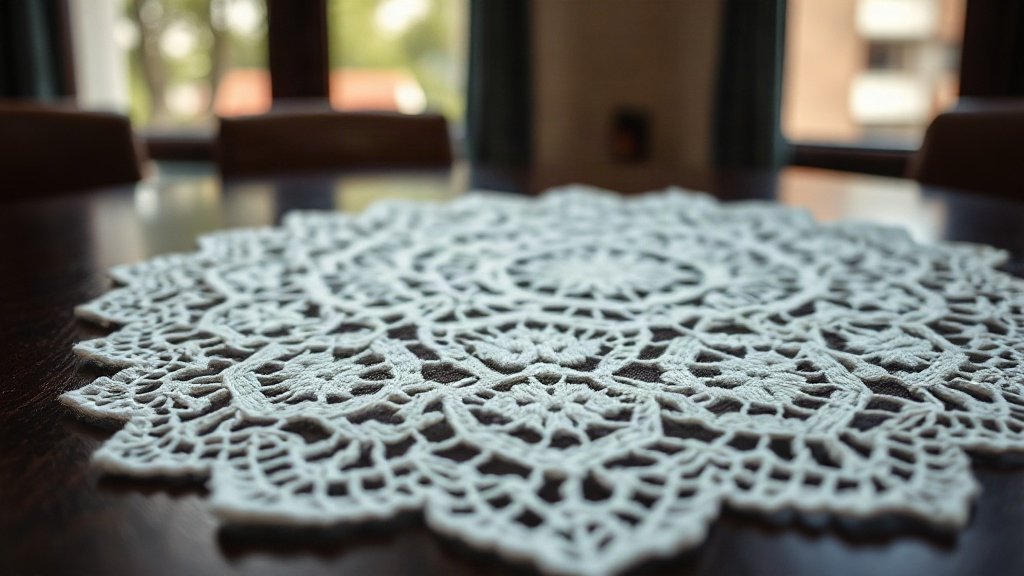
Illustration: AI-generated image
Pag lace is one of Croatia's most delicate and prized traditional crafts, a form of needle lace made exclusively by hand on the island of Pag. Known locally as *paška čipka*, it is admired for its intricate geometric patterns and the patience required to create even the smallest piece. Unlike bobbin lace or crochet, Pag lace is worked with a single needle and fine thread, building each motif stitch by stitch. The result is a fragile, filigree-like textile that has been passed down through generations of women on the island.
A Delicate Art with Deep Roots
The origins of Pag lace are often traced back to the 15th century, when the island had close ties with Venice and other Adriatic trading centres. The craft is thought to have developed through the influence of Venetian needle lace, but over time it acquired its own distinctive character. Pag lace is characterised by striking geometric patterns: stars, wheels, crosses and stylised flowers, often arranged in concentric circles or symmetrical grids. These motifs are not merely decorative; some are believed to carry symbolic meanings related to fertility, protection and the natural world.
In 2009, lacemaking in Croatia was inscribed on UNESCO's Representative List of the Intangible Cultural Heritage of Humanity. The listing recognises three distinct traditions: Pag lace, Lepoglava lace and Hvar lace. Pag's version is the most famous, partly because of its exceptional fineness and the rigorous training required to master the technique.
How Pag Lace is Made
Making Pag lace is a slow and meticulous process. The lacemaker begins with a pattern drawn on stiff paper or cardboard. She then stretches a foundation thread along the outlines of the design, anchoring it with small stitches. Using only a needle and very fine cotton or linen thread, she fills the spaces with a variety of buttonhole stitches and other looped stitches, building up the pattern from the centre outwards. No bobbins, hooks or other tools are used.
The work demands extraordinary concentration and nimble fingers. A small medallion just a few centimetres across can take many hours to complete. Traditionally, young girls on Pag learned the craft from their mothers and grandmothers, starting with simple patterns and gradually progressing to more complex designs. Today, the tradition is kept alive by a small number of skilled women, some of whom still practise it as a form of cultural expression rather than a livelihood.
Uses and Symbolism
Historically, Pag lace was used to adorn ecclesiastical vestments, altar cloths and the traditional folk costumes of the island. It was also given as a precious gift, often for weddings or baptisms. The white colour symbolised purity, while the geometric patterns were thought to bring good fortune. Today, the lace is still used in religious contexts, but it has also found new life as a decorative element in modern fashion and home accessories. Small pieces are often framed or mounted on cards as souvenirs.
Where to See Pag Lace Today
Visitors to the island can find examples of old and new Pag lace in the town of Pag, often displayed in shop windows or at cultural events. The craft is sometimes demonstrated during summer festivals, when lacemakers sit in public and work on pieces, allowing onlookers to appreciate the skill involved. While exact locations and opening hours vary, the island's heritage is best experienced by simply walking through the old town and noticing the lace-inspired motifs that appear on traditional costumes and in local architecture.
For those unable to travel, photographs and documentary films offer a glimpse of the craft, but nothing compares to seeing the lace in person—its whiteness, its fragility and the countless hours of labour hidden in every loop and knot.