Pršut: A Guide to Croatia's Beloved Dry-Cured Ham
Learn about the tradition, flavour, and best ways to enjoy Dalmatia's iconic air-dried ham, a staple of Croatian tables and festive occasions.
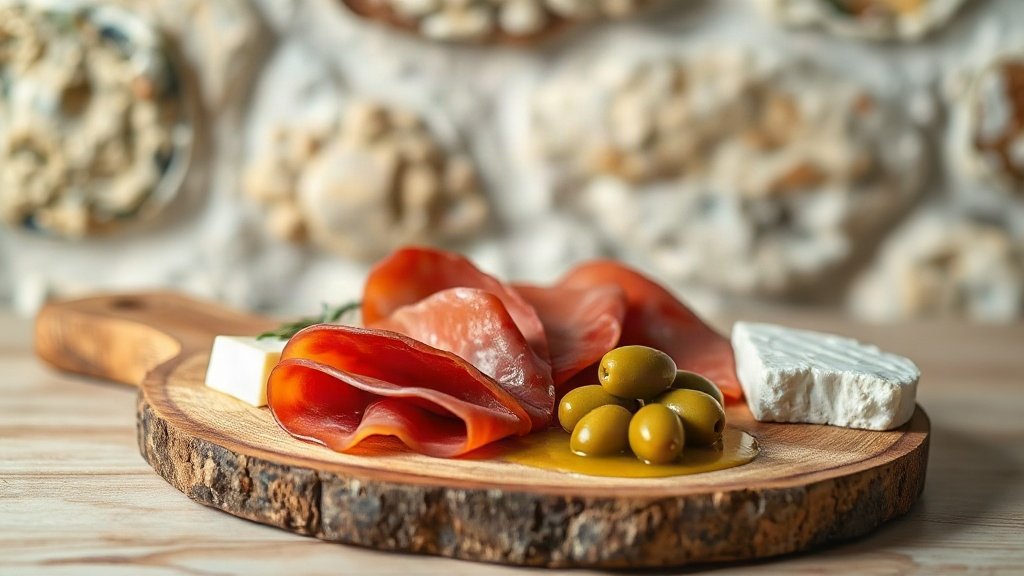
Illustration: AI-generated image
When you sit down at a konoba along the Dalmatian coast, a platter of thinly sliced, ruby-red ham is almost certain to appear. That is pršut, Croatia's answer to Italian prosciutto, and it is a point of deep regional pride. Cured by the bora wind and aged for months, this ham captures the essence of the Adriatic—salty, savoury, and unmistakably local.
What is pršut?
Pršut is a dry-cured ham made from the hind leg of a pig. The name comes from the Italian word "prosciutto," reflecting centuries of Venetian influence along the Croatian coast. Unlike many Italian varieties, Dalmatian pršut is typically smoked lightly over aromatic woods before being left to air-dry in the open air. The result is a firmer texture and a deeper, more rustic flavour than its Italian cousin.
How it's made
The process begins with careful selection of pork legs, which are rubbed with sea salt and left to cure for several weeks. After salting, the hams are pressed to remove excess moisture, then hung to dry in well-ventilated rooms. The crucial step is exposure to the bora, a cold, dry north-easterly wind that sweeps down from the mountains. This wind naturally preserves the meat, giving pršut its characteristic concentrated flavour. Ageing lasts at least a year, often longer, during which time the ham develops a complex aroma of nuts, herbs, and sea air.
How to enjoy it
Pršut is traditionally sliced paper-thin and served as part of a cold starter, often alongside sheep's cheese, olives, and pickled onions. It is a fixture on meze platters and at celebrations, from weddings to Christmas feasts. Locals might drizzle it with a little olive oil or pair it with a glass of Plavac Mali, a robust red wine from the same region. While it can be used in cooking—wrapped around melon, folded into pasta, or layered on pizza—purists insist that it is best enjoyed on its own, allowing the full depth of flavour to shine.
For visitors, seeking out locally produced pršut at a green market or family-run agritourism is a must. It travels well and makes an excellent edible souvenir, provided you buy it vacuum-packed. Whether you are savouring it on a sunny terrace or building a platter at home, pršut offers a delicious introduction to the culinary soul of Dalmatia.