Rovinj on Foot: A Guide to Istria's Coastal Gem
From its hilltop church to its cobbled lanes and bustling harbour, Rovinj rewards slow exploration. Here’s how to make the most of a visit.
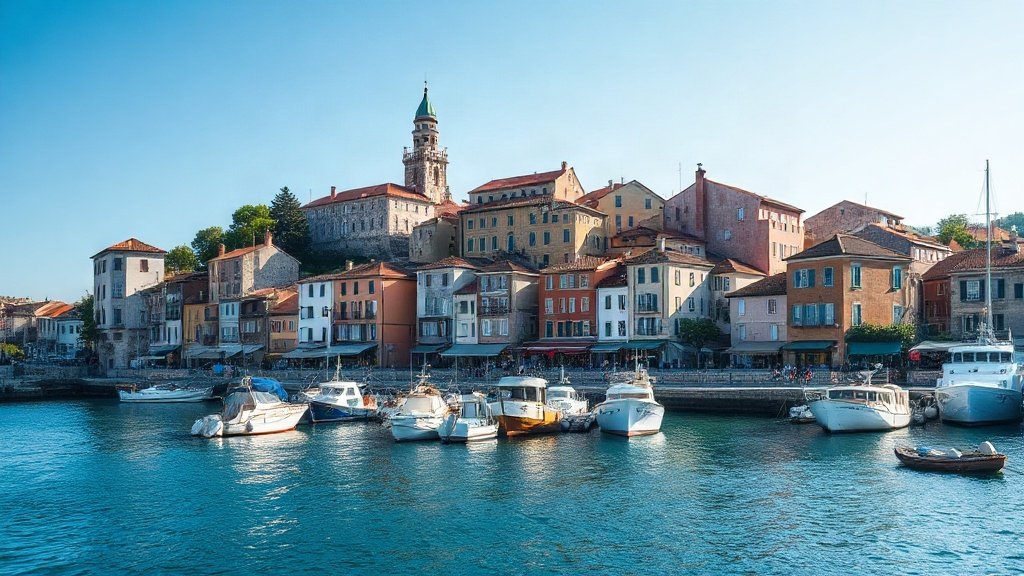
Illustration: AI-generated image
Perched on the western coast of the Istrian peninsula, Rovinj is one of Croatia's most photogenic towns. Its tightly packed old town, crowned by the Church of St. Euphemia, tumbles down to a working harbour where fishing boats bob beside pleasure craft. Unlike some Adriatic destinations that feel overrun in summer, Rovinj retains a lived-in, local character that rewards travellers who take their time.
Wandering the Old Town
The heart of Rovinj is a warren of cobbled lanes, arched passageways and tiny squares that climb the hill from the waterfront. Start at the main square, Trg Maršala Tita, and follow the signs to the church at the top. Along the way, you will pass artisan shops, galleries and small konobas tucked into centuries-old buildings. The climb is gentle but steady; wear comfortable shoes as the stone streets can be slippery when wet.
The baroque Church of St. Euphemia dominates the skyline. Its bell tower, modelled on the campanile of St. Mark's in Venice, offers sweeping views over the red rooftops and the sea. The church itself holds the relics of the town's patron saint, and the square in front is a peaceful spot to catch your breath.
The Harbour and Seafront
Down by the water, Rovinj's harbour is a hive of activity. Early morning is the best time to watch fishermen unload their catch, while evenings bring a relaxed promenade of locals and visitors. The seafront promenade, known as the riva, stretches south past the Punta Corrente forest park, a pleasant spot for a shaded walk or a swim from the rocky shore.
For a different perspective, consider a short boat trip around the nearby islands of St. Catherine and St. Andrew. Many depart from the harbour throughout the day in season, and the views back toward the old town are unforgettable.
Beaches and Swimming
Rovinj's beaches are mostly rocky or pebbly, but the water is famously clear. The most popular is Lone Bay, a sheltered cove surrounded by pine trees, part of the Golden Cape forest park. Further south, the beaches become wilder and less crowded. Bring water shoes, as the rocks can be sharp underfoot. The sea warms up by June and stays inviting well into September.
Food and Local Flavours
Istrian cuisine is a highlight of any visit. In Rovinj, look for restaurants serving fresh seafood, truffle-rich pasta, and local wines like Malvazija and Teran. The town's market, just outside the old town, is a good place to buy olive oil, cheese, and seasonal fruit for a picnic. Evenings are best spent at a konoba table, lingering over a slow meal as the light fades over the harbour.
Practical Tips
- Getting there: Rovinj is well connected by bus from Pula, Rijeka and Trieste. The nearest airport is Pula, about 40 minutes away by car.
- Getting around: The old town is pedestrian-only, so leave the car in one of the large car parks on the edge of town. Bicycles are a popular way to explore the coast.
- Best time to visit: Late spring and early autumn offer pleasant temperatures and fewer crowds. July and August are busiest, with long sunny days perfect for swimming.
- What to pack: Comfortable walking shoes, a hat, sunscreen, and a swimsuit. Evenings can be cool, especially in spring and autumn.
Rovinj may be small, but it leaves a big impression. Take a few days to wander without a strict plan, and you will understand why so many travellers return year after year.