Skradinski Rižot: A Guide to Croatia's Slow-Cooked Veal Risotto
Discover the story behind one of Dalmatia's most labor-intensive dishes, a creamy veal risotto that has been perfected over centuries in the town of Skradin.
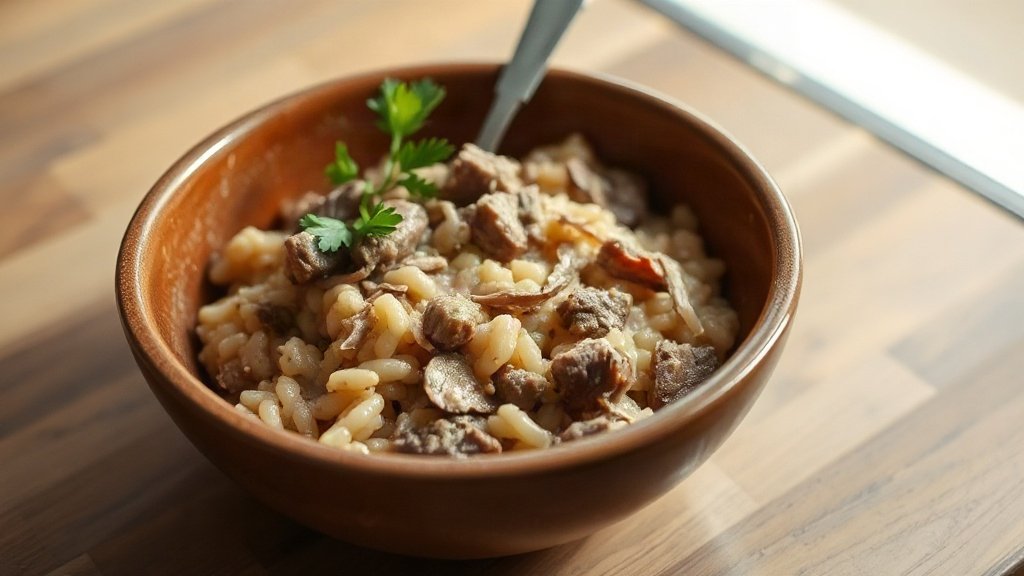
Illustration: AI-generated image
If there is one dish that embodies patience and tradition in the Šibenik-Knin County, it is Skradinski rižot. This creamy veal risotto, named after the small town of Skradin on the Krka River, is a culinary icon that takes hours—sometimes up to twelve—to prepare. It is not an everyday meal, but a celebration of craft, typically reserved for weddings, festivals, and family gatherings.
A dish born of time and place
Skradin sits at the edge of the Krka National Park, where the river meets the Adriatic. For centuries, the town was a crossroads of trade and agriculture, and its cuisine reflects both inland and coastal influences. The risotto likely evolved as a way to transform simple local ingredients—veal, rice, and aromatic vegetables—into something extraordinary through slow, gentle cooking. While many Croatian coastal towns have their own rice dishes, Skradinski rižot stands apart for its painstaking method and distinctive texture.
What makes it different?
Unlike a typical Italian risotto, which is cooked relatively quickly with constant stirring, Skradinski rižot requires a long, slow simmer. The veal is cooked with onions, carrots, celery, and herbs until it becomes so tender it almost melts into the rice. The key is repeated addition of hot stock over many hours, allowing the rice to absorb the rich flavours gradually. The result is a deeply savoury, velvety dish where the meat and rice are nearly indistinguishable—a creamy, porridge-like consistency that is uniquely satisfying.
How it is traditionally made
The process begins with the slow braising of veal in a covered pot, often for several hours, until the meat falls apart. Then the rice is added and toasted lightly before being cooked with the veal and a generous amount of onion. Stock is added ladle by ladle, and the risotto is stirred frequently, but not constantly, as patience is key. Some cooks finish it with a grating of local hard cheese or a knob of butter for extra richness. The exact recipe varies by family, but the principle remains the same: low heat, long time, and a lot of love.
Where to find it
Skradinski rižot is most authentic in and around Skradin, where local restaurants and family-run konobas often serve it as a speciality. Because it takes so long to prepare, it is rarely available every day—many places require advance notice. If you see it on a menu, consider it a rare opportunity. It is a dish that cannot be rushed, and tasting it is to savour a piece of Dalmatian heritage.
For home cooks, tackling Skradinski rižot is a labour of love, but the reward is a deeply comforting, historic dish that connects you to a small town's enduring culinary pride.