Slovenia's Triglav Glacier has melted away after a scorching summer
The last remnant of the glacier on Slovenia's highest peak has disappeared, scientists say, ending a retreat that lasted decades and removing a valuable source of climate data.
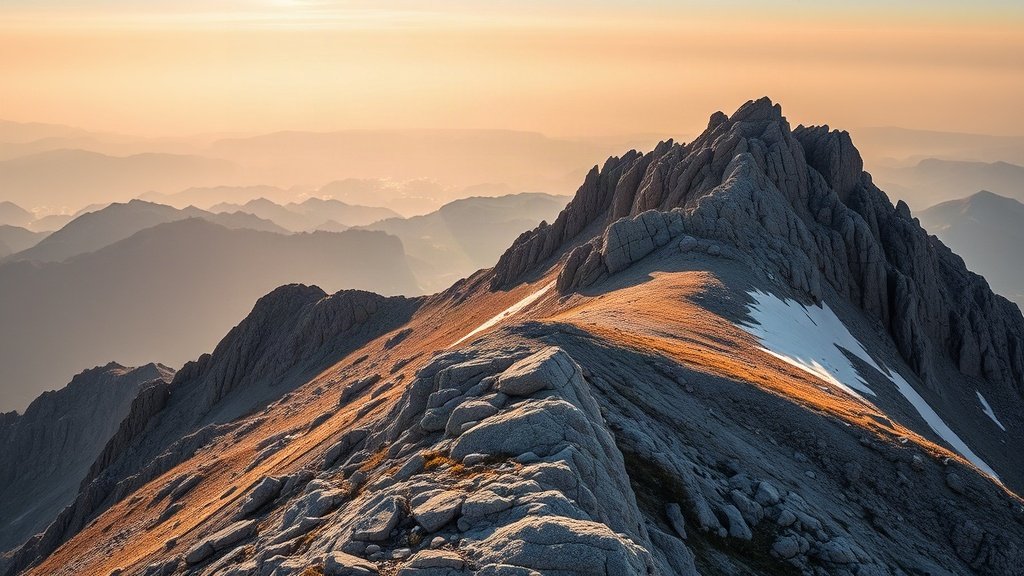
Illustration: AI-generated image
The Triglav Glacier, which sat below Slovenia's highest peak in the Julian Alps, has melted completely after an exceptionally hot summer, according to reports citing Slovenian scientists. Photographs taken before and after this week's snowfall reportedly confirmed that no ice remains.
For many Slovenes, the news is more than a scientific footnote. Triglav is the country's highest mountain and a cornerstone of national identity, and climbing it is widely seen as something every resident should do at least once.
A long retreat
The glacier was once a large body of ice. Historical photographs and records suggest it covered roughly 40 hectares in the middle of the 19th century. When it was first officially measured in 1946, it had shrunk to about 14 hectares.
It lost 93 per cent of its surface between 1983 and 2003, leaving less than one hectare of ice among sun-warmed rock. It nonetheless survived two more decades, though researchers expected it to vanish soon. Over the past five years, which include three of the warmest years on record in Europe, the remaining ice broke into isolated patches. By the end of this summer, the last piece of the main mass was only a few metres across.
What scientists say
Matija Zorn, director of the Anton Melik Geographical Institute, said Triglav holds a central place in Slovenian national identity. He told reporters that the glacier's loss also means losing an important source of data and an indicator of climate change, as reported by the Guardian.
Zorn carried out the first glacier measurements in 2001. He recalled that in 2002 his team took an ice sample for geochemical analysis that was about five metres deep. A year later, he said, he stood on the same spot and found bare rock instead of ice.
Glaciologist and mountain guide Miha Pavšek warned that nature is changing before our eyes, but that people do not yet grasp how serious the changes are.
Wider Alpine picture
The disappearance comes as Alpine glaciers face heavy pressure. Swiss glaciologists reported last month that Switzerland has lost almost a fifth of its glacier ice in five years, with volume falling by 5.5 per cent in 2026 alone. Western Europe also had its warmest summer on record this year, according to the reports.
There are some small silver linings for researchers. Ice has been found in caves beneath Triglav, and the glacier's retreat has exposed new openings in the rock. Slovenia's other glacier, on Mount Skuta, has also thinned, but better shelter from the sun means scientists expect it could last a few more years.
For hikers in the Julian Alps, which sit just across the border from Croatia's northern neighbours, the peak itself remains open to climbers. What has gone is a landmark that generations of walkers and skiers knew.