Ston Oysters: A Guide to Croatia's Prized Adriatic Bivalves
Discover why oysters from the Bay of Mali Ston are considered a Croatian delicacy, how they're traditionally served, and what to expect when you try them.
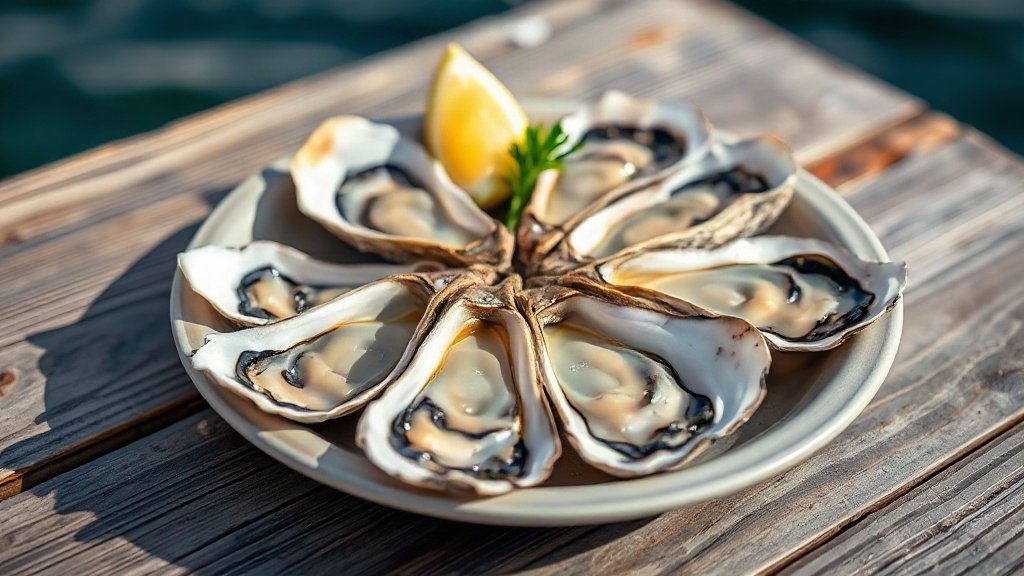
Illustration: AI-generated image
Along a quiet stretch of the Pelješac Peninsula, the small town of Ston guards a centuries-old secret: some of the finest oysters in the Mediterranean. The Bay of Mali Ston, a protected inlet with a unique mix of fresh and salt water, has been home to oyster farming since Roman times. Today, these briny jewels remain a source of local pride and a must-try for any food lover visiting southern Dalmatia.
What Makes Ston Oysters Special?
The oysters cultivated here are the European flat oyster (Ostrea edulis), prized for their delicate but complex flavour. Unlike the more common Pacific oyster, the flat oyster has a smooth, rounded shell and a meaty texture with a pronounced taste of the sea. The bay's nutrient-rich waters, fed by the Neretva River and sheltered from the open Adriatic, create an ideal environment for slow, natural growth. The result is an oyster with a balanced saltiness, a hint of sweetness, and a clean, mineral finish.
Local producers take a low-intervention approach, relying on traditional methods passed down through generations. The oysters are grown on ropes or in baskets suspended in the water column, allowing them to feed on natural plankton. It takes two to three years for an oyster to reach market size, which contributes to its depth of flavour.
How to Eat Them Like a Local
Ston oysters are almost always enjoyed raw, straight from the shell. The traditional presentation is simple: a dozen or so oysters arranged on a bed of ice, with lemon wedges on the side. A squeeze of lemon is optional—many purists insist that the oyster should be eaten unadorned to appreciate its pure taste. Some locals add a drop of high-quality olive oil or a grind of black pepper, but never cocktail sauce.
The proper technique is to hold the shell, tilt it towards your mouth, and let the oyster and its liquor slide in. Chew once or twice to release the flavours, then swallow. Sip a crisp white wine, such as Pošip from Korčula or Malvazija from Istria, to complement the salinity.
Oysters are traditionally eaten in months containing the letter 'r'—September through April—when they are at their plumpest. However, modern farming and cold storage mean they are available year-round, though many consider the colder months the peak season.
Beyond the Raw Bar
While raw is the classic way to enjoy Ston oysters, they also appear in cooked dishes. Grilled oysters with a breadcrumb and herb topping, or oysters baked in their shells with a splash of white wine, are popular in local taverns. Some chefs use them in risottos or pasta, adding a briny depth to otherwise simple preparations.
No matter how you try them, a visit to Ston offers a rare chance to taste a product so deeply connected to its place. Pair your oyster experience with a walk along the town's famous defensive walls—the longest in Europe—and a visit to the nearby salt pans, another ancient local industry.