The Eye of the Earth: A Guide to Croatia's Cetina River Source
Discover the stunning karst spring that feeds the Cetina River, a natural wonder hidden in the Dalmatian hinterland, and how to visit it responsibly.
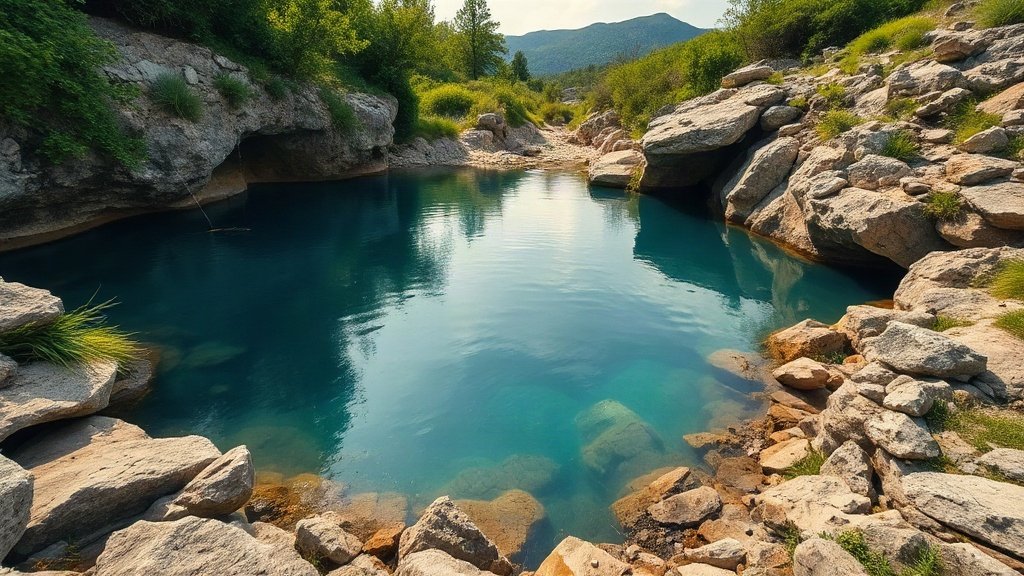
Illustration: AI-generated image
High in the Dalmatian hinterland, near the sleepy village of Cetina, lies one of Croatia's most mesmerising natural sights: the source of the Cetina River. Known locally as the 'Eye of the Earth' (or 'Oko zemlje'), this deep karst spring emerges from a rocky basin in an explosion of turquoise and sapphire, its waters so clear you can see down for dozens of metres before the light fades into darkness.
What makes the spring so special
The spring is a classic karst phenomenon, formed where groundwater forces its way up through limestone fissures. It is the main source of the Cetina River, which flows for over 100 kilometres before reaching the Adriatic at Omiš. The spring's exact depth has never been fully measured, but it is known to descend well over 100 metres, making it one of the deepest karst springs in the country. The water temperature remains a chilly 4–8°C year-round, so swimming is not advisable – but the view from the edge is unforgettable.
Getting there and exploring the area
The spring is located just outside the village of Cetina, about 10 km from the town of Vrlika and roughly 80 km from Split. The easiest way to reach it is by car, following the signs from Vrlika towards the village. There is no admission charge, but parking in the village is limited, so arrive early in high season. From the small parking area, a short gravel path leads to the spring, taking about 10 minutes on foot. Wear sturdy shoes, as the path can be uneven and dusty in summer.
The spring sits at the base of the Dinara mountain range, and the surrounding landscape is a mix of dry karst, green pastures and ancient oak forests. It is a peaceful spot, perfect for a picnic or a quiet moment of contemplation. Bring water and a hat – there is little shade around the spring itself.
Best time to visit and practical tips
The spring is accessible year-round, but the experience changes with the seasons:
- Spring and early summer: The water flow is strongest, and the colour is at its most vivid. The surrounding meadows are green and full of wildflowers.
- Late summer and autumn: The flow may slow, but the clarity remains exceptional. Colours shift to gold and amber in the surrounding hills.
- Winter: The spring rarely freezes, but the area can be cold and windy. If you go, dress warmly.
Please respect the environment: take all rubbish with you, stay on marked paths and do not attempt to dive or swim. The spring is a protected natural feature and an important water source.
Nearby attractions worth adding to your trip
While in the area, make time for two other remarkable sights. The first is the Church of the Holy Salvation (Crkva sv. Spasa), a small pre-Romanesque church built in the 9th century. It is one of the oldest churches in Croatia and lies just a few minutes' drive from the spring, in a peaceful field with lovely views. The second is Peruća Lake, a large reservoir a short distance downstream, popular for fishing and panoramic drives. For keen hikers, the slopes of Dinara – Croatia's highest mountain – offer challenging trails and, on a clear day, views all the way to the sea.