Za Krizen: A Guide to Croatia's Unique Night Procession on Hvar
Discover one of Croatia's most moving Easter traditions, where a single cross-bearer walks through the night across the island of Hvar.
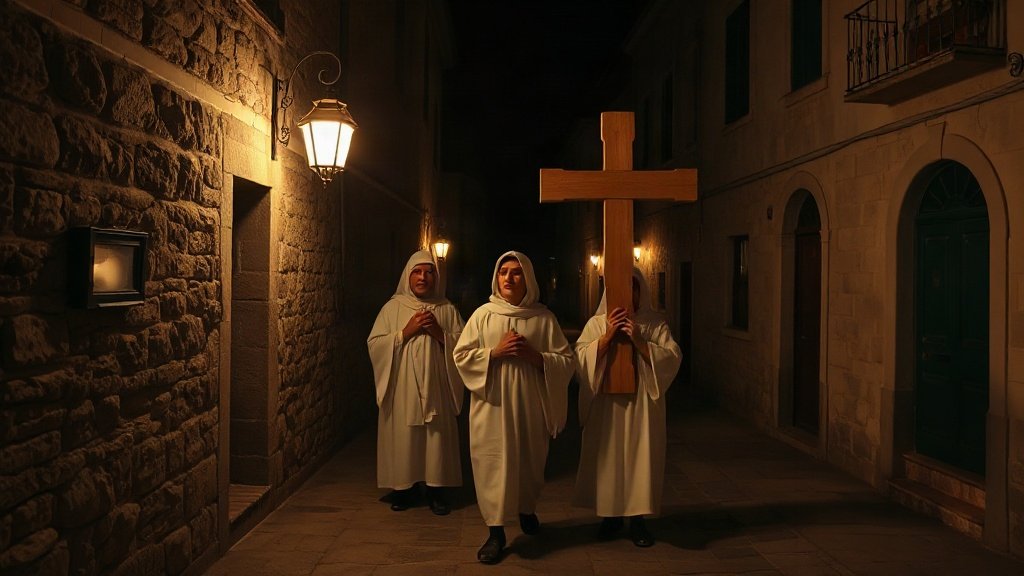
Illustration: AI-generated image
If you're looking for a truly profound cultural experience in Croatia, few traditions match the intensity of Za Krizen – the "Following the Cross" procession on the island of Hvar. Held every year on Maundy Thursday, the night before Good Friday, it is a deeply moving display of faith, endurance, and community that has remained unchanged for over five centuries.
What is Za Krizen?
Za Krizen is a unique religious procession that takes place simultaneously in six parishes in the central part of Hvar: Jelsa, Pitve, Vrisnik, Svirče, Vrbanj, and Vrboska. Each parish sends out a procession led by a single cross-bearer, known as the križonoša, who carries a heavy wooden cross – often weighing 10 to 18 kilograms – for the entire night.
The tradition dates back to 1510, when a small crucifix in the church of St. Mary in Vrisnik reportedly began to weep blood. In response, the local people made a solemn vow to carry a cross through the island's villages as an act of penance and devotion. That vow has been kept ever since, making Za Krizen one of the oldest continuously observed processions in Europe.
The Cross-Bearer's Journey
Being chosen as the križonoša is considered one of the highest honours in Hvar's communities. The cross-bearer prepares for months, often fasting and praying. On the night of the procession, they set out barefoot or in thin socks, wearing a simple white robe, and walk a route of around 22 to 25 kilometres, visiting each of the other five parishes in a predetermined order.
The journey takes about eight hours, from late evening until dawn. The cross-bearer never rests, never eats, and never speaks. They carry the cross the entire way, pausing only to place it in front of each church. As they walk, a group of companions follows, singing ancient religious chants, most notably the Gospin plač (Lamentation of the Virgin Mary), a haunting medieval poem set to music.
At each stop, the procession is met by the local parish community. Candles flicker, prayers are offered, and then the cross-bearer moves on. The route winds through olive groves, vineyards, and stone-paved village streets, often in complete darkness except for lanterns and candlelight.
Where and When
Za Krizen takes place every Maundy Thursday, which falls on a different date each year depending on the lunar calendar. The six processions start from their respective parish churches after the evening Mass, usually around 10 p.m., and they continue until early Friday morning. Visitors are welcome to observe, but it is essential to be respectful: dress modestly, keep noise to a minimum, and avoid flash photography. Many people choose to stand along the route in one of the villages, but you can also follow a portion of the procession on foot if you are quiet and unobtrusive.
Why It Matters
In 2009, UNESCO inscribed Za Krizen on its Representative List of the Intangible Cultural Heritage of Humanity, recognising its cultural value and the remarkable way it has been preserved through generations. Unlike many other processions, there are no priests leading the way – the cross-bearer is an ordinary member of the community, often a young person, carrying a centuries-old responsibility alone. The tradition binds families and villages together, and many locals speak of it as the defining moment of their year.
Za Krizen offers a rare window into the soul of Dalmatia: a place where faith, tradition, and a deep sense of place are woven into daily life. If you happen to be in Croatia during Holy Week, witnessing this procession is an experience you will never forget.