A Guide to Suhozid: Croatia's Ancient Dry Stone Walls
Discover the ancient craft of suhozid — hand-built dry stone walls that shape Croatia's landscape and have UNESCO recognition.
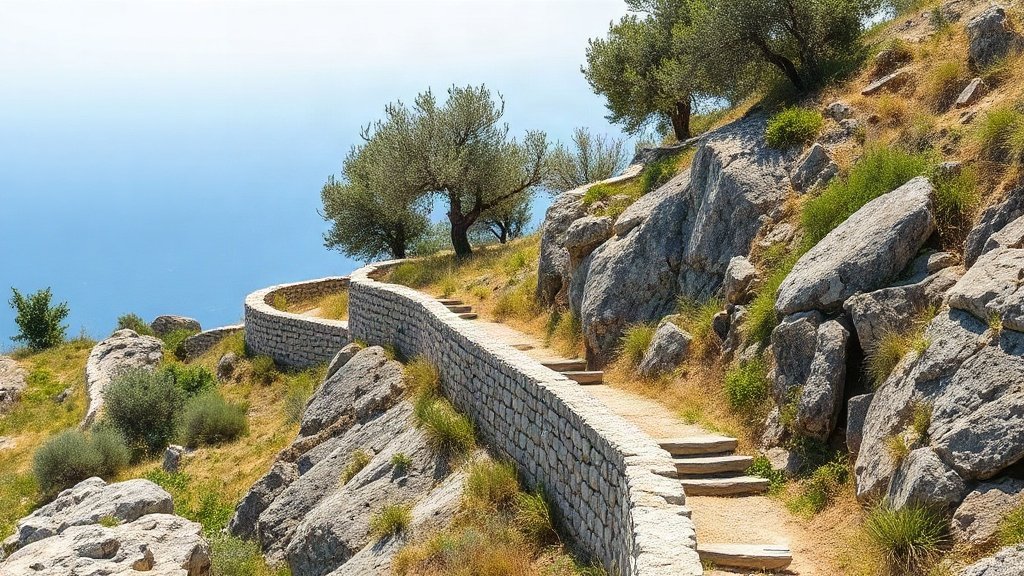
Illustration: AI-generated image
Scattered across the rocky hillsides of Dalmatia and Istria, you will see them: low walls of limestone, built without a drop of mortar, winding through olive groves, vineyards and pastures. These are suhozidi — dry stone walls — and they are not just field boundaries. They are a living tradition that has shaped Croatia's rural landscape for centuries.
What is suhozid?
Suhozid (plural: suhozidi) is a method of building walls by carefully stacking stones without any binding material. The technique relies on the weight and fit of the stones themselves to create a stable structure. Skilled builders select angular stones and wedge them tightly together, often using smaller chips to fill gaps. The result is a wall that can stand for generations, allowing water to drain through and providing shelter for wildlife.
A tradition rooted in survival
In the rocky karst terrain of the Adriatic coast, farmers cleared fields of stones to create arable land. Those stones then became the building blocks for walls that marked property lines, protected crops from wind and animals, and prevented soil erosion. The craft was passed down through families, with knowledge of stone types and wall construction honed over lifetimes. In 2018, the art of dry stone walling was inscribed on UNESCO's Representative List of the Intangible Cultural Heritage of Humanity, with Croatia among the countries nominated.
Where to see suhozidi
The islands of Krk, Brač, Hvar and Korčula are particularly rich in dry stone walls, as are the hinterlands of Zadar, Šibenik and Split. The region of Istria also has numerous examples, especially around Motovun and Grožnjan. For an immersive experience, walk the old donkey paths or field lanes where the walls frame the landscape, often overgrown with wild herbs and capers.
Why they matter today
Beyond their practical function, suhozidi are integral to the Mediterranean ecosystem. They provide habitats for lizards, insects and small mammals, and their porous nature supports plant growth. As modern agriculture declines, many walls are falling into disrepair, but local associations and enthusiasts are working to preserve the craft through workshops and restoration projects. Learning to build a suhozid is not only a connection to the past but also a sustainable skill for the future.
Experience the craft
Visitors can observe these walls almost anywhere in rural Dalmatia, but to truly appreciate the technique, consider joining a dry stone wall workshop. Several heritage organisations across the country offer hands-on courses where you can learn to select, shape and place stones. It is a meditative practice that reveals the ingenuity of generations who turned a harsh landscape into a productive one.