A Practical Guide to Island Hopping by Ferry in the Dalmatian Archipelago
Ferries are the backbone of life on Croatia's islands. Here is how the system works, how to choose between boats, and a few habits that make the journey smoother.
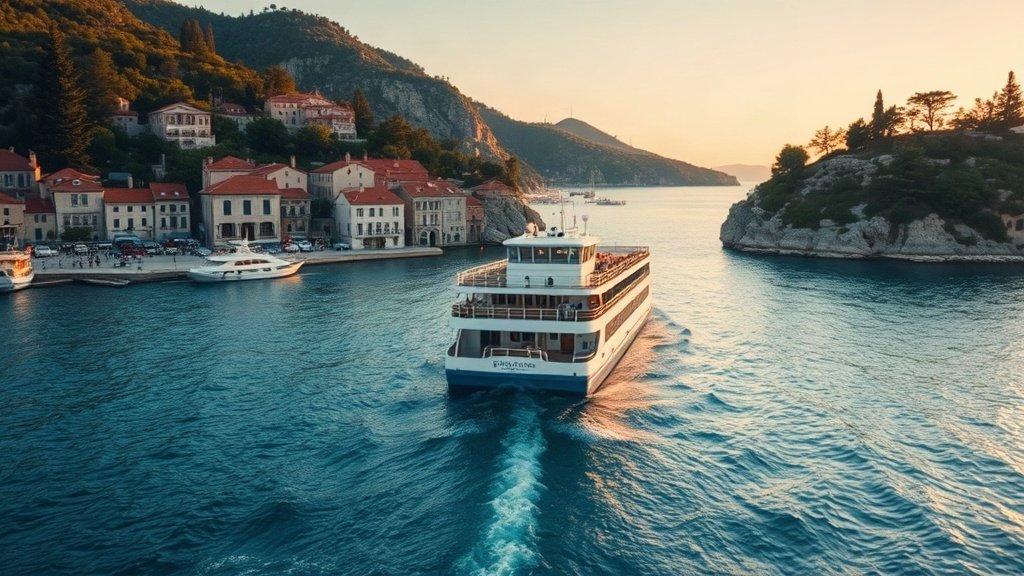
Illustration: AI-generated image
For many visitors, the ferry is the first real taste of island life in Croatia. For islanders, it is simply the road to the mainland. Understanding how the network works makes a Dalmatian trip far more relaxed.
Two kinds of boat
Broadly, you will meet two types of vessel. Car ferries are large, slow and sturdy, carrying vehicles, passengers and often a small café. They suit anyone bringing a car, bicycle or lots of luggage.
Catamarans and fast passenger boats carry people only (and usually bags and sometimes bikes). They are quicker and often link several islands in one route, which makes them handy for hopping without a vehicle.
Do you need a car?
Often, no. Most island towns are compact, and local buses, taxis and your own feet cover a lot. Hiring a bike or scooter on arrival is common on larger islands. Taking a car is only worth it if you plan to explore a big island widely, and it adds planning because vehicle space is limited.
Tips for smoother crossings
- Check the timetable for your exact date. Services change by season, and some routes run less often outside summer.
- Arrive early with a vehicle. Queues form at the port, and in busy periods space can fill before departure.
- Foot passengers have it easier. Boarding is simpler and there is usually more flexibility.
- Keep ID handy and have your ticket ready, either printed or on your phone.
- Expect weather to matter. Strong wind, particularly the bura, can disrupt sailings, so leave a buffer before flights or onward connections.
Build a sensible route
Think in clusters. Islands near Split, such as Brač, Šolta, Hvar and Vis, connect in different ways, and not every pair has a direct link. Often you return via the mainland port or a hub town. Sketch your route first, then confirm each leg before booking accommodation.
Around Zadar and Šibenik, shorter hops lead to island groups that feel pleasantly quiet, while the Pelješac peninsula and Dubrovnik area offer crossings to Korčula, Mljet and the Elaphiti Islands.
Make the most of the journey
Treat the crossing as part of the trip. Head to the upper deck, watch the coastline slide past and bring a light layer, since it is breezy even on warm days. A coffee on board and a view of approaching harbour rooftops is a very Croatian way to arrive.
Above all, build in slack. Island time is real, and the best itineraries leave room for a delayed boat, an extra swim or a long lunch by the quay.