A Slow Guide to the Island of Korčula: Medieval Streets, Vineyards and Island Life
Discover the fortified old town, centuries-old sword dance and quiet coves of one of Croatia's most enchanting islands.
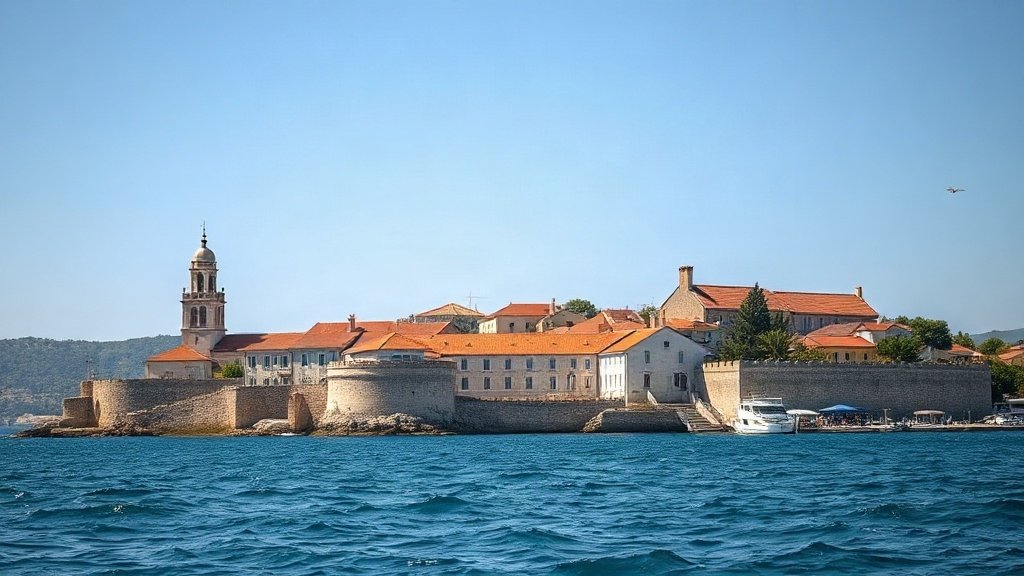
Illustration: AI-generated image
Korčula is the kind of island that rewards travellers who linger. Dense pine forests slope down to pebble coves, vineyards climb the hillsides, and a beautifully preserved medieval town sits on a small peninsula, its stone houses glowing gold in the afternoon light. Often called “Little Dubrovnik” for its fortified walls and terracotta roofs, Korčula feels more intimate and less hurried than its famous cousin.
Getting to Korčula
The island is well connected by ferry and catamaran from Split, Dubrovnik and the Pelješac peninsula. The shortest crossing is from Orebić to the town of Korčula, a scenic fifteen-minute ride. If you are coming by car in summer, book your ferry slot in advance; foot passengers can usually just turn up. Once on the island, a car is useful for exploring remote beaches and villages, but many visitors are happy to base themselves in Korčula Town and use local buses, taxis or bicycles.
Wandering the Old Town
Korčula Town is laid out in a fishbone pattern: a central spine of streets runs along the peninsula, with narrow lanes branching off to catch the sea breeze. This clever design, often attributed to medieval planners, keeps the town cool in summer and sheltered from winter winds. Stroll the land gate, climb the bell tower of St Mark’s Cathedral for a view over the rooftops, and look for the many carved doorways and coats of arms that speak to the town’s Venetian past.
One claim to fame is that Marco Polo may have been born here in 1254. The house that bears his name is now a small museum, though historians debate the connection. According to local tradition, the great traveller’s family came from Korčula, and the town proudly celebrates the link.
The Moreška Sword Dance
Korčula’s most famous tradition is the Moreška, a dramatic sword dance performed only here. In this centuries-old spectacle, two armies—one dressed in red, the other in black—clash in a rhythmic battle over a veiled princess. The dance is usually performed for visitors on summer evenings in the open-air cinema near the town walls, and also on special feast days. The clashing of swords, the stirring music and the fierce choreography make it a memorable part of any visit.
Island Flavours
Korčula produces two distinctive white wines. Grk grows almost exclusively in the sandy vineyards of Lumbarda, a village at the island’s eastern end, and has a dry, aromatic character. Pošip, grown around the village of Čara, is fuller and often compared to Chardonnay. Both are best enjoyed with local seafood, sheep’s cheese and olive oil. Many family-run konobas (taverns) serve simple, honest dishes: grilled fish, black risotto, and žrnovski makaruni, a rolled pasta traditionally served with a meat sauce.
Beaches and Coves
The island’s coastline is a mix of rocky ledges and pebble beaches. Near the old town, the small beaches of Banje and Luka Korčulanska offer easy swimming. For more space, head to Lumbarda’s sandy coves—rare in Croatia—or take a water taxi to the islet of Badija, where a Franciscan monastery overlooks a clear, shallow bay. Further afield, the south coast has wilder spots such as Pupnatska Luka, a pebble beach reached by a winding road.
When to Go
Spring and early autumn are ideal: the sea is swimmable from May to October, the light is soft, and the crowds are thinner than in July and August. Vineyard walks and cycling routes are especially pleasant in May, when the island is green with new growth. If you come in winter, expect a quiet, local atmosphere—many restaurants and attractions close, but the old town remains hauntingly beautiful.
Whether you come for the history, the wine or simply the slow rhythm of island life, Korčula invites you to put away the map for an afternoon and get pleasantly lost.