A Slow Guide to Vis: Croatia's Island of Wild Beauty and Hidden History
From the Blue Cave to abandoned military tunnels, Vis offers rugged landscapes, quiet beaches and a glimpse into Croatia's recent past.
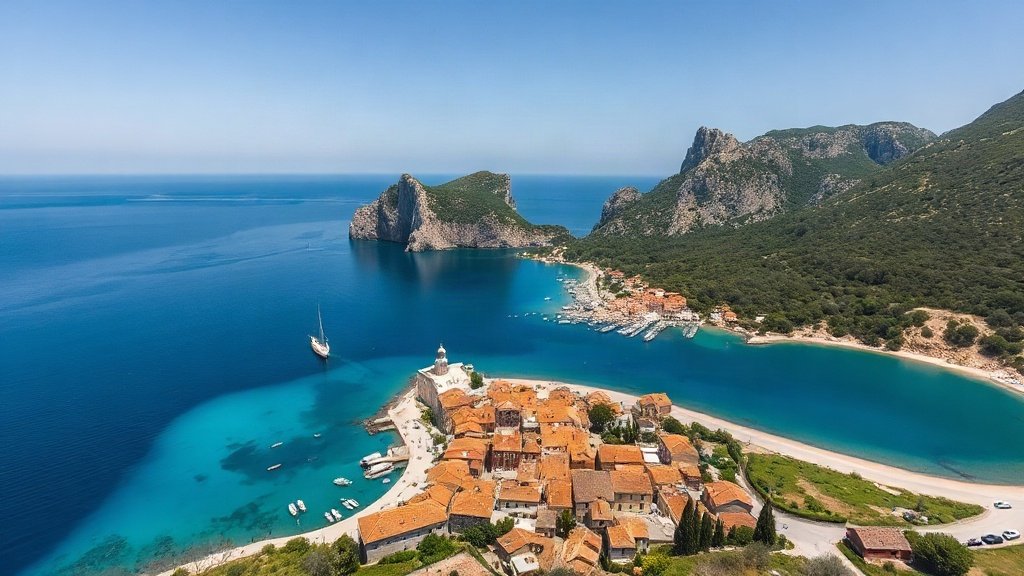
Illustration: AI-generated image
Vis is one of Croatia's most remote inhabited islands, lying further from the mainland than any other in the central Adriatic. For decades it was closed to foreign visitors due to its role as a Yugoslav military base, which preserved its unspoiled character and traditional way of life. Today it attracts travellers seeking natural beauty, quiet coves and a slower pace, while still offering fascinating historical layers.
Getting There
Regular car ferries and faster catamarans connect Split with the island's two main towns, Vis and Komiža. The journey takes around two to two and a half hours, depending on the vessel. There is no bridge or airport for commercial flights, which helps keep mass tourism at bay. Once on the island, a car, scooter or bicycle is the best way to explore, as public buses are limited.
A Layered History
Vis has been inhabited since prehistoric times. Greek settlers from Syracuse founded the colony of Issa in the 4th century BC, and remnants of their town walls and a necropolis can still be seen near Vis town. Over the centuries the island passed through Venetian, Austrian, French and Italian hands before becoming part of Yugoslavia. During the Cold War, the island served as a major military stronghold, with extensive underground tunnels, bunkers and a network of defensive positions. Many of these abandoned sites, including the tunnel complex near Vis town, are now open to curious visitors and offer a sobering reminder of the island's strategic importance.
Beaches and Natural Wonders
The most famous natural sight is the Blue Cave on the nearby islet of Biševo. Accessible only by boat, the cave's interior glows an ethereal blue when sunlight reflects off the sandy seabed and through the water. The effect is most intense around midday during summer, but the cave remains a breathtaking experience at any time.
Back on Vis, Stiniva Cove is often listed among Europe's most beautiful beaches. Tucked between towering cliffs, it can be reached by a steep footpath or by small boat, and its pebbly shore meets crystal-clear water. Other notable spots include Srebrna Beach, a broad pebble bay on the island's east coast, and the Green Cave on the islet of Ravnik, where swimmers can float beneath a natural opening in the rock ceiling.
For hikers, the island's interior offers a network of old donkey paths through vineyards, olive groves and fragrant Mediterranean scrub. The highest peak, Hum, rises to 587 metres and rewards walkers with panoramic views over the island and the open sea.
Vis Town and Komiža
The island's two main settlements each have a distinct character. Vis town, on the northeast coast, is built around a broad bay and features elegant stone houses, a palm-lined waterfront and the remnants of ancient Issa just uphill. Komiža, on the western side, is a traditional fishing village with a long maritime heritage. Its harbour is still active with small boats, and the narrow streets are lined with simple stone cottages. From Komiža you can look out to the islet of Biševo and, on clear days, the distant island of Jabuka.
Food and Wine
Vis has its own culinary identity, shaped by centuries of isolation and a strong agricultural tradition. The island is particularly known for Vugava, a white grape variety that produces aromatic, full-bodied wines, and for Plavac Mali, the robust red grown on the island's sun-baked slopes. Seafood is naturally abundant, with grilled fish, octopus salad and brodetto (fish stew) among the staples. A speciality worth seeking out is viška pogača, a savoury pie filled with salted anchovies, onions and sometimes tomatoes, traditionally baked under a bell-like lid called a peka.
Practical Tips
The best times to visit Vis are late spring and early autumn, when the sea is warm enough for swimming but the crowds are smaller. Summer months can be busy, especially around the Blue Cave and Stiniva, so plan excursions for early morning or late afternoon. Most beaches are pebbly rather than sandy, so water shoes are useful. Accommodation ranges from private apartments to small family-run hotels, but booking ahead is essential in high season. Keep in mind that the island's remoteness is part of its charm: there are no large supermarkets or chain stores, and life moves at a gentler rhythm.