Ajvar: A Guide to Croatia's Beloved Roasted Pepper Spread
Learn what makes ajvar special, how it is traditionally made, and the many ways to enjoy this smoky Balkan relish.
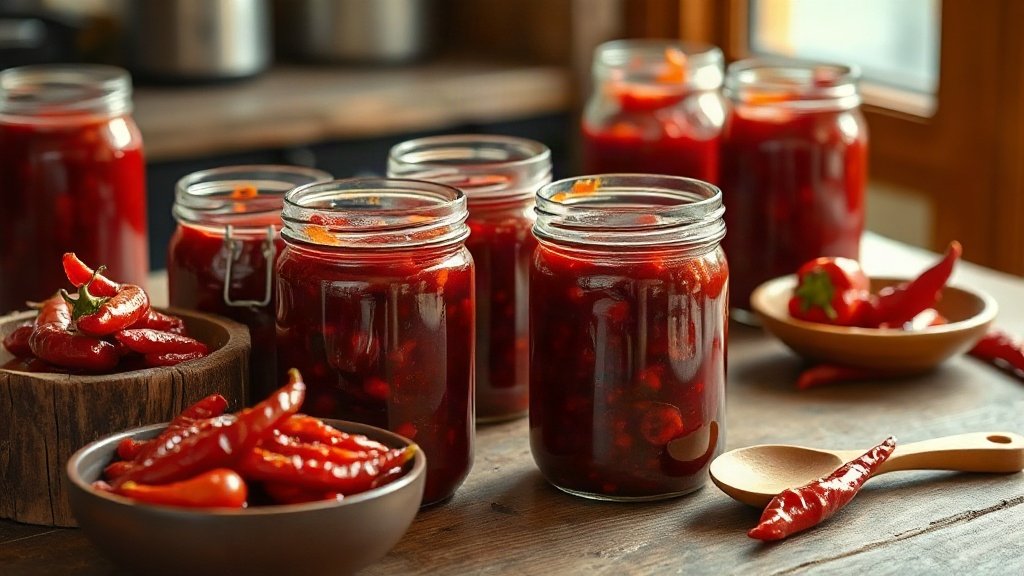
Illustration: AI-generated image
Ajvar is a thick, smoky relish made from roasted red peppers and aubergines, sometimes with garlic and chilli. It is a staple of Croatian and wider Balkan cuisine, appearing on tables from Slavonia to Dalmatia. In autumn, when peppers are at their sweetest, many households still make large batches to preserve for the year ahead.
What is Ajvar?
At its core, ajvar is a simple combination of roasted red peppers, aubergine, oil, vinegar and seasoning. The ingredients are slowly cooked down to a dense, spreadable paste. The flavour is deep, sweet and gently tangy, with a subtle smokiness from charring the vegetables over an open flame. Some versions include garlic or hot peppers for extra bite.
Ajvar is not a dish on its own but a condiment and ingredient. It sits somewhere between a spread, a relish and a sauce, and it pairs well with grilled meats, bread, cheese and eggs. Because it is naturally vegan and gluten-free, it suits many diets.
How Ajvar is Made
Traditional ajvar starts with ripe, fleshy red peppers, often the local roga variety, which are roasted until the skins blister and blacken. The skins are then removed, and the peppers are left to drain. Aubergines are given the same treatment, adding body and a mellow depth.
The roasted vegetables are then minced or ground and slowly simmered with sunflower oil, salt and a little vinegar. This long, patient cooking concentrates the flavours and gives ajvar its signature thick, almost jam-like texture. Finally, the hot mixture is packed into sterilised jars and sealed, often with a thin layer of oil on top to help preserve it.
Making ajvar is labour-intensive, which is why it remains a point of pride. In many households, the arrival of late summer peppers signals a weekend of roasting, peeling and stirring, often involving the whole family.
How to Enjoy Ajvar
The simplest way to eat ajvar is to spread it on a slice of fresh bread or a warm flatbread. It also shines as a side to grilled meats such as ćevapi or pljeskavica, and it is a natural companion to roasted vegetables and strong cheeses.
Ajvar can be used as a quick pasta sauce, stirred into scrambled eggs, or spooned over baked potatoes. A spoonful adds depth to stews, risottos and even sandwiches. In Croatia, it often appears as part of a meze platter alongside kajmak, olives and cured meats.
For those who want to try making it at home, the process is straightforward: roast red peppers and one aubergine until soft and charred, peel and drain them, then cook the chopped vegetables slowly with oil, salt and a splash of vinegar until thick. Store in sterilised jars and keep refrigerated once opened.