Brudet: A Guide to Croatia's Slow-Cooked Fish Stew
Discover brudet, the hearty fish stew simmered along Croatia's coast for generations. Learn about its ingredients, regional twists and cultural role.
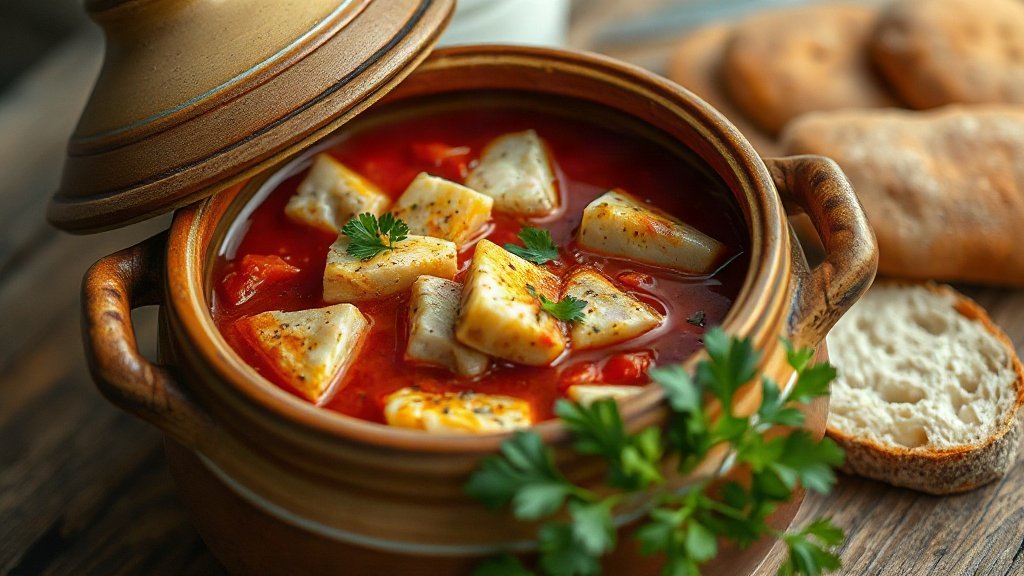
Illustration: AI-generated image
Walk into any konoba along Croatia's Adriatic coast and you are likely to find brudet on the menu. This slow-cooked fish stew is a cornerstone of Dalmatian and Istrian cuisine, a dish born from the sea and shaped by centuries of simple, honest cooking. Unlike the French bouillabaisse or Italian brodetto, brudet has its own distinct character—rustic, deeply flavoured and always made with whatever the day's catch brings.
What is brudet?
Brudet (also spelled brodet or brujet) is a fish stew traditionally prepared by fishermen using the fish they could not sell. It is a one-pot meal that combines several varieties of fish with onions, garlic, tomato, wine and olive oil, then simmers gently until the flavours meld. The result is a thick, intensely savoury stew, often served over soft polenta or with a slice of crusty bread to soak up the sauce.
Key ingredients
The beauty of brudet lies in its flexibility. No two recipes are exactly alike, but most include a mix of firm white fish such as grouper, monkfish, sea bream or scorpionfish. Shellfish like mussels or prawns may be added, and some versions feature eel or other oily fish. The base is almost always a soffritto of onion and garlic cooked in olive oil, to which tomatoes—either fresh, puréed or paste—and a generous splash of wine are added. White wine is common, but red wine is used in some Dalmatian versions for a deeper colour. Herbs like parsley and bay leaf, along with a little vinegar or lemon juice, round out the flavour.
Regional variations
While brudet is found along the entire coast, each region has its own take. In Dalmatia, the stew tends to be tomato-rich and may include capers or olives. Istrian brudet often uses white wine and less tomato, letting the fish shine through, and is sometimes finished with a spoonful of polenta directly in the pot. On the islands, cooks might add a touch of sweet wine or use rockfish for extra texture. In the Kvarner region, brudet often includes scampi (langoustines) from the local waters.
How brudet is eaten
Traditionally, brudet is a communal dish, served in the middle of the table in a large, shallow pan. Diners help themselves to chunks of fish and ladle the sauce over polenta. The polenta—whether soft and creamy or left to set and sliced—acts as a neutral canvas for the rich, briny sauce. A glass of local white wine, such as Pošip or Malvazija, is the perfect accompaniment.
Brudet's cultural significance
More than just a meal, brudet is a link to Croatia's maritime heritage. It embodies the resourcefulness of fishermen who turned humble ingredients into something deeply satisfying. Today, it is a dish served at family gatherings, feast days and in homes along the coast every week. While every cook claims their own recipe is the best, the shared experience of brudet is a reminder of the Adriatic's abundance and the simple pleasures of good food and company.
If you are travelling along Croatia's coast, ordering brudet is a must. Look for it in small family-run restaurants and konobas, where it is most often prepared with care and pride. Because it is slow-cooked, the best versions are those that have simmered for hours, so allow time to savour it properly. You will taste the sea, the sun and centuries of tradition in every spoonful.