Croatian Wedding Traditions: A Guide to Customs and Celebrations
From the flag-bearing barjaktar to the money dance, Croatian weddings blend centuries-old customs with joyful celebration. Here’s what to expect as a guest.
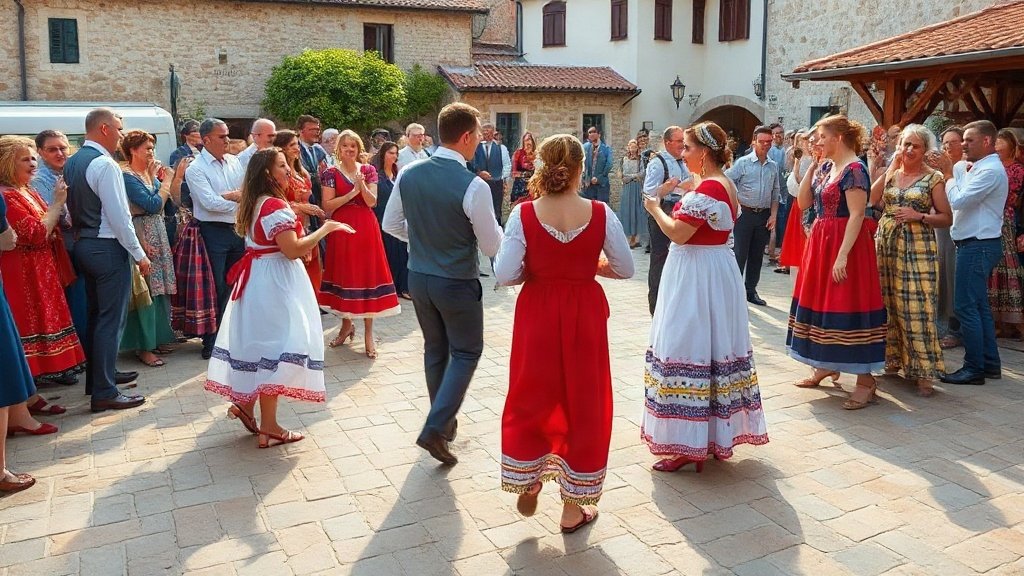
Illustration: AI-generated image
The significance of a Croatian wedding
Weddings in Croatia are more than a union of two people; they are a celebration of family, community and heritage. Many customs have roots in pre-Christian times, later adapted to Catholic traditions, and survive today in various forms across the country.
Key figures and pre-wedding rituals
Before the wedding day, the couple often receives blessings from their families. In many regions, the groom’s party travels to the bride’s home to "collect" her, where playful negotiations or challenges may occur. The kum (godfather or best man) and kuma (godmother) hold honoured roles, often acting as witnesses and moral support.
A distinctive feature is the barjaktar, the flag bearer who leads the wedding procession. He carries a decorated Croatian flag, and his energetic waving and dancing set the tone for the celebration. In some areas, the barjaktar is chosen for his stamina and humour.
Wedding day customs
During the ceremony and reception, several customs stand out. Guests are often given a sprig of rosemary (ružmarin) decorated with a ribbon in the colours of the Croatian flag or the wedding theme, sometimes with the couple’s names printed on it. This fragrant herb symbolises fidelity and is pinned to clothing as a keepsake.
The money dance is a popular tradition: guests pin banknotes to the bride’s dress or place them in a basket, contributing to the couple’s new life together while sharing a dance. It’s a lively, joyful moment that combines generosity with fun.
Traditional music and dance, such as the kolo (circle dance), bring everyone together. In Slavonia, the playful bećarac singing often spices up the party, while in other regions local instruments like the tamburica or sopile provide the rhythm.
Regional variations
Croatia’s diverse regions add their own flavours. In Dalmatia, weddings might feature klapa singing (a cappella harmony) and seafood feasts, while in Istria, the balun dance and hearty truffle dishes appear. In Zagorje, the drmeš dance is a highlight, and guests may wear traditional folk costumes to honour the couple.
Tips for guests
If you’re invited to a Croatian wedding, expect a long and lively celebration that can last until the early hours. Dress smartly; many guests wear formal attire, and sometimes traditional costume elements are appreciated. Cash gifts are common and practical, often placed in an envelope for the couple. Be ready to dance, sing and cheer — participation is warmly welcomed. And don’t be surprised if you’re offered a shot of rakija (fruit brandy) more than once!