Doing Business in Zagreb: A Guide for Entrepreneurs and Investors
Zagreb is Croatia's economic and administrative heart, offering a skilled workforce, excellent infrastructure and a dynamic business environment. Here's what you need to know before setting up or expanding in the capital.
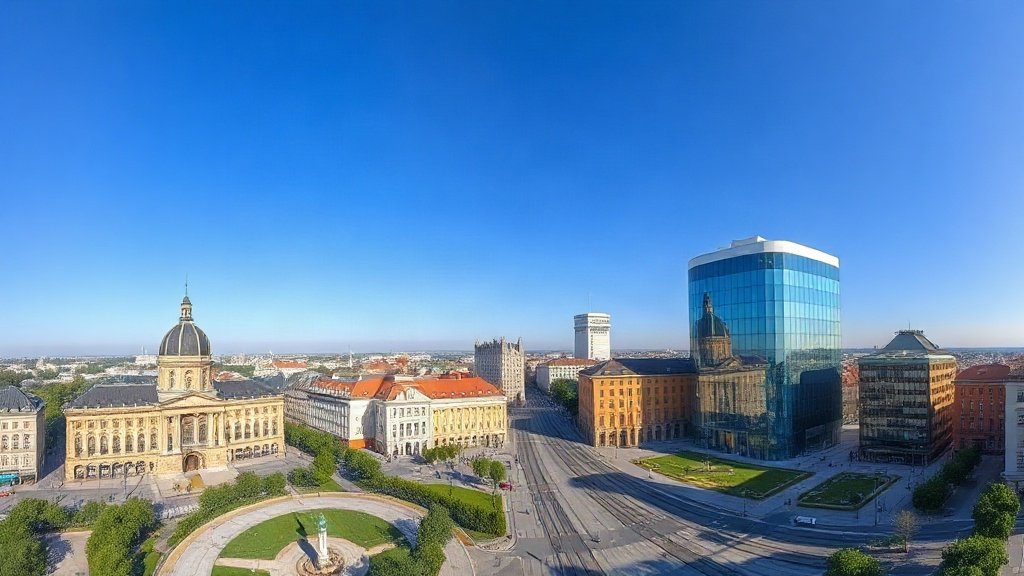
Illustration: AI-generated image
Zagreb is not only Croatia's capital and largest city, but also the country's primary economic engine. Home to roughly a quarter of the national population, it hosts the headquarters of most major companies, government institutions and international organisations. For entrepreneurs and investors, Zagreb offers a combination of central location, developed infrastructure and a large pool of educated workers.
Why Zagreb Attracts Business
As the administrative centre of Croatia, Zagreb is where key decisions are made and where most government bodies, banks and professional services are based. This concentration makes it easier to access legal, financial and consulting expertise, and to network with decision-makers. The city's economy is diverse, with strong sectors including information technology, financial services, manufacturing, pharmaceuticals and creative industries.
Zagreb's central position in Croatia and its well-connected transport links are major advantages. Franjo Tuđman Airport offers regular flights to major European hubs, while the motorway network connects the city to the coast and neighbouring countries. Within the city, public transport is reliable and affordable, with trams and buses covering most districts.
A Skilled and Educated Workforce
Zagreb is home to the University of Zagreb, the oldest and largest university in Croatia, as well as numerous polytechnics and private colleges. Every year, thousands of graduates enter the job market, many with degrees in engineering, IT, economics and natural sciences. The city's workforce is generally well-educated, with a high level of English proficiency among younger professionals. This makes it easier for foreign businesses to recruit and communicate.
Key Business Districts and Office Space
While there is no single business district, several areas stand out for commercial activity. The city centre around Ban Jelačić Square and the main railway station is home to many corporate offices, banks and government institutions. Newer business zones, such as those along Radnička cesta, Vukovarska Avenue and in the western suburb of Jankomir, offer modern office buildings with good parking and access to the motorway. Coworking spaces have also multiplied in recent years, catering to freelancers and small teams.
Setting Up Your Company
Registering a business in Zagreb follows the same national procedures as elsewhere in Croatia, but the presence of all major registries and institutions in the city often speeds things up. The most common company types are the limited liability company (d.o.o.) and the simple limited liability company (j.d.o.o.), suitable for small and medium enterprises. Foreign investors have the same rights as domestic ones, and there are no restrictions on foreign ownership.
Networking and Professional Community
Zagreb has a vibrant professional community with numerous industry associations, chambers of commerce and regular business events. The Croatian Chamber of Economy has its headquarters in the city and organises workshops, trade missions and networking gatherings. International business clubs and expat groups also provide valuable connections for newcomers. Attending these events is a practical way to understand the local market and build relationships.
Practical Tips for Daily Business
While English is widely spoken in business settings, learning a few basic Croatian phrases can go a long way in building rapport. Business dress tends to be formal in corporate environments, though startups and creative agencies often adopt a more casual style. Punctuality is expected, and meetings usually start on time. The city's café culture is strong, and many informal discussions take place over coffee rather than in boardrooms.
Finally, Zagreb offers an excellent quality of life, with a rich cultural scene, green spaces and a relatively low cost of living compared to Western European capitals. This helps attract and retain talent, making the city an appealing base for both local and international businesses.