Euphrasian Basilica: A Guide to Poreč's Byzantine Masterpiece
Explore one of Croatia's most important early Christian monuments, renowned for its glittering mosaics and UNESCO World Heritage status.

Illustration: AI-generated image
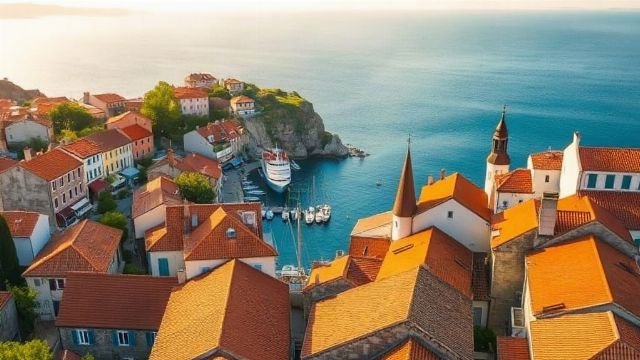
Rising above the rooftops of Poreč on Croatia's Istrian coast, the Euphrasian Basilica is one of the finest surviving examples of early Byzantine art and architecture in the entire Mediterranean. Built in the 6th century and remarkably well preserved, this sacred complex is not only a place of worship but also a journey back to the golden age of the Byzantine Empire.
A Brief History
The basilica we see today was commissioned by Bishop Euphrasius, after whom it is named, in the mid-6th century. It stands on the site of earlier Christian buildings, including a 4th-century church and a 5th-century basilica, parts of which have been incorporated into the present structure. The bishop spared no expense, importing marble from the island of Proconnesus in the Sea of Marmara and employing skilled mosaicists from Constantinople. At the time, Istria was part of the Byzantine Empire, and Poreč was an important ecclesiastical centre, making the basilica a symbol of imperial power and religious devotion. The result is a harmonious blend of classical Roman layout and Byzantine splendour.
The Mosaics: A Golden Glow
The undisputed highlight of the Euphrasian Basilica is its apse mosaic, a shimmering masterpiece of gold and coloured glass. In the centre, Christ is depicted as Pantocrator, seated on a globe and holding an open book. He is flanked by the twelve apostles, each shown with individual facial features, and below them, Bishop Euphrasius himself is portrayed holding a model of the church. The mosaic's rich colours and intricate details are astonishing, considering they have survived nearly 1,500 years.
Exploring the Complex
The basilica is part of a larger episcopal complex that includes a baptistery, a bell tower, and an atrium. The octagonal baptistery, dating from the 5th century, is one of the oldest in Croatia. The bell tower, added in the 16th century, offers views over the old town and the Adriatic, though the climb requires a bit of effort. The atrium, with its ancient columns and stone paving, provides a peaceful entrance to the main church. Beneath the basilica, excavations have revealed remnants of earlier religious structures, visible through glass floors in some areas.
- The apse mosaic with Christ Pantocrator and apostles
- The octagonal baptistery with its ancient baptismal font
- The 16th-century bell tower for panoramic views
- Remains of earlier churches visible beneath glass panels
Why It Matters
In 1997, the Episcopal Complex of the Euphrasian Basilica in the Historic Centre of Poreč was inscribed on UNESCO's World Heritage List, recognised as an outstanding example of early Christian and Byzantine architecture. Its mosaics are frequently compared to those in Ravenna, Italy, yet remain far less crowded, offering an intimate encounter with a masterpiece.
Practical Tips for Visitors
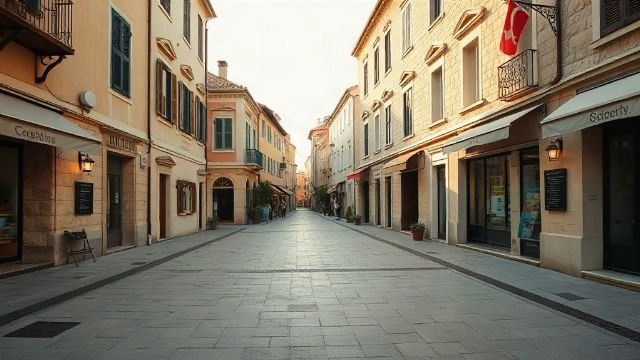
Because the basilica remains an active place of worship, visitors are asked to dress respectfully, covering shoulders and knees. The best light for viewing the mosaics is in the morning, when sunlight streams through the windows and makes the gold tesserae glow. Allow at least an hour to explore the complex fully, and consider joining a guided tour to learn about the many layers of history beneath your feet. The basilica sits at the end of the Decumanus, the main street of Poreč's Roman grid, so a visit fits naturally into a walk around the old town. Look for the distinctive bell tower to orient yourself.