Janjetina s Ražnja: A Guide to Croatia's Spit-Roasted Lamb
Discover the tradition behind Croatia's beloved spit-roasted lamb, a centrepiece of celebrations and family gatherings, and learn how it's prepared.
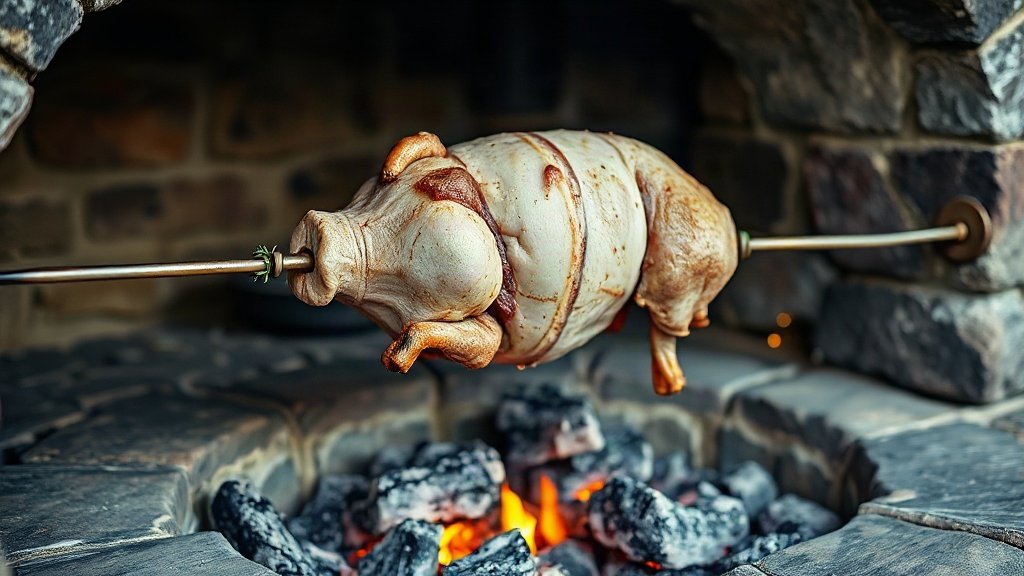
Illustration: AI-generated image
Across Croatia, the aroma of slowly roasting lamb over an open fire signals a special occasion. Janjetina s ražnja—spit-roasted lamb—is more than a meal; it is a ritual deeply woven into the country's social fabric. Whether for a family feast, a religious holiday, or a village celebration, this method of cooking transforms a simple ingredient into a succulent, smoky centrepiece that brings people together.
A Celebration Staple
Lamb roasted on a spit has ancient roots in the Mediterranean and the Balkans, and in Croatia it remains a beloved tradition. It is commonly prepared for Easter, Christmas, weddings, and community gatherings, especially in rural areas where families raise their own sheep. The process is as much about togetherness as it is about food: the spit must be turned regularly, often by several people taking shifts, while others prepare side dishes and set long tables outdoors.
How It's Made
The preparation begins with a whole lamb, usually a young animal weighing around 10 to 15 kilograms, which is cleaned and sometimes marinated overnight. A simple rub of salt, garlic, and rosemary—or a mixture of olive oil and Mediterranean herbs—is all that is needed to enhance the meat's natural flavour. The lamb is then secured onto a metal spit and placed over a bed of hot coals, traditionally from vine cuttings or oak wood, which impart a subtle smokiness.
The key to perfect janjetina s ražnja is patience. The spit rotates slowly, either by hand or with a motor, ensuring even cooking and basting the meat in its own juices. Over two to four hours, the exterior develops a golden, crispy skin while the interior remains tender and moist. Skilled roasters know exactly when to adjust the distance from the coals and when to baste with a brush of rosemary-infused oil.
Regional Twists
While the basic technique is consistent, regional variations add local character. Along the Dalmatian coast, the lamb is often seasoned with wild herbs like sage and bay leaf, and served with a simple salad of fresh tomatoes and cucumbers. In the interior, especially in Lika and Slavonia, the seasoning may be more robust, sometimes including paprika or a splash of white wine. In Istria, a light brushing of olive oil and a squeeze of lemon just before serving adds brightness.
How to Enjoy It
Janjetina s ražnja is typically eaten family-style, with the whole lamb presented on a large platter and carved at the table. It is often accompanied by spring onions, fresh bread, and roasted potatoes or blitva (Swiss chard with potatoes). Hands are the utensil of choice, and the crispy skin is prized as a delicacy. Many agritourism farms and rural restaurants across Croatia offer this dish, especially on weekends, but the most authentic experience remains a private gathering where the spit is the heart of the celebration.
For visitors, seeking out janjetina s ražnja is a chance to taste a tradition that has remained largely unchanged for generations. It is a reminder that in Croatia, food is not just sustenance—it is a reason to come together.