Licitar Hearts: Croatia's Sweet Symbol of Love
Discover the story behind Croatia's famous red gingerbread hearts, a centuries-old craft recognised by UNESCO, and where to find them on your travels.
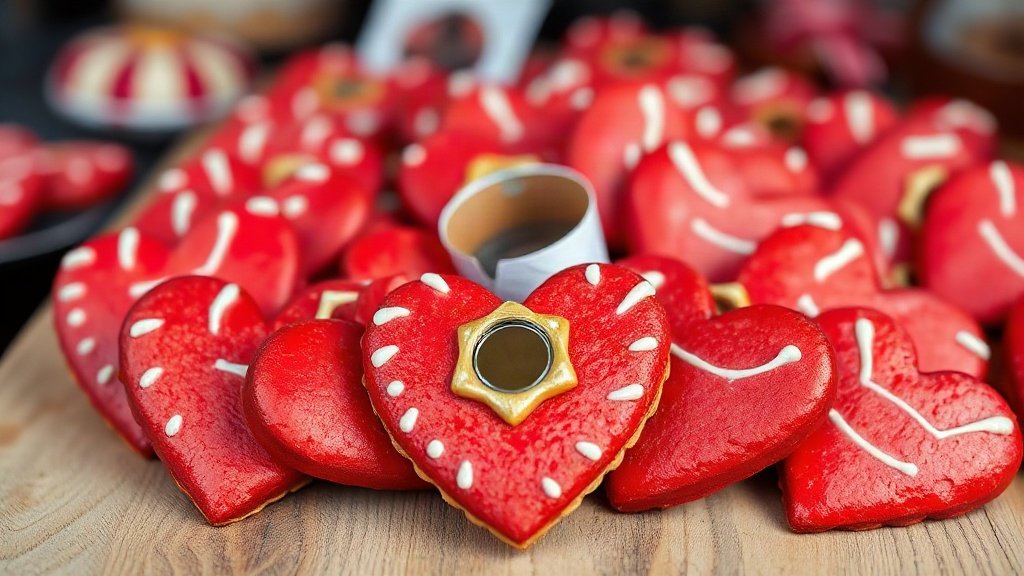
Illustration: AI-generated image
Walk through any Croatian market or souvenir shop and you’ll likely spot rows of bright red hearts hanging on ribbons. These are licitar hearts (licitarska srca), the country’s most beloved edible token. More than just gingerbread, they are a centuries-old symbol of love and a recognised piece of Croatia’s living heritage.
The history and symbolism
Licitar making has roots in the medieval honeybread traditions of Central Europe, but in Croatia it evolved into a distinct craft centred on the northern regions around Zagreb, Zagorje and Međimurje. The name comes from the licitar, the artisan who makes the biscuits. For centuries, licitari sold their wares at fairs and pilgrimages, shaping dough into hearts, dolls, horses and other forms. The heart, however, became the most iconic. Painted a glossy red and decorated with white piping, it often features a small mirror in the centre. Tradition says that when someone gives you a licitar heart, the mirror reflects their affection back at you, making it a popular gift for weddings, engagements and St Valentine’s Day.
How licitar hearts are made
The craft is surprisingly labour-intensive. The dough is made from flour, water, sugar and baking powder, sometimes with a touch of honey, then rolled and cut into heart shapes. After baking, the biscuits are left to dry for days to harden. Each piece is then dipped in a rich red glaze and hand-decorated with intricate icing patterns, often floral or geometric. The final touch is the small mirror, pressed into the centre. While the biscuits are technically edible, most are kept as decorative souvenirs; they can last for years if kept dry.
A craft recognised by UNESCO
In 2010, UNESCO added the “Gingerbread craft from Northern Croatia” to its Representative List of the Intangible Cultural Heritage of Humanity. This recognition highlights not just the recipe but the entire tradition: the skills passed down through families, the distinctive decoration styles, and the role licitari played in community life. Today, a new generation of artisans keeps the craft alive, and you can often see demonstrations at cultural events and craft fairs, especially in Zagreb and the surrounding countryside.
Where to find licitar hearts
Licitar hearts are easy to find across Croatia, but they are most abundant in the capital and the northern counties. In Zagreb, head to any of the main markets—Dolac Market is a classic spot—or browse souvenir shops around the upper town. Look for the traditional large red hearts, but also smaller versions, as well as other shapes like horseshoes, mushrooms and dolls. If you want to see the craft in action, visit during the Christmas markets or at events like the Zagreb County crafts fairs, where licitari often set up stalls and demonstrate their piping skills. For a deeper dive, consider a visit to the Ethnographic Museum in Zagreb, which has a collection of historic moulds and decorated licitar pieces.
How to enjoy them as a traveller
Buying a licitar heart is a lovely way to support local artisans and take home a piece of Croatian culture. They make wonderful, lightweight gifts and can be hung on a wall or given to a loved one. If you’re tempted to eat one, be aware that the hardened gingerbread is quite tough—many people prefer to nibble the edges and keep the rest as a memento. Either way, the licitar heart is a sweet reminder of Croatia’s warm-hearted traditions.