Međimurska Gibanica: A Guide to Croatia's Layered Cake
Discover the rich layers of Međimurska gibanica, a traditional cake from northern Croatia that combines apples, poppy seeds, walnuts, and fresh cheese.
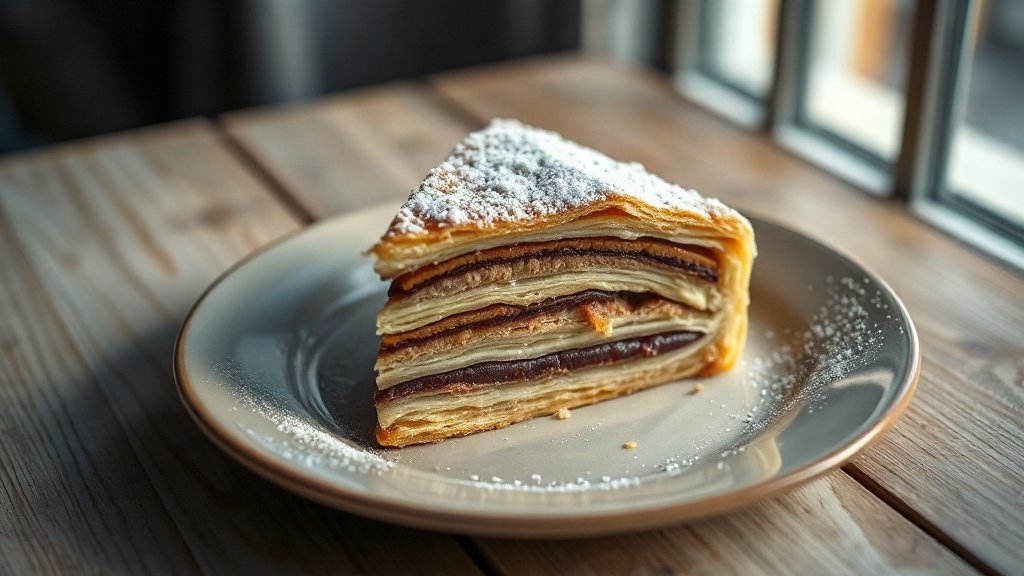
Illustration: AI-generated image
Međimurska gibanica is a beloved layered cake from the Međimurje region in northern Croatia. It is made with four distinct fillings—fresh cheese, ground walnuts, poppy seeds, and grated apples—spread between thin sheets of dough. The result is a rich, moist, and deeply satisfying dessert that has been a cornerstone of local celebrations for generations.
A Cake with Four Fillings
The key to this cake's character lies in its layers. The dough is stretched thin, similar to strudel dough, and the fillings are arranged in a careful sequence. A typical version starts with a layer of fresh cow's cheese mixed with eggs and sometimes raisins, followed by a layer of sweetened ground walnuts, then a layer of poppy seeds, and finally a layer of grated apples, often spiced with cinnamon. Some recipes add a thin layer of sour cream on top before baking. Each bite offers a different combination of textures and flavours, from creamy to nutty to fruity.
From Country Kitchens to Protected Status
Gibanica has deep roots in Međimurje's rural traditions. It was historically baked for weddings, harvest festivals, and religious holidays, with recipes passed down through families. The dish reflects the region's cultural crossroads, showing influences from neighbouring Slovenia and Hungary, but the local version has developed its own identity. In recent years, Međimurska gibanica has been granted protected geographical indication (PGI) status by the European Union, which recognises its authentic production methods and regional origin.
Where to Try It
While recipes vary from household to household, you can find Međimurska gibanica in restaurants and cake shops across Međimurje, particularly in the regional capital Čakovec. It is also increasingly offered in traditional restaurants (konobas) elsewhere in Croatia as a dessert. It pairs wonderfully with a cup of coffee or a glass of sweet local wine such as Muškat.
Serving and Enjoying
Međimurska gibanica is usually served at room temperature or slightly chilled, cut into squares or rectangles. The layers should be visible and distinct, with a dense but moist crumb. A light dusting of icing sugar is traditional. Whether as part of a festive table or a simple afternoon treat, this cake brings a taste of Međimurje's culinary heritage to every forkful.