Nijemo Kolo: Croatia's Silent Circle Dance from the Dalmatian Hinterland
Discover the UNESCO-listed silent circle dance from Dalmatia, performed without music to the rhythm of stomping feet and jingling attire.
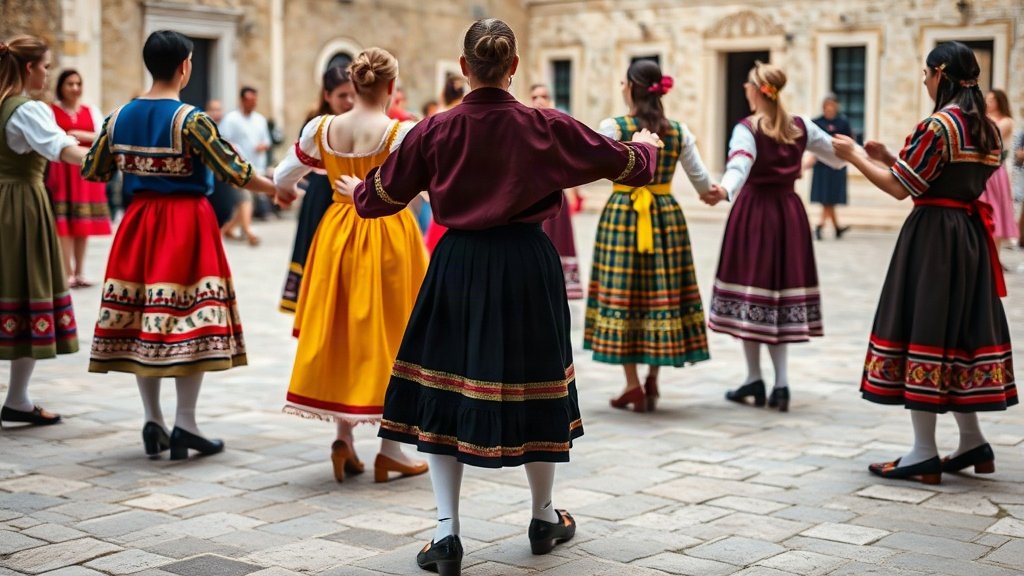
Illustration: AI-generated image
The Nijemo Kolo, or "silent circle dance", is one of Croatia's most distinctive folk traditions. Hailing from the rugged Dalmatian hinterland, this UNESCO-listed dance is performed without any instrumental accompaniment, relying instead on the rhythmic stamping of feet and the jingling of traditional costume.
What is Nijemo Kolo?
Nijemo Kolo literally means "silent kolo". A kolo is a circle dance common across the Balkans, but this version stands out because it is danced in complete silence. Dancers form a closed circle, linked by holding hands or belts, and move with a series of precise steps and stamps. The only sounds come from the dancers' footwork and the small metal decorations on their costumes.
The dance is particularly associated with the villages of the Dalmatian hinterland, known as the Zagora. It was traditionally performed at weddings, village gatherings and other community celebrations, often as a way for young people to meet and court.
A Dance Without Music
What makes Nijemo Kolo so remarkable is its lack of music. There is no singer, no instrument, no recorded track. Instead, the dancers themselves create the rhythm through complex foot patterns and the jingling of coins or bells sewn onto their clothing. The leader of the dance sets the pace, and the rest of the circle follows, sometimes accelerating into an energetic crescendo.
The steps vary from village to village, but they generally include a basic walking pattern, sharp stamps, and occasional leaps. The dance is often performed in unison, with the entire circle moving as one. It requires strength, stamina and a keen sense of rhythm.
Traditional Attire
Dancers wear traditional folk costumes from the region, which are rich in embroidery and decoration. Men typically wear dark trousers, white shirts, and a red or black vest, while women wear long skirts, aprons and headscarves. The costumes are adorned with metal coins, bells and chains that jingle as the dancers move, adding to the percussive effect.
Where to Experience It
Today, Nijemo Kolo is kept alive by folklore ensembles and cultural associations across Dalmatia. It is regularly performed at local festivals, cultural events and international folklore showcases. Visitors to the region may encounter it at summer festivities in towns like Sinj, Imotski or Vrlika, or at dedicated folklore evenings organised by local communities.
Cultural Significance
In 2011, Nijemo Kolo was inscribed on UNESCO's Representative List of the Intangible Cultural Heritage of Humanity. The listing recognises the dance as a vital part of the cultural identity of the Dalmatian hinterland, passed down from generation to generation. For many locals, it remains a symbol of resilience and community spirit, a tradition that has survived centuries of change.
Whether you are a lover of folk traditions or simply curious about Croatia's living heritage, witnessing Nijemo Kolo is a moving experience. It is a reminder that sometimes the most powerful music is the one we make ourselves.