Vitalac: A Guide to Dalmatia's Traditional Lamb Offal Dish
Discover vitalac, a cherished Dalmatian delicacy made from lamb offal wrapped in caul fat and roasted on a spit. Learn about its origins, how it's made, and how to enjoy it like a local.
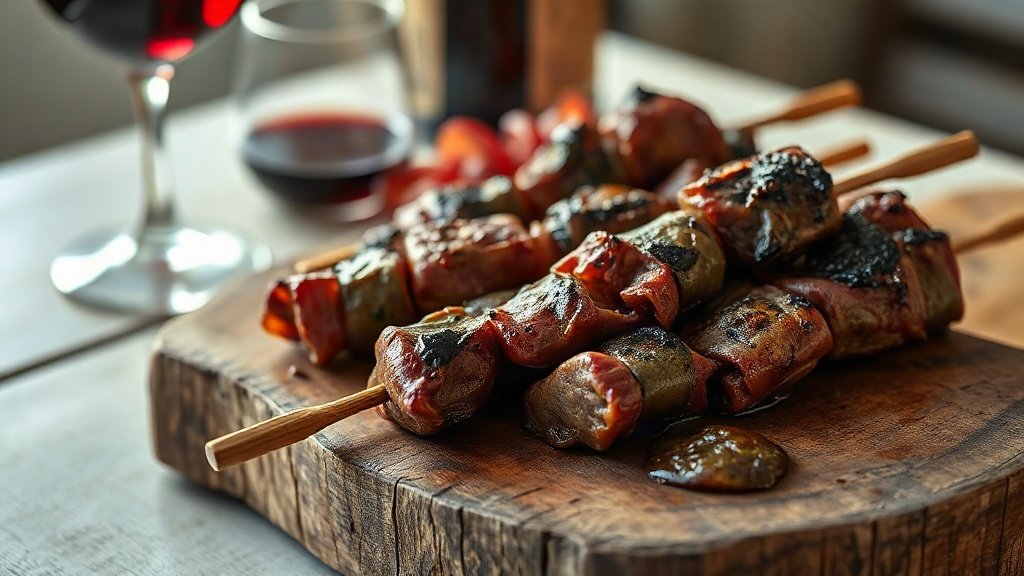
Illustration: AI-generated image
When most people think of Dalmatian cuisine, they picture fresh seafood, grilled fish, and olive oil. But tucked away in the region's rich culinary heritage is a dish that speaks to the resourcefulness of shepherds and farmers: vitalac. This traditional delicacy, made from lamb offal, is a true taste of Dalmatia's inland traditions, often enjoyed during festive occasions and family gatherings.
What Exactly is Vitalac?
Vitalac (pronounced vee-tah-lahts) is a traditional Dalmatian dish made from lamb offal—typically the liver, lungs, spleen, and heart—wrapped in caul fat and roasted on a spit. The name comes from the Italian word "vitello," meaning calf, but the dish is almost always made with lamb or kid goat. It's a prime example of "nose-to-tail" eating, where no part of the animal goes to waste.
The offal is cut into small pieces, seasoned simply with salt, pepper, and sometimes garlic or parsley, then threaded onto a skewer and wrapped tightly in caul fat (a lacy membrane that encases the organs). The skewers are then roasted over an open fire or alongside a whole lamb on a spit, basting in the dripping fat until the outside is crispy and the inside is tender.
A Dish Born of Tradition
Vitalac has humble origins. In rural Dalmatia, especially in the hinterland around towns like Drniš, Vrlika, and Sinj, sheep farming was a way of life. When a lamb was slaughtered for a special occasion, nothing could be wasted. The offal, which was quick to spoil, was cooked immediately—often while the main meat was still roasting. This practical approach gave birth to a dish that is now celebrated as a delicacy.
Today, vitalac is a staple at traditional feasts and weddings, and it's increasingly appearing on the menus of konobas (taverns) that champion authentic regional cuisine. It's particularly associated with the Dalmatian interior, though you can find variations along the coast as well.
How to Enjoy Vitalac
Vitalac is usually served as an appetiser or a side dish alongside the main roast. Its flavour is rich and gamey, with a texture that melts in your mouth thanks to the caul fat. It pairs beautifully with a glass of robust red wine, such as Plavac Mali from the Pelješac peninsula, or a simple Dalmatian red like Babić.
If you're feeling adventurous, seek out vitalac at a traditional peka or spit-roast restaurant. It's often made to order, so it's best to call ahead. For a true local experience, try it during a village festival or "dernek," where whole lambs are roasted on spits and vitalac is served as a prized treat.
Why It Matters
Vitalac is more than just food; it's a connection to a way of life that is slowly disappearing. As modern farming and dining habits change, dishes like vitalac remind us of the ingenuity and respect for ingredients that define Dalmatian cuisine. For adventurous eaters, it's a chance to taste something truly authentic—a dish that has been made the same way for generations.