A Fortress-Hopper's Guide to Šibenik
From the old town to the hilltops, Šibenik's trio of fortresses offers history and panoramic views over the Adriatic.
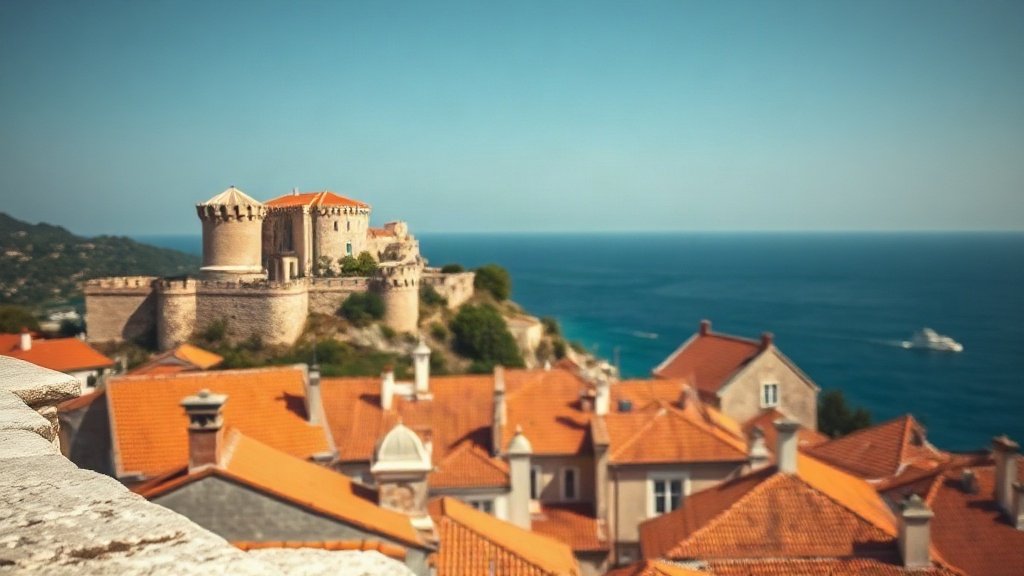
Illustration: AI-generated image
Šibenik is often a jumping-off point for Krka National Park, but the city itself holds a remarkable trio of hilltop fortresses that reward slow exploration. Connected by stone paths and stairways, they make for one of Croatia’s most satisfying urban walks.
A city shaped by stone
Šibenik’s old town is a jumble of steep lanes and pale limestone, crowned by the UNESCO-listed Cathedral of St James. But above the rooftops, three fortresses – St Michael’s, Barone and St John’s – trace centuries of defence against Ottoman advances. Built between the 13th and 17th centuries, they once formed a single fortified system with the city walls. The fortresses proved their worth in 1647, when Šibenik withstood a 17-month Ottoman siege – one of the longest in Dalmatian history.
Start at St Michael’s Fortress
Begin in the old town and climb the signposted steps to St Michael’s Fortress, the oldest of the three. Perched directly above the sea, it offers the closest view over the terracotta rooftops and the channel towards the island of Zlarin. In summer, its open-air stage hosts concerts, but even outside performance hours the ramparts are worth the short but steep ascent.
Walk to Barone Fortress
From St Michael’s, follow the marked path east for about ten minutes to reach Barone Fortress. Restored in 2016, it houses interactive exhibits that explain Šibenik’s military history through touchscreens and augmented reality. The highlight, however, is the panoramic terrace – a quiet spot to catch your breath and watch ferries slide toward the Kornati islands.
Climb to St John’s Fortress
The highest point of the walk is St John’s Fortress, a further twenty minutes uphill on a winding path that starts north of the old town. The effort pays off with a 360-degree view: the Krka river estuary, the grey ridge of the Dinaric Alps, and the scattered islets of the Šibenik archipelago. The fortress itself is partly ruined, which only adds to its raw, windswept atmosphere.
Practical tips for the walk
Allow two to three hours at a relaxed pace. The stone steps can be slippery after rain, so wear shoes with good grip. There is little shade on the upper sections, so early morning or late afternoon are the most comfortable times in summer. Carry water, as there are no cafés along the route – only in the old town below. While each fortress can be visited separately, a combined ticket offers better value if you plan to see all three.
After descending, take time to wander Šibenik’s maze of alleys and pause at the Cathedral of St James, whose unusual all-stone construction has no wooden supports. Together, the fortresses and the old town tell the story of a city that has always looked to the sea while guarding its hills.