Blitva: Croatia's Essential Chard and Potato Side Dish
Blitva, a simple sauté of Swiss chard and potatoes with garlic and olive oil, is the backbone of many Dalmatian meals. Here is how to spot it, eat it, and make it at home.
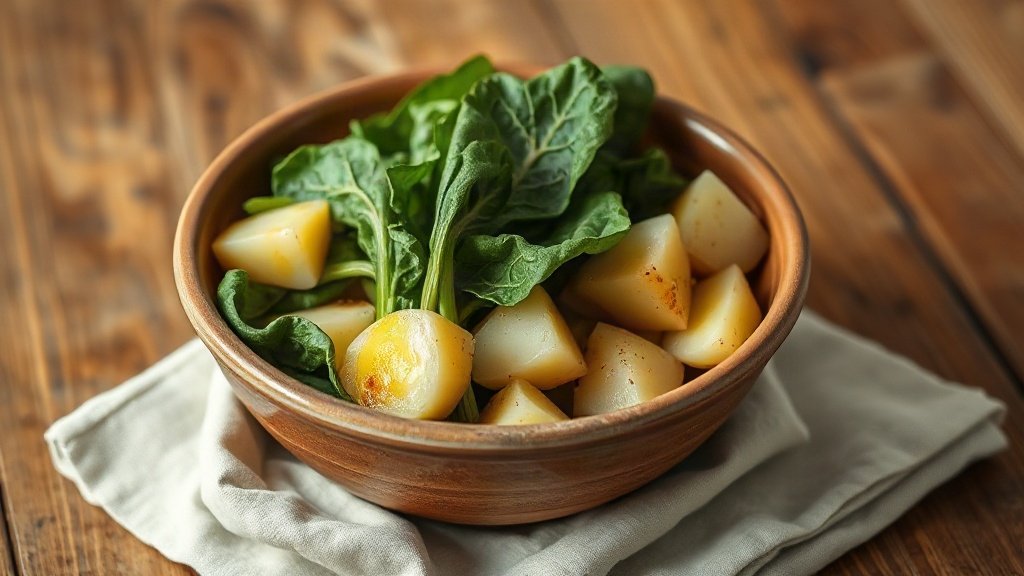
Illustration: AI-generated image
Ask anyone who has eaten along the Dalmatian coast what came with their grilled fish, and the answer is almost always the same: blitva. This unassuming mix of Swiss chard and potatoes, softened with garlic and good olive oil, is the quiet hero of Croatian tables. It rarely gets top billing, but a meal without it feels incomplete.
What Is Blitva?
Blitva is the Croatian word for Swiss chard, but as a dish it refers to a simple side made from the leafy green and potatoes. The leaves and tender stems are wilted with garlic in olive oil, then combined with boiled, often roughly crushed potatoes. The result is silky, savoury and surprisingly hearty for something so green.
You will find it in konobas (family-run taverns) and homes along the coast, from Istria to Dubrovnik. It is particularly tied to Dalmatia, where it is the default accompaniment to grilled fish, squid, octopus and sometimes meat. Because it is so common, many menus list it simply as a side, often without description — locals know exactly what it means.
How Blitva Is Made
The recipe is deliberately simple, letting the quality of the ingredients speak. Traditionally, it includes only a handful of components:
- Swiss chard (blitva), washed and roughly chopped
- Potatoes, usually a waxy variety, boiled and peeled
- Garlic, sliced or finely chopped
- Olive oil, ideally a fruity Croatian extra virgin
- Salt, and sometimes a squeeze of lemon
The potatoes are boiled until tender, then drained and lightly crushed or cut into chunks. In a wide pan, garlic is warmed in olive oil until fragrant, then the chard is added and wilted. The potatoes are folded in, and the whole mixture is seasoned and cooked for another minute or two. The dish is served warm or at room temperature, often with a final drizzle of olive oil.
Some cooks add a little onion with the garlic, or use a mix of chard and spinach. In northern Croatia, blitva without potatoes is common — just the greens sautéed with garlic and served as a simple vegetable. But along the coast, the potato version reigns.
How to Eat Blitva Like a Local
Order it as a side with any grilled fish — sea bass, sea bream, or a whole fish cooked over charcoal. The mild, earthy flavour of the chard and potato balances the smoky, salty fish perfectly. It is also excellent with octopus salad, black risotto, or roasted lamb. Do not be surprised if it arrives in a generous bowl; sharing is common.
If you are cooking at home, blitva is forgiving and quick. Use young chard if possible, and do not discard the stems — they add texture. Choose waxy potatoes such as a salad variety so they hold their shape. And most importantly, use a good olive oil; it is not just a cooking fat, it is a key flavour.
Blitva may not be the most glamorous dish on the menu, but it is one of the most authentic. In a cuisine built on the sea and simple, sun-grown produce, this humble side dish is a reminder that sometimes the best things are the simplest.