Dalmatian Pašticada: The Slow-Cooked Beef Dish Behind Every Celebration
Pašticada is Dalmatia's celebratory beef dish, marinated for hours and served with gnocchi. Here is what goes into it and how to enjoy it.
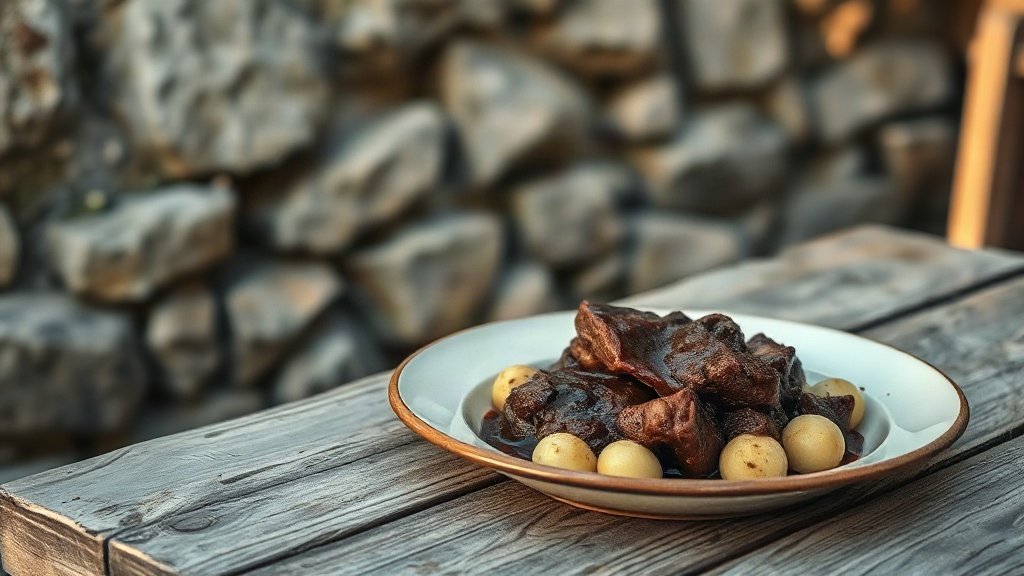
Illustration: AI-generated image
Ask a Dalmatian family what they cook for Easter, a wedding or a big Sunday lunch, and there is a good chance the answer is pašticada. This rich, glossy beef stew is one of the best-loved dishes on the Adriatic coast, and it rewards anyone who takes the time to try it properly.
What is pašticada?
Pašticada is a braised beef dish, traditionally made with a large cut of beef that is studded with garlic, cloves and sometimes bacon or carrot, then marinated in vinegar and wine. It is then cooked slowly with vegetables and spices until the meat is tender enough to slice with a spoon.
The sauce is the star. It is deep brown, slightly sweet and gently tangy, and it is usually spooned generously over the meat and its accompaniment.
What goes into it
Recipes vary from household to household, and every cook believes theirs is the right one. Still, a few elements turn up again and again:
- Beef, often a cut suited to long, slow cooking
- Wine and wine vinegar for the marinade
- Garlic, cloves, onion, carrot and celery
- Prošek, a traditional Dalmatian dessert wine, in many classic versions
- Dried fruit such as prunes in some recipes, which adds sweetness
The meat is typically marinated overnight, and the cooking itself takes several hours. This is not a dish for a rushed weeknight, which is part of why it is saved for occasions.
What to eat it with
The classic partner is njoki (gnocchi), soft potato dumplings that soak up the sauce. Hand-rolled versions are common in Dalmatia, though you may also see homemade pasta such as fuži or macaroni-style shapes. A simple green salad on the side helps cut through the richness.
How to order it well
- Look for traditional, family-style konobas (taverns), especially inland from the coast and in smaller towns, where the dish is made the old way.
- Ask whether it is made fresh that day. Because it takes so long to prepare, many places cook it in batches and it can sell out.
- Pair it with a local red. A Dalmatian red such as Plavac Mali has the structure to stand up to the sauce.
- Come hungry. Portions are usually generous.
Why it matters
Pašticada reflects the history of the coast, where Mediterranean ingredients and long-standing trade routes shaped a cuisine that feels both rustic and refined. The name is often linked to the Italian word for a pasticcio or stew-like preparation, a hint at the region's historic ties across the Adriatic.
If you are travelling in Dalmatia and want a dish that tells you something about the place, pašticada is a very good choice. Order it with gnocchi, take your time, and save room for a small glass of something sweet afterwards.