Exploring the Stari Grad Plain: Hvar's Ancient Agricultural Landscape
A walk or cycle through the Stari Grad Plain reveals 2,400 years of continuous farming, stone walls, and vineyards on the island of Hvar.
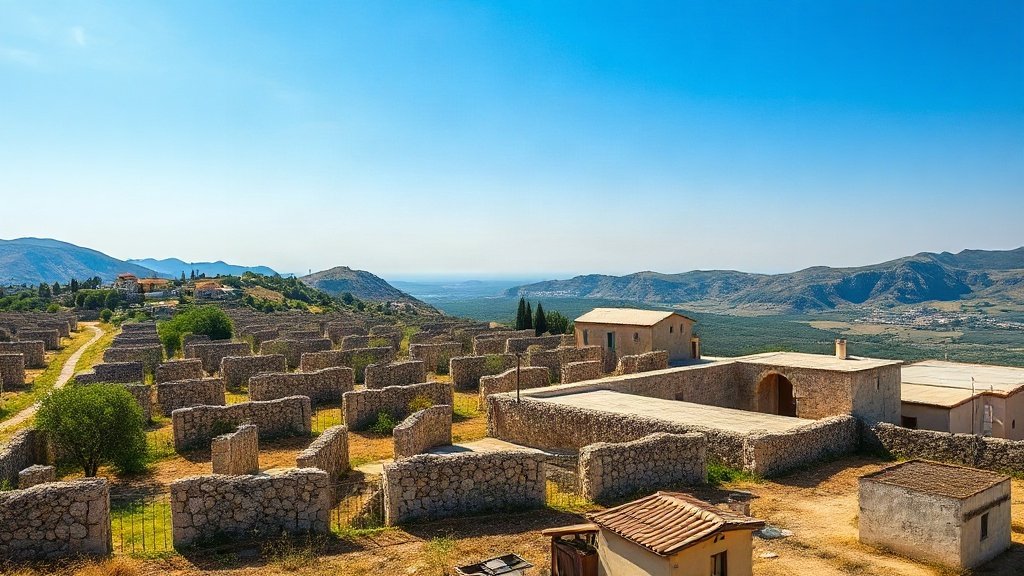
Illustration: AI-generated image
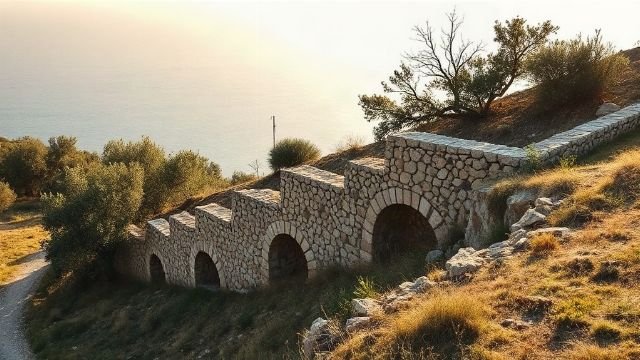
Just outside the town of Stari Grad on the island of Hvar lies a landscape that has barely changed in over two millennia. The Stari Grad Plain, known locally as the Ager, is a UNESCO World Heritage Site and one of the best-preserved examples of ancient Greek agriculture in the Mediterranean. It is not a museum behind glass but a working countryside of olive groves, vineyards and lavender fields, criss-crossed by dry stone walls that follow a geometric grid laid out by Greek colonists in the 4th century BC.
A landscape shaped by ancient Greeks
In 385/384 BC, Greek settlers from the island of Paros founded the colony of Pharos on the site of today's Stari Grad. To distribute farmland fairly, they surveyed the fertile plain and divided it into rectangular plots, each measuring roughly one Greek stadion by five stadia. Those boundaries, marked by low stone walls, still structure the land today. The system survived Roman rule, Venetian administration and every later era because the walls continued to serve a practical purpose: clearing stones from the soil and marking ownership. UNESCO recognised the plain in 2008 for its outstanding testimony to an ancient land division system that remains in use.
What you will see
The plain stretches between Stari Grad and the villages of Vrbanj and Dol, covering about 14 square kilometres. Its most distinctive feature is the network of dry stone walls, some built more than two thousand years ago. Small stone shelters, called trims, dot the fields and once provided shade for farmers. Depending on the season, you will pass through rows of grapevines, silvery olive trees, purple lavender or golden wheat. Wild herbs grow along the paths, and in spring the ground is bright with poppies and wildflowers.
How to explore
The plain is flat and ideal for slow travel on foot or by bicycle. Many visitors start from Stari Grad's waterfront and follow quiet lanes into the fields. A popular loop goes from Stari Grad towards Dol, then across to Vrbanj and back, a distance of about ten kilometres. The lanes are unpaved in places, so sturdy shoes are recommended. Cycling is easy because there are no steep climbs, and bikes can be hired in Stari Grad if you do not bring your own. Always carry water and sun protection; there is little shade in the open fields. While some paths are public, others cross private farmland, so stay on the clear tracks and respect the walls and crops.
When to go
The plain has a different character each season. Spring brings cool weather, green vines and carpets of wildflowers. Summer can be hot, but early mornings and late afternoons are delightful, with cicadas humming in the olive trees. Autumn is perhaps the most atmospheric time, when the vines turn gold and red and the grape harvest begins. Winter is quiet and mild; the plain remains walkable, though some lanes may be muddy after rain.
Practical tips
- Wear comfortable walking shoes with good grip for stone and gravel paths.
- Bring a hat, sunscreen and at least one litre of water per person.
- There are no entrance fees or opening hours for the plain itself.
- Combine your visit with a stroll through Stari Grad's historic centre, one of the oldest towns in Croatia.
- Local olive oil and wine are produced on the plain; you can taste them at family-run konobas in nearby villages, though it is wise to book ahead in peak season.
- Allow at least two to three hours for a relaxed exploration, more if you stop for a picnic among the stone walls.
Visiting the Stari Grad Plain is a reminder that travel in Croatia does not have to be about ticking off sights. Sometimes the most rewarding experiences are the quiet ones, where the landscape itself tells a story that has been unfolding for thousands of years.