Kroštule: A Guide to Croatia's Crispy Carnival Pastry
Kroštule are a beloved sweet treat from Croatia's Adriatic coast. Learn about these crispy, sugary ribbons and how to enjoy them like a local.
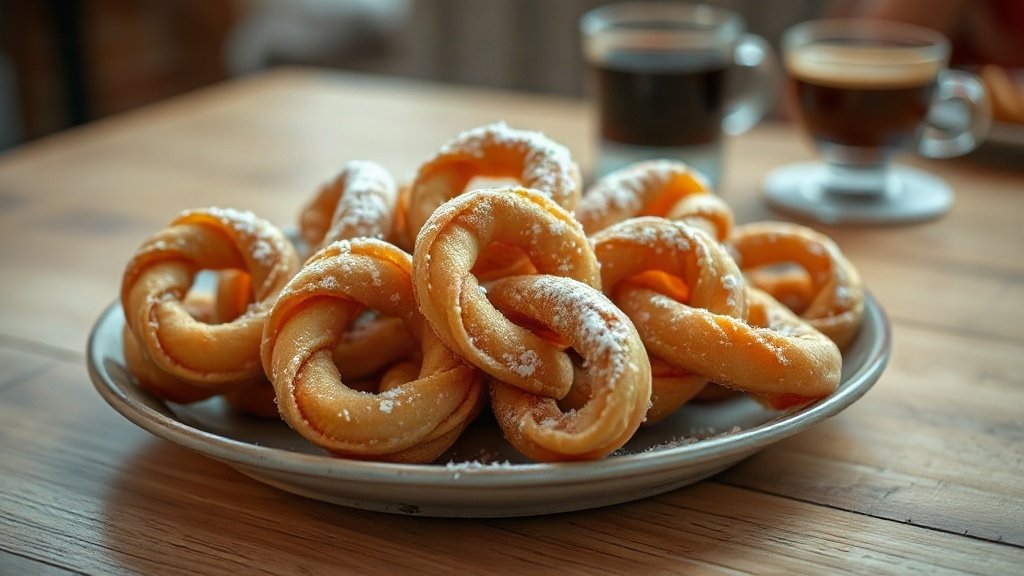
Illustration: AI-generated image
Kroštule are a beloved sweet treat from Croatia's Adriatic coast, particularly Dalmatia and Istria. These delicate, crispy ribbons of fried dough are dusted with powdered sugar and often associated with Carnival, but they are now enjoyed year-round at celebrations and as a sweet snack with coffee.
What are kroštule?
Kroštule (pronounced krosht-oo-leh) are thin strips of dough twisted into knots or ribbons, deep-fried until golden and crispy, then coated in powdered sugar. They are sometimes flavoured with lemon zest, brandy or vanilla, and can be shaped into various forms, from simple bows to more elaborate spirals. Unlike fritule, which are small round balls, kroštule have a distinctive crunchy texture and a lighter, airier bite.
A tradition rooted in Carnival
The tradition of making kroštule dates back centuries along the Croatian coast, where they were typically prepared during Carnival season before Lent. Because they require simple ingredients—flour, eggs, sugar, butter or oil, and a splash of local brandy like rakija—they were an affordable way to create a festive treat. Today, they remain a highlight of Carnival celebrations in towns like Rijeka, Dubrovnik and Split, but they are also served at weddings, christenings and family gatherings throughout the year.
How are kroštule made?
The dough is similar to a sweet pasta or pastry dough: flour, eggs, a little sugar, butter or olive oil, and often a bit of lemon zest or brandy for flavour. After resting, it is rolled thin and cut into strips, which are then twisted or tied into shapes before frying in hot oil. The key is to fry them until they are golden and crisp, then drain well and toss in powdered sugar while still warm. Some recipes call for a touch of vanilla or cinnamon in the sugar. Because they are fried in small batches, making kroštule is often a social activity, with family members gathering to shape and fry.
Enjoying kroštule like a local
Kroštule are best eaten fresh, ideally within a day or two of frying, when they are at their crispest. They are perfect with a strong espresso or a glass of sweet prošek wine. In coastal towns, you might find them at local bakeries or pastry shops, especially around Carnival time, but many families make their own at home. If you are visiting during the Carnival season, look for them at local markets or street stalls—they are a delicious, portable snack.
Try them for yourself
While recipes vary slightly from family to family, the basic method is straightforward enough for home cooks. For a simple version, combine flour, eggs, sugar, a pinch of salt, and a few tablespoons of melted butter or olive oil, plus a splash of brandy if you like. Knead until smooth, rest, roll thin, cut into strips, tie into knots, and fry in neutral oil until golden. Toss with powdered sugar and serve. Experiment with shapes: traditional knots, bows, or even small spirals.
Whether you encounter them at a Carnival celebration or in a local bakery, kroštule offer a taste of Croatia's sweet heritage. Their simple ingredients and festive spirit make them a lovely treat to seek out—or to recreate at home.