Linđo: A Guide to Dubrovnik's Spirited Circle Dance
Discover the history, steps and rhythms of Linđo, the lively folk dance from the Dubrovnik region that has been bringing people together for centuries.
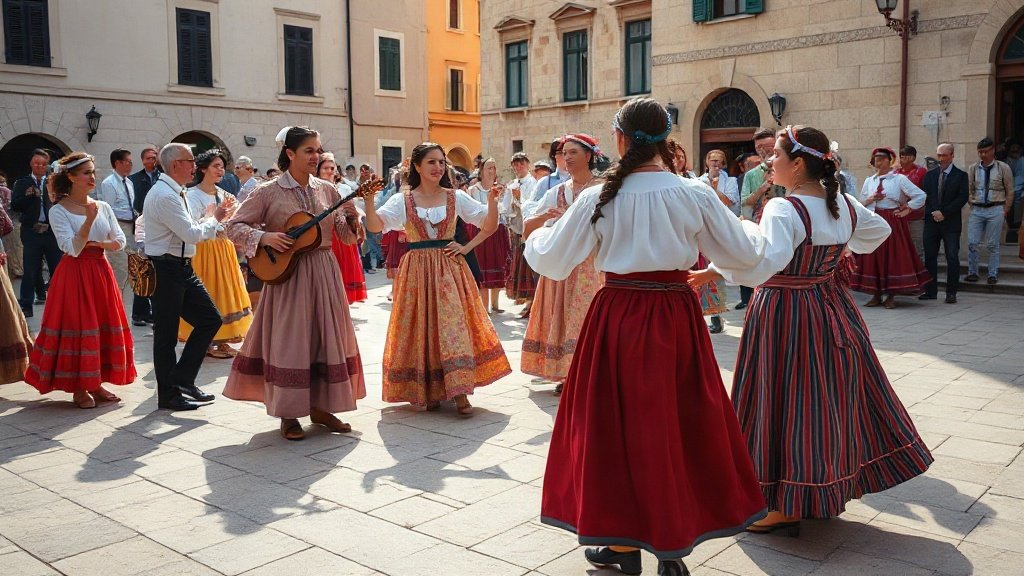
Illustration: AI-generated image
In the sun-warmed squares of Dubrovnik and the surrounding region, the sound of a three-stringed fiddle often signals the start of something joyful: the Linđo. This spirited circle dance, sometimes called Dubrovnik's answer to the kolo, has been a centrepiece of local celebrations for generations. With its quick steps, playful energy and distinctive musical accompaniment, Linđo is a living link to the area's folk heritage.
What is Linđo?
Linđo is a traditional couple dance performed in a circle, typical of the Dubrovnik littoral and the islands of the former Republic of Ragusa. It is usually danced to the music of the lijerica, a small three-stringed fiddle held on the knee. The dance is known for its lively tempo and the way partners move around each other in a flirtatious, almost teasing manner. The name Linđo is thought to derive from a 19th-century folk musician who popularised the style, though the dance itself is much older.
How the Dance Works
Linđo is a circle dance, but unlike many Balkan kolos, it is not performed holding hands in a chain. Instead, the circle is formed by couples, with the men standing on the inside and the women on the outside. The dance begins with a slow, swaying introduction, during which the men hold their partners' hands and step gently from side to side. As the music quickens, the men take the lead, guiding their partners in quick, turning steps around the circle. The movements are often improvised, with the man showing off his skill through spins and flourishes, while the woman follows with grace. The dance can be vigorous, and it often ends with both partners breathless and laughing.
Costumes and Music
Traditional Linđo performances feature the rich folk costumes of the Dubrovnik region. Women wear long, dark skirts with white blouses, colourful aprons and headscarves, while men don black trousers, white shirts and red sashes. The music is provided by a single lijerica player, who sets the rhythm by stamping his foot while bowing the strings. The tunes are typically in a fast 2/4 or 6/8 time, with a driving, almost hypnotic quality that invites dancers onto the floor.
Where to See Linđo Today
Linđo is still performed at weddings, village feasts and cultural events throughout the Dubrovnik area. During the summer, it is common to see impromptu performances in Dubrovnik's Old Town, particularly on the Stradun, where folklore ensembles entertain visitors. The dance is also a highlight of international folk festivals across Croatia, where it represents the region's unique cultural identity. For those wanting to learn the steps, some cultural associations offer short workshops, but simply watching a performance is enough to appreciate the energy and skill involved.