Pašticada: A Guide to Dalmatia's Slow-Cooked Beef Delicacy
Pašticada is a rich, sweet-and-sour beef dish that embodies the soul of Dalmatian cuisine. Here's what makes it so special and how it became a centrepiece of festive tables.
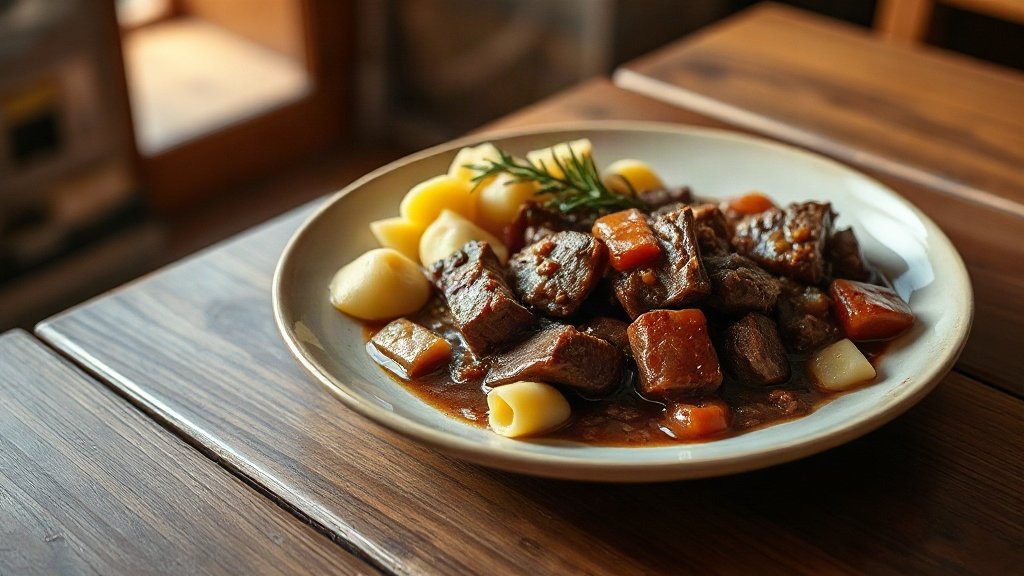
Illustration: AI-generated image
Pašticada is more than just a meal; it is a culinary ritual deeply woven into the fabric of Dalmatian life. This slow-cooked beef dish, often served with homemade gnocchi or fuži pasta, is a staple at weddings, Christmas lunches, and other major celebrations along the Croatian coast. Its complex sweet-and-sour flavour, achieved through a long marination and patient braising, sets it apart from any other stew.
What is Pašticada?
At its heart, pašticada is a beef dish, traditionally made from a whole cut like topside or rump. The meat is first pierced and stuffed with slivers of garlic, cloves, and sometimes carrot or pancetta. It is then marinated overnight in wine vinegar, often with red wine or prošek, a sweet dessert wine typical of Dalmatia. The marinade infuses the beef with a deep, tangy base.
The cooking process is lengthy. The meat is seared until browned, then slowly braised for hours with a rich sauce made from onions, root vegetables, prunes, and a touch of sweet wine or sugar. Some recipes add a spoonful of tomato concentrate, while others rely purely on the caramelised onions and wine for colour and depth. The result is incredibly tender beef in a glossy, aromatic sauce that balances sweet, sour, and savoury notes.
A Dish for Special Occasions
In Dalmatia, pašticada is synonymous with festivity. It appears on tables for weddings, baptisms, confirmations, and the most important family gatherings. Preparing it is often a full-day affair, and many families guard their own version of the recipe, passed down through generations. Because it requires so much time and care, it is rarely made for everyday meals—its presence signals that something worth celebrating is at hand.
How It's Made
The first step is the marinade. The beef is larded with garlic and cloves, then submerged in a mixture of wine vinegar and red wine, sometimes with bay leaves and rosemary. After at least 24 hours, the meat is removed and dried. It is then browned in oil or lard, and removed from the pot. In the same fat, a large quantity of onions is slowly cooked until deeply caramelised—this is crucial for the sauce's sweet depth. Carrots, celery, and sometimes parsley root are added, along with a little tomato paste or purée. The meat goes back in, along with the strained marinade, prunes, and a bit of prošek or sweet wine for extra sweetness. Everything simmers gently for several hours until the beef is fork-tender and the sauce has thickened.
Serving and Enjoying
Pašticada is traditionally served with homemade gnocchi or fuži, a type of hand-rolled pasta from Istria and northern Dalmatia. The sauce clings to the pasta, and the tender meat is sliced and laid on top. A sprinkle of grated hard cheese, often Paški sir from the island of Pag, adds a salty contrast. It pairs beautifully with a robust red wine, such as Plavac Mali from the Pelješac peninsula.
Where to Try It
While many restaurants along the Dalmatian coast offer pašticada, the best versions are often found in family-run konobas (taverns) and at private celebrations. If you are invited to a Dalmatian wedding or feast, do not be surprised to see it as the main course. For visitors, seeking out this dish is a delicious way to connect with the region's cultural heritage—one slow-cooked bite at a time.