A Beginner's Guide to Croatia's Glagolitic Script
Discover the ancient alphabet that shaped Croatian literacy and still appears on monuments across the coast.
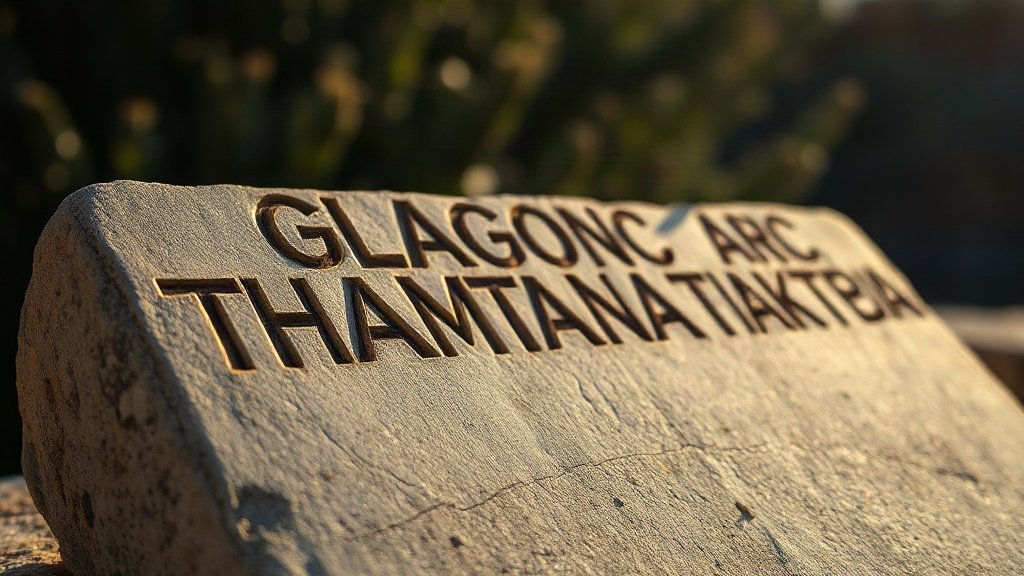
Illustration: AI-generated image
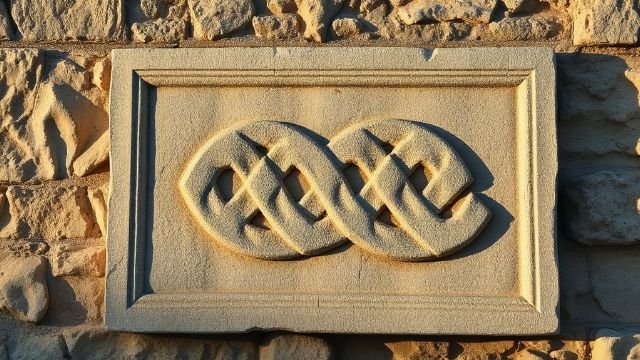
Walk through many old towns along the Croatian coast and you will notice strange, angular letters carved into stone or painted above doorways. They are not decorative patterns but the Glagolitic script, one of the oldest Slavic alphabets and a proud symbol of Croatian cultural identity. This beginner's guide explains what Glagolitic is, why it matters, and where you can still see it today.
Origins and purpose
Glagolitic was created in the 9th century, traditionally attributed to Saints Cyril and Methodius, Byzantine missionaries who wanted to translate religious texts into the Slavic language. The script allowed Slavic peoples to read and write in their own tongue at a time when Latin and Greek dominated literacy. In Croatia, Glagolitic took root particularly in Istria, the Kvarner islands, and parts of Dalmatia, where it remained in active use for over a thousand years.
Unlike the Latin alphabet we use now, Glagolitic letters have distinctive round and angular shapes. Early examples are rounded, while the later Croatian version developed a more squared, compact form known as angular Glagolitic. Each letter represents a sound, and the alphabet originally had around 40 characters, though the exact number varied over time.
Why Glagolitic matters
Glagolitic is more than an old alphabet; it is a thread connecting modern Croatia to its medieval past. The script appears in some of the country's most important historical documents, including the Baška tablet from around 1100, often called the 'birth certificate' of the Croatian language. This stone slab, found on the island of Krk, contains the earliest known text in the Croatian vernacular written in Glagolitic.
The script also symbolises a unique cultural blend. While much of Western Europe used Latin, Croatian communities along the coast maintained Glagolitic for church services, legal documents, and personal correspondence. This practice was officially recognised by the Pope, making Croatia one of the few places where a non-Latin script was used in the Roman Catholic liturgy.
Where to see Glagolitic today
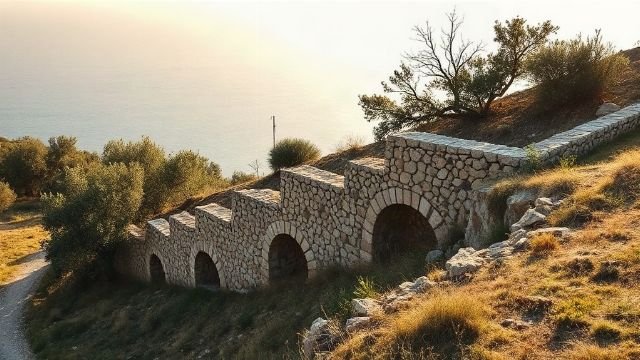
You do not need to visit a museum to encounter Glagolitic, though museums certainly help. In Istria, the small town of Hum proudly calls itself the 'town of Glagolitic', and the nearby Aleja glagoljaša (Glagolitic Alley) is a scenic road lined with stone monuments dedicated to the script. The alley stretches between Roč and Hum, with each monument representing a letter or a historical figure linked to Glagolitic heritage.
On the island of Krk, the town of Baška displays a replica of the famous tablet near the parish church, while the original is kept in Zagreb. In the Kvarner region, the town of Vrbnik has a library with a collection of Glagolitic manuscripts, and many local churches still show inscriptions above their entrances. Further south, the cathedral in Senj and some old houses in Zadar and Trogir have Glagolitic carvings.
If you are in Zagreb, the Croatian Academy of Sciences and Arts holds important Glagolitic codices, though they are not always on public display. A more accessible option is to look for the script in everyday life: souvenirs, wine labels, and even some modern street signs use Glagolitic letters as a nod to tradition.
A living tradition
Although Glagolitic is no longer used for daily writing, it remains a powerful cultural emblem. You may see it on commemorative plaques, hear it mentioned in local folklore, or spot it in the logos of cultural institutions. Learning to recognise a few letters can deepen your appreciation of Croatia's layered history, and you might find yourself scanning old stone walls for those unmistakable angular marks.
For visitors, the best approach is simply to keep your eyes open. In Istria and the northern coast, Glagolitic appears more frequently than you might expect, often in quiet village squares or along rural roads. It is a quiet reminder that Croatia's written heritage goes far beyond the Latin alphabet most travellers know.