A Guide to Croatian Naive Art: The Hlebine School
Croatia's naive art movement, born in the rural village of Hlebine, is a unique expression of peasant creativity that has gained international acclaim.
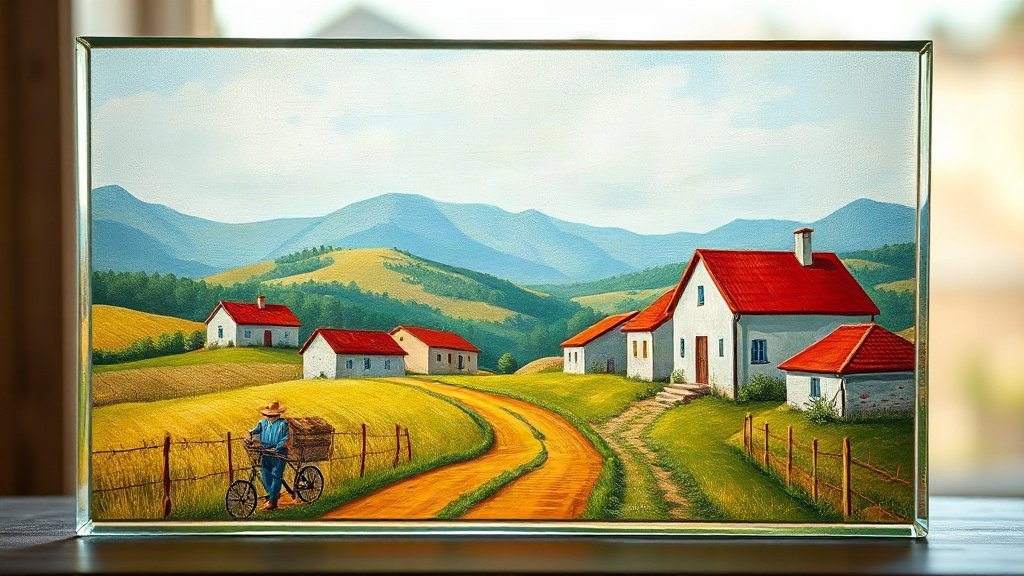
Illustration: AI-generated image
Naive art in Croatia has a story unlike almost anywhere else in the world. It began not in city studios but in the fields and farmhouses of the Podravina region, where self-taught peasant painters created a style that would eventually hang in galleries across Europe and beyond.
Origins and Development
The movement is most closely associated with the village of Hlebine, where in the 1930s the academically trained artist Krsto Hegedušić encouraged local farmers to paint their everyday lives. He believed that genuine art could spring from the untrained hand, and his guidance helped shape what became known as the Hlebine School.
Early members included Ivan Generalić, Franjo Mraz and Mirko Virius, who painted scenes of rural labour, seasonal cycles and village customs. Their work was first exhibited in Zagreb in 1931 and soon attracted international attention. A second generation, active from the 1950s, expanded the style with more personal and sometimes fantastical imagery.
Distinctive Characteristics
Several features make Croatian naive art instantly recognisable. Perhaps the most distinctive is the technique of painting in reverse on glass, which requires the artist to work in mirror image, applying details first and background last. This method gives colours a particular luminosity and depth.
The compositions are typically flat, with no linear perspective, and often show an entire village or landscape from a single elevated viewpoint. Colours are bright and pure, with great attention to detail in leaves, feathers, fur and fabric. Subjects range from idyllic farm scenes to winter landscapes, religious themes and even surreal or dreamlike visions.
Where to See Croatian Naive Art
The Croatian Museum of Naive Art in Zagreb holds the world's most important collection, with over 1,900 works. The museum displays a rotating selection that spans the movement's history, from the early Hlebine pioneers to later artists from other regions.
In Hlebine itself, the village gallery and the studios of working artists keep the tradition alive. Many private collections throughout Croatia and abroad also hold significant pieces, and naive art remains a popular souvenir for visitors seeking an authentic piece of Croatian culture.
A Living Tradition
Though the golden age of the Hlebine School may have passed, naive art continues to be practised and appreciated in Croatia. New generations of self-taught artists, some following the glass-painting tradition and others working on canvas, ensure that this remarkable blend of folk sensibility and individual imagination remains a vibrant part of the country's cultural identity.