Diocletian's Palace in Split: A Guide to Croatia's Living Roman Heart
Discover the ancient Roman palace that forms the heart of Split, where history and modern life intertwine among UNESCO-listed ruins.
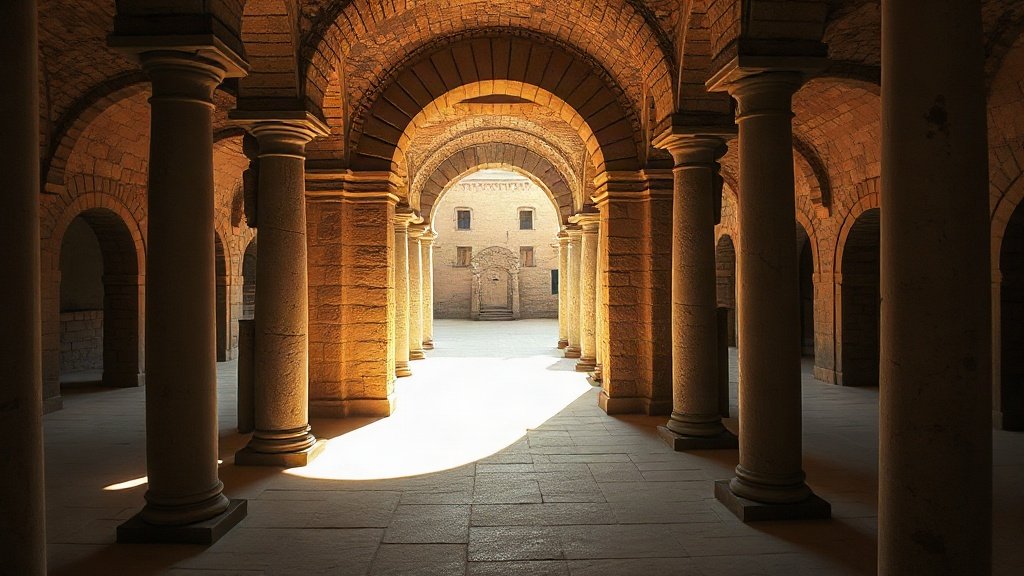
Illustration: AI-generated image
In the heart of Split, one of Croatia's largest cities, lies a remarkable ancient monument that is not a museum piece but a living part of the urban fabric. Diocletian's Palace, built at the turn of the 4th century AD as a retirement residence for the Roman Emperor Diocletian, is one of the best-preserved examples of late Roman architecture in the world. Today, its historic core is a UNESCO World Heritage Site and a vibrant neighbourhood filled with homes, shops, cafes and cultural attractions.
A Palace That Became a City
Unlike many ancient ruins that stand isolated from modern life, Diocletian's Palace has been continuously inhabited since the Middle Ages. After the fall of the Western Roman Empire, local residents sought refuge within its sturdy walls, gradually transforming the imperial complex into a thriving medieval town. Over the centuries, layers of history accumulated, creating a unique blend of Roman, medieval, Renaissance and Baroque architecture that still defines Split's old town. Walking through the palace today, visitors can trace these transformations in the stones, from original Roman columns to Venetian-era windows and later additions.
Key Sights Within the Palace
Visitors can wander freely through the palace's ancient streets, most of which are open to the public at all times. Some of the most significant structures include:
- The Peristyle: The palace's central courtyard, surrounded by original Roman columns. This open-air space often hosts cultural performances and is a favourite meeting point.
- The Cathedral of Saint Domnius: Originally built as Diocletian's mausoleum, it was converted into a Christian cathedral in the 7th century. Its bell tower offers panoramic views over Split.
- The Temple of Jupiter: A small Roman temple that later became a baptistery, featuring a well-preserved coffered barrel vault and a statue of Saint John the Baptist by Ivan Meštrović.
- The Basement Halls (Podrumi): A vast network of underground chambers that mirror the layout of the imperial apartments above. They now host exhibitions and events and served as a filming location for the television series Game of Thrones.
Experiencing the Palace Today
Because the palace is seamlessly woven into the city, there is no single entrance or closing time. You can stroll through its narrow alleys, peek into hidden courtyards, and stumble upon Roman walls while shopping for local crafts or enjoying a coffee. For a deeper understanding, guided walking tours are available from local operators, but exploring independently is equally rewarding. The palace is also easily reached on foot from Split's ferry port and main bus station, making it a natural starting point for any visit to the city.
The palace is also a stage for cultural life. During the summer, the Peristyle and other ancient spaces host concerts and theatre performances as part of the Split Summer Festival, and the atmospheric substructures provide a dramatic backdrop for art installations. Even outside festival season, the palace's stones carry an energy that connects visitors directly to two millennia of history.
Whether you are a history enthusiast, an architecture lover, or simply a curious traveller, Diocletian's Palace offers an unforgettable journey through time in the very centre of Split.