How to Make Pašticada: Croatia's Slow-Cooked Beef Classic
Pašticada is a rich, slow-cooked Dalmatian beef dish served with gnocchi. Learn the traditional method, key ingredients and tips for authentic flavour.
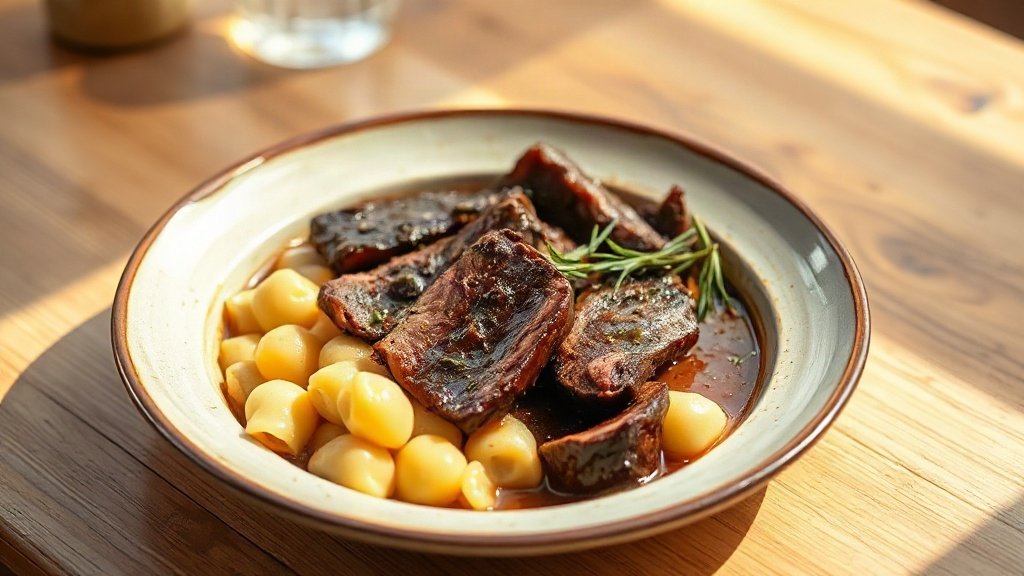
Illustration: AI-generated image
Pašticada is the pride of Dalmatian kitchens—a deeply savoury, slightly sweet beef stew that graces tables for Sunday lunches, weddings and festive gatherings. This slow-cooked classic, often marinated for days and simmered for hours, rewards patience with tender meat and a complex, glossy sauce. If you want to bring a true taste of Croatia's coast to your home, here is how to make it the traditional way.
What Makes Pašticada Special?
Unlike quick stews, pašticada relies on a long marinade and gentle braising. Beef—typically top round or rump—is larded with garlic and cloves, then marinated in red wine vinegar and aromatics. The sauce gains depth from prunes or dried figs, which lend a subtle sweetness, and often a spoonful of tomato paste. The result is a dark, almost jammy sauce that clings to the meat.
Key Ingredients
While recipes vary by family, these are the essentials:
- Beef: A single large piece, about 1–1.5 kg, from the round or rump.
- Marinade: Red wine vinegar, red wine (Prošek is traditional, but any full-bodied red works), onions, carrots, celery, bay leaves, rosemary.
- Flavourings: Garlic cloves, whole cloves, nutmeg, black pepper, salt.
- Sweeteners: Prunes or dried figs (soaked), sometimes a little sugar or honey.
- Extras: Tomato paste, a splash of sweet wine or dessert wine near the end.
Step-by-Step Method
1. Lard the beef. Cut slits into the meat and insert slivers of garlic and whole cloves. This infuses the beef from within.
2. Marinate. Place the beef in a deep dish with sliced onions, carrots, celery, bay leaves, rosemary, red wine vinegar and red wine. Cover and refrigerate for at least 24 hours, preferably 48–72 hours, turning occasionally.
3. Sear. Remove the beef from the marinade, pat it dry, and brown it well on all sides in a heavy pot with a little oil. Set aside.
4. Sauté the vegetables. In the same pot, cook the strained marinade vegetables until soft and caramelised. Add tomato paste and cook for a minute.
5. Braise. Return the beef to the pot. Pour in the strained marinade liquid and enough water or beef stock to come halfway up the meat. Add soaked prunes or figs, a grating of nutmeg, and a little salt and pepper. Bring to a simmer, then cover and cook on the lowest heat for 3–4 hours, turning the meat occasionally, until fork-tender.
6. Finish the sauce. Remove the beef and keep warm. Blend the sauce until smooth (or pass through a sieve), then return to the pot. Taste and adjust with salt, a spoonful of honey or sugar if needed, and a splash of sweet wine for brightness. Simmer until the sauce thickens slightly.
7. Rest and slice. Let the beef rest for 15 minutes, then slice against the grain. Serve with the sauce poured over.
Serving Suggestions
Pašticada is traditionally served with homemade gnocchi (njoki) or wide pasta, and a generous grating of hard sheep's cheese. A simple green salad or sautéed greens balance the richness. Many cooks make pašticada a day ahead—the flavours deepen overnight, and the sauce is easier to skim.
Tips for Success
- Choose a well-marbled cut; lean beef can become dry.
- Do not rush the marinade—this is key to the deep flavour.
- Cook over very low heat; a slow oven (150°C) or a diffuser helps prevent scorching.
- If the sauce becomes too thick, thin with a little stock or water.
Making pašticada is a labour of love, but the result is a true Dalmatian celebration on a plate.